Plant Overview
Known as the "Ancient Spice of the East," Cinnamomum aromaticum—commonly called Cassia—is the bold, spicy cousin of "true" cinnamon. While it originated in Southern China, it has traveled the Silk Road for millennia, eventually becoming the most common cinnamon found in spice racks today. This evergreen tree is prized not just for its aromatic bark, but for its glossy, handsome foliage.
🔍 How to Identify
- 🍃 Leathery Leaves: The leaves are thick, glossy, and lance-shaped. Look for three distinct, prominent veins running vertically from the base to the tip—a classic signature of the Cinnamomum family.
- 🪵 Thick, Rough Bark: Unlike the paper-thin, fragile layers of Ceylon cinnamon, Cassia bark is thick, hard, and usually forms a single, sturdy scroll (quill) when dried.
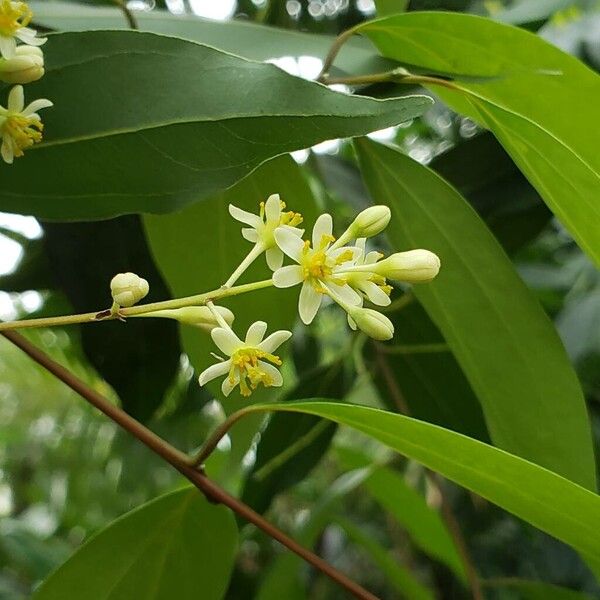
- 🌼 Small Flower Clusters: It produces tiny, inconspicuous pale yellow or white flowers that grow in branched clusters, often emitting a spicy, slightly heavy fragrance.
🏡 In Your Garden
- ☀️ Tropical Requirements: This is a sun-loving tropical tree. While it can be grown in large containers in cooler climates, it demands high humidity and protection from frost, which will cause the glossy leaves to drop almost instantly.
- 🚿 The "Drench and Drain" Method: Cassia enjoys consistent moisture but hates "wet feet." It requires well-draining, slightly acidic soil. If the roots sit in stagnant water, the tree is highly susceptible to root rot.
- 🌱 Patience in Growth: It is a slow-to-moderate grower. If you are growing it for spice, the tree typically needs to reach about 6-8 years of age before the bark is mature enough to be harvested and dried.
⚠️ Safety & Toxicity
- 🐾 Pet Warning: The plant contains essential oils and coumarin. While a leaf or two might just cause a tummy ache, concentrated ingestion is toxic to dogs, cats, and horses, potentially leading to liver distress or skin irritation.
- 🧪 Coumarin Sensitivity: Cassia contains significantly higher levels of coumarin than "True" cinnamon. While perfectly safe for normal culinary use, consuming massive medicinal quantities can be taxing on the human liver and kidneys.
✨ Fun Fact
📜 An Ancient Preservative: In Ancient Egypt, cinnamon was considered more precious than gold. It was a key ingredient in the mummification process, used both for its heavenly scent and its natural antimicrobial properties to help preserve the body for the afterlife.

Detailed Care Instructions

Place in a bright room that is sun drenched almost all day. Or directly in a south-facing window.

Some plants require more regular watering than others, which should be done every few days. It's critical to maintain the soil moist all of the time. The water requirements of the same plant placed in pots with varying sizes will differ. Because the water in the smaller pot evaporates faster than the water in the larger pot, it will require more watering. Regardless of pot size, the surface should constantly be maintained moist.
To maintain their leaves healthy and green, these plants need a lot of nitrogen. Because they rely on fertilizers to grow, fertilize them once a week with diluted fertilizers. The plants housed in containers need fertilizers more frequently. However, adding excessive fertilizers makes it hard for the roots to take up water that causes their leaves to turn yellow or brown.
You may use All Purpose Plant Food or All Purpose Fertilizer for your Chinese Cinnamon
Common pests of the chinese cinnamon include Scale insect, spider mites, larvae. Make a habit of checking your chinese cinnamon frequently for pests so that any infestations can be caught and managed early.







