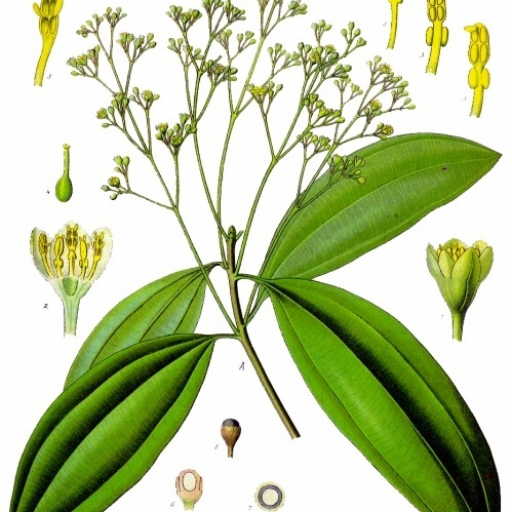
Plant Overview
Often referred to as Chinese Cinnamon, Cinnamomum cassia is the bold, spicy powerhouse behind the "cinnamon" flavor most people know and love. While its cousin, Ceylon cinnamon, is considered "true" cinnamon, Cassia is the ancient traveler that dominated the spice routes of the East. In its native subtropical forests, it grows as a stately evergreen tree with bark that carries a scent so potent it can be smelled from yards away after a heavy rain.
🔍 How to Identify
- 🌿 The Leaves: The glossy, leathery leaves are easy to spot because of three distinct, prominent veins that run vertically from the base to the tip. New growth often emerges in a beautiful shade of copper or red.
- 🪵 The Bark: Unlike the paper-thin layers of Ceylon cinnamon, Cassia bark is thick, hard, and rough. When dried, it typically curls inward from both sides into a "double scroll" shape.
- 🫐 The Fruit: The tree produces small, dark purple drupes that look somewhat like tiny acorns or blueberries, which are often used in traditional spice blends as "cinnamon buds."
🏡 In Your Garden
- ☀️ Tropical Requirements: This is a sun-loving plant that craves high humidity and warmth. If you live in a cooler climate, it is best grown in a large container that can be moved indoors during the winter, as it is very sensitive to frost.
- 🌱 Root Room: Because it eventually grows into a medium-sized tree, it requires deep, well-draining acidic soil. It hates "wet feet," so ensure your pot or garden bed doesn't hold standing water, which can lead to root rot.
- ✂️ Harvesting Nuance: To harvest the spice, gardeners usually "coppice" the tree (cutting it back to the ground) to encourage the growth of multiple thin shoots, from which the aromatic bark is more easily stripped.
⚠️ Safety & Toxicity
- 🧪 Coumarin Levels: Caution is advised with consumption. Cassia contains significantly higher levels of coumarin than other cinnamon species. While fine in small culinary amounts, excessive ingestion can be toxic to the liver in humans.
- 🐾 Pets & Kids: The plant itself is generally non-toxic to touch, but the concentrated essential oils or large amounts of the spice can cause mouth irritation or digestive upset in cats and dogs.
- 🩹 Skin Sensitivity: The sap and concentrated oils from the bark can cause mild skin irritation or "cinnamon burns" for those with sensitive skin.
✨ Fun Fact
Most of the "cinnamon" sticks and powder found in grocery stores across North America are actually Cinnamomum cassia! If your cinnamon is hard, dark, and spicy rather than crumbly and sweet, you’re eating the bark of this ancient Chinese tree.

Detailed Care Instructions

Place in a bright room that is sun drenched almost all day. Or directly in a south-facing window.

Some plants require more regular watering than others, which should be done every few days. It's critical to maintain the soil moist all of the time. The water requirements of the same plant placed in pots with varying sizes will differ. Because the water in the smaller pot evaporates faster than the water in the larger pot, it will require more watering. Regardless of pot size, the surface should constantly be maintained moist.
To maintain their leaves healthy and green, these plants need a lot of nitrogen. Because they rely on fertilizers to grow, fertilize them once a week with diluted fertilizers. The plants housed in containers need fertilizers more frequently. However, adding excessive fertilizers makes it hard for the roots to take up water that causes their leaves to turn yellow or brown.
You may use All Purpose Plant Food or All Purpose Fertilizer for your Padang Cassia
Common pests of the padang cassia include Scale insect, spider mites, larvae. Make a habit of checking your padang cassia frequently for pests so that any infestations can be caught and managed early.








