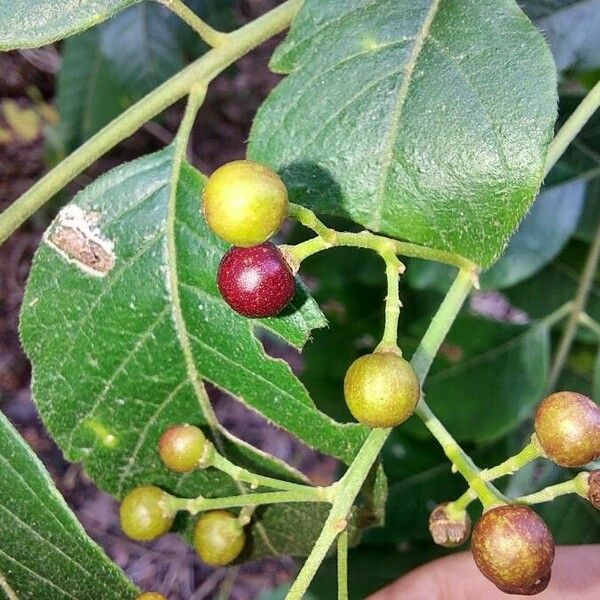
Plant Overview
Known widely across South Asia as "Ranabili" or "Maramalli," Cipadessa baccifera is a hardy, woody shrub that belongs to the same family as the majestic Mahogany tree. Often found hugging the edges of tropical forests and hillsides, it is a resilient survivor that transforms from a humble green bush into a spectacle of red and purple berries. While it may look like a common wild shrub, it has been a staple in traditional folk medicine for centuries.
🔍 How to Identify
- 🍃 Feathery Foliage: It features "odd-pinnate" leaves, meaning the leaflets grow in pairs along a central stalk with one single leaf at the very tip, creating a soft, fern-like appearance.
- 🌼 Dainty Blooms: The plant produces small, inconspicuous greenish-white flowers that grow in long, branching clusters (panicles) tucked between the leaves and the stem.
- 🍒 Jewel-like Berries: Its most striking feature is the fruit—globose berries that start green, turn a vibrant scarlet red, and eventually ripen into a deep, glossy purple-black.
🏡 In Your Garden
- 🛡️ Living Fences: Because of its dense, twiggy growth habit and ability to withstand heavy pruning, it is traditionally used as a "living fence" to create natural, bird-friendly boundaries around rural properties.
- ⛅ The Edge Dweller: In a garden setting, it mimics its natural habitat best when placed in "edge" zones—areas that receive dappled sunlight or partial shade. It isn't picky about soil but hates sitting in stagnant water.
- 🦋 Wildlife Magnet: If you are looking to support local biodiversity, this plant is a winner; its flowers provide nectar for small pollinators, and its berries are a favorite snack for forest birds.
⚠️ Safety & Toxicity
- 🛑 Caution Advised: While this plant is deeply rooted in Ayurvedic medicine for treating snake bites and skin issues, it should never be consumed or applied without professional guidance.
- 👶 Keep Out of Reach: The bright berries can be very tempting to children and pets. Ingesting the raw berries or leaves may lead to stomach upset or more severe toxic reactions, as the plant contains potent alkaloids.
✨ Fun Fact
In some rural regions, the leaves of Cipadessa baccifera are crushed and mixed with water to create a natural pesticide. Farmers have historically used this "green soup" to protect their stored grains from hungry weevils and pests!

Detailed Care Instructions
To grow Cipadessa Baccifera plants, also known as velvet leaf, follow these steps:
- Obtain seeds or a healthy plant: You can either buy seeds from a reputable nursery or obtain a young plant from a local garden center.
- Choose a suitable location: Cipadessa Baccifera plants prefer full or partial sunlight, so select a spot in your garden or balcony that receives adequate light.
- Prepare the soil: Ensure the soil is well-drained and rich in organic matter. If your soil is heavy clay or doesn't drain well, add organic compost to improve its structure.
- Plant the seeds or young plant: If using seeds, sow them directly into the soil or start them in seed trays. Ensure the seeds are lightly covered with soil, and water gently. If using a young plant, dig a hole in the prepared soil and place the plant, covering the roots with soil.
- Water regularly: Cipadessa Baccifera plants prefer slightly moist soil. Water them regularly, keeping the soil evenly moist but not waterlogged. Avoid overwatering, as that can lead to root rot.
- Fertilize: Use a balanced, slow-release fertilizer during the growing season to provide necessary nutrients. Follow the instructions on the packaging for the correct dosage and frequency.
- Prune as needed: Cipadessa Baccifera plants benefit from occasional pruning to maintain their shape and remove any dead or damaged branches. Prune during early spring or after flowering to encourage healthy growth.
- Protect from extreme temperatures: If you live in an area with harsh winters or extreme heat, provide protection to the plant during those seasons. Mulching around the base can help insulate roots during winter, while providing shade during hot summers can prevent stress on the plant.
- Monitor for pests and diseases: Keep an eye out for common garden pests such as aphids, mealybugs, or scale insects. Treat any infestations promptly using organic insecticides or natural remedies.
- Enjoy the blooms: Cipadessa Baccifera plants produce clusters of pretty flowers in various colors, such as white, pink, or purple. Enjoy their blooms and take pride in successfully growing this unique plant.

Place in a window with dappled sun or a spot in the middle of a room. Or directly in a window facing west or east.

To water this plant, first check the soil moisture level by sticking your finger about an inch into the soil. If the soil feels dry, it is time to water. Use a watering can or hose to thoroughly water the soil around the base of the plant until the water begins to drain out of the bottom of the pot or into the ground. Avoid getting water directly on the foliage of the plant. Water this plant deeply but less frequently, rather than giving it small amounts of water frequently. Ensure that the soil is well-draining and not waterlogged, as this can lead to root rot. It is also important to adjust watering frequency based on environmental factors such as temperature and humidity.
The plant requires fertilization to remain healthy and grow well. The best time to fertilize is during the growing season, which is typically in the spring and summer months. Use a balanced fertilizer with equal amounts of nitrogen, phosphorus, and potassium. Dilute the fertilizer according to the manufacturer's instructions and apply it once every four weeks. Be careful not to over-fertilize, as this can damage the plant. Additionally, make sure to water the plant regularly to ensure that the fertilizer reaches the roots.
When planting this particular plant, it is important to use a well-draining soil mixture that is rich in organic matter. A mixture of peat moss, perlite, and sand is ideal, with a pH of around 6.5 to 7.0. The soil should also be slightly acidic and loamy, with good water retention and aeration properties. It is important to avoid using heavy soils that retain water, as this can lead to root rot or other fungal diseases. Overall, the soil should be fertile and nutrient-rich, with a texture that promotes healthy root growth and allows for easy drainage.
Cipadessa baccifera can be propagated through stem cuttings and seeds. For stem cutting propagation, healthy stems with a length of 10-12 cm and 2-3 nodes are selected. The leaves on the bottom half of the stem are removed and the stem is dipped in rooting hormone powder. The stem is then planted in a well-draining potting mix and kept in a warm and humid location with filtered sunlight. After 3-4 weeks, roots will start to form and the plant can be transferred to a larger pot or garden.
For seed propagation, the ripe berries of the Cipadessa baccifera plant are harvested and the seeds are extracted from them. The seeds are then sown in a well-draining potting mix and covered with a layer of soil. The pot is kept moist and in a warm location with filtered sunlight. Germination should occur within 2-4 weeks and the plants can be transferred to a larger pot or garden once they are large enough to handle.








