Plant Overview
Known affectionately as the Edible Thistle or Indian Thistle, Cirsium edule is a striking native of the Pacific Northwest. While many gardeners view thistles as prickly invaders, this species holds a place of honor in natural history as a vital survival food for Indigenous peoples. It is a towering, architectural beauty that proves even the sharpest plants can have a "sweet" side.
🔍 How to Identify
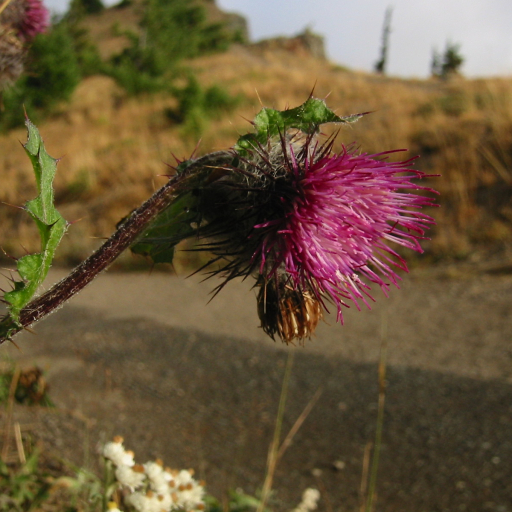
- 🌸 The Bloom: Look for dense, nodding clusters of fuzzy, magenta-to-purple flower heads. Unlike some thistles that stand straight up, these often have a slightly "heavy-headed" look.
- 🗡️ The Foliage: The leaves are deeply lobed and armed with sharp, pale spines. The undersides of the leaves are often covered in fine, silvery hairs, giving them a slightly frosted appearance.
- 📏 The Stature: This isn't a low-creeping weed; it can grow quite tall, sometimes reaching 6 to 7 feet in moist, favorable conditions, supported by a thick, succulent stem.
🏡 In Your Garden
- 🦋 The Pollinator Party: If you have the space for a wilder "pollinator corner," this plant is a must-have. It is a high-octane nectar source for long-tongued bees, butterflies, and especially hummingbirds.
- 💧 Moisture Matters: Unlike its desert-dwelling cousins, the Edible Thistle thrives in moist meadows, forest openings, and stream banks. In a home landscape, it prefers "wet feet" and rich, organic soil rather than dry, sandy patches.
- 🌱 Root Depth: It develops a significant taproot. This makes it incredibly drought-resistant once established, but it also means it hates being moved. Pick its "forever home" carefully!
⚠️ Safety & Toxicity
- 🌵 Mechanical Injury: The primary danger is physical. The spines are sharp and can easily pierce gardening gloves or thin clothing. Always handle with heavy-duty leather gloves.
- 🍽️ Edibility Context: While the species name edule means edible, never consume wild plants unless you are 100% certain of the identification and the area is free of pesticides. Traditionally, the peeled stems and boiled roots were eaten, but they contain inulin, which can cause significant gas or bloating if not cooked properly!
✨ Fun Fact
The Lewis and Clark expedition famously relied on the Edible Thistle for sustenance. In his journals, Meriwether Lewis described the root as "palatable" and "resembling a mushmellon" in texture when boiled, helping the crew survive when other food sources were scarce.

Detailed Care Instructions
To grow Cirsium edule, also known as the edible thistle or Indian thistle, follow these steps:
- Climate and Soil Requirements: Cirsium edule prefers well-draining soil with a slightly acidic to neutral pH (around 6.0-7.5). It grows best in full sun to partial shade. The plant is native to North America and typically found in dry prairies and open woodlands.
- Seed Selection and Germination: Obtain Cirsium edule seeds from a reputable nursery or online retailer. The plant can be grown from seeds or propagated by dividing mature plants. To start from seeds, soak them overnight or nick the seed coat gently with a file or sandpaper to encourage germination. Sow the seeds in well-prepared soil, barely covering them with a thin layer of soil.
- Planting: Plant the seeds or divided plants in late spring or early summer, after the danger of frost has passed. Space the plants around 1-2 feet apart to provide them with room to spread. Ensure they receive ample sunlight and have access to water.
- Watering: Keep the plants well-watered during the first few weeks until they establish a strong root system. Afterward, Cirsium edule is relatively drought-tolerant and may not require frequent watering. However, during prolonged dry spells, provide them with supplemental irrigation.
- Mulching and Weed Control: Apply a layer of organic mulch around the plants to retain soil moisture and suppress weed growth, which can compete with Cirsium edule for nutrients and water.
- Fertilization: Cirsium edule does not generally require regular fertilization, as it naturally thrives in nutrient-poor soil. However, if your soil lacks nutrients, you can apply a balanced, slow-release fertilizer according to the package instructions.
- Pest and Disease Control: Cirsium edule is relatively resistant to common pests and diseases. However, keep an eye out for aphids, caterpillars, or leaf-mining insects. In case of infestation, treat the plants with organic insecticides or try using natural pest control methods like handpicking or introducing beneficial insects.
- Harvesting: Cirsium edule produces edible flower buds and stems. Harvest them when they are still young and tender before the flowers fully open. Use gloves to avoid prickles, and trim the thorny edges before preparing them as a vegetable.
- Winter Care: Cirsium edule is a perennial plant and will die back during winter. Cut back the dried stems to a few inches above the ground and protect the crown with a layer of mulch to insulate it from harsh temperatures.
By following these steps, you can successfully grow Cirsium edule and enjoy its edible parts.

Cirsium Edule is a plant that requires a moderate amount of water to thrive. One way to water this plant is to thoroughly soak the soil until the water starts to seep out of the drainage holes at the bottom of the pot. It is important to avoid watering the foliage of the plant to prevent the leaves from becoming wet, which can lead to fungal growth and potential damage to the plant. Another method is to water the plant from below by placing the pot in a saucer filled with water and allowing the soil to absorb the water through the drainage holes. It is important to allow the soil to dry out slightly between watering to prevent overwatering, which can lead to root rot. Additionally, it is recommended to avoid using hard tap water, as the minerals in the water can cause damage to the plant over time. Instead, it is best to use distilled or rainwater when possible. Overall, watering Cirsium Edule requires attention to the soil moisture levels and care to avoid wetting the foliage.
To fertilize this plant, mix a balanced fertilizer with equal parts nitrogen, phosphorus, and potassium. Apply the fertilizer in early spring before new growth begins, and then once a month during the growing season. Be sure to follow the manufacturer's instructions for proper application rates. Avoid over-fertilizing, as this can lead to poor growth and weak plants. Water the soil thoroughly after fertilizing.
Cirsium Edule is a plant that prefers slightly acidic to neutral soil with a pH range of 5.5-7.5. It grows best in well-draining soil that is rich in organic matter. A mixture of sand, loam, and peat moss or compost can be used when planting Cirsium Edule. It is essential to ensure that the soil does not become too waterlogged, as this can lead to root rot. Therefore, adding perlite or vermiculite to the soil mix can improve drainage. Cirsium Edule is a drought-tolerant plant that can handle some dryness, but the soil should remain moist but not wet. Adding a layer of mulch around the plant can help retain moisture in the soil, suppress weeds, and regulate soil temperature. Additionally, fertilizing Cirsium Edule with a well-balanced fertilizer can help promote healthy growth and flowering.
Propagation of this plant can be done through seed or division. To propagate through seed, collect the ripe seed heads in the fall and store in a cool, dry place until ready to plant in the spring. Alternatively, you can stratify the seeds by placing them in a plastic bag with damp peat moss in the refrigerator for several weeks before planting. To propagate through division, carefully dig up the plant in the spring or fall and separate the root clumps into smaller sections. Replant the sections immediately and keep well-watered until established.








