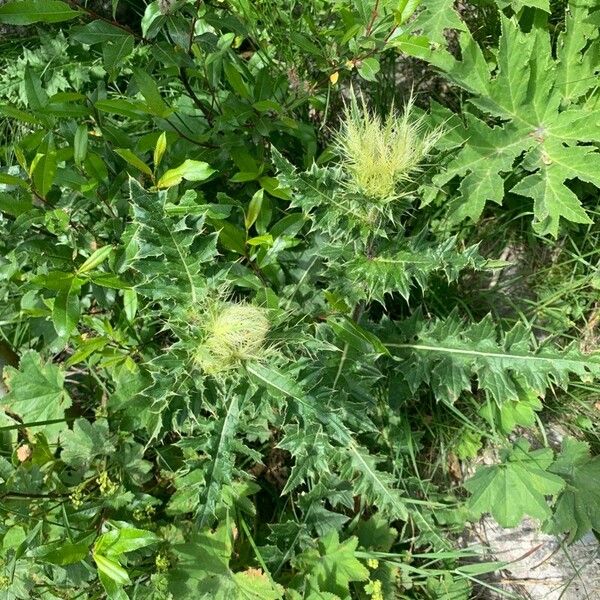
Plant Overview
Known as the Caucasian Thistle, Cirsium obvallatum is a striking architectural beauty from the high-altitude meadows of the Caucasus Mountains. Unlike the common purple thistles often seen in waste-lands, this species carries an air of elegance with its pale, ghostly blooms. It is often nicknamed the "Walled Thistle" because of the unique way its flowers are shielded by protective, leafy layers.
🔍 How to Identify
- 🛡️ Protective Bracts: The most distinctive feature is the cluster of large, yellowish-green leafy bracts that encircle the base of the flower, looking like a protective "wall" or collar.
- ☁️ Pale Blooms: The flower heads themselves are not the typical thistle-purple; they are a soft creamy-white or pale lemon-yellow, packed into dense, round clusters.
- ⚔️ Spiny Foliage: The leaves are long, deeply lobed, and armed with sharp spines along the margins—a classic defense mechanism against hungry mountain herbivores.
🏡 In Your Garden
- 🏔️ Mountain Roots: Because it originates from subalpine regions, this plant thrives in cooler climates and struggles in sweltering, humid heat. It prefers well-draining, rocky soil that mimics a mountain slope.
- 🐝 Pollinator Buffet: In a garden setting, it serves as a massive magnet for bumblebees and butterflies. The nectar is easily accessible, making it a vital pit stop for beneficial insects during the mid-to-late summer bloom.
⚠️ Safety & Toxicity
- 🌵 Status: Non-toxic but physically hazardous.
- 🧤 Details: While the plant is not known to be poisonous to humans or pets, the spines are very sharp and can easily pierce skin or paws. Always wear heavy-duty gardening gloves when handling this plant to avoid painful punctures or irritation.
✨ Fun Fact
The specific epithet obvallatum comes from the Latin word obvallatus, meaning "surrounded by a wall." This refers to those oversized, pale bracts that stand guard around the flower head, protecting the delicate reproductive parts from harsh mountain winds and cold nights.

Detailed Care Instructions

Some plants require more regular watering than others, which should be done every few days. It's critical to maintain the soil moist all of the time. The water requirements of the same plant placed in pots with varying sizes will differ. Because the water in the smaller pot evaporates faster than the water in the larger pot, it will require more watering. Regardless of pot size, the surface should constantly be maintained moist.








