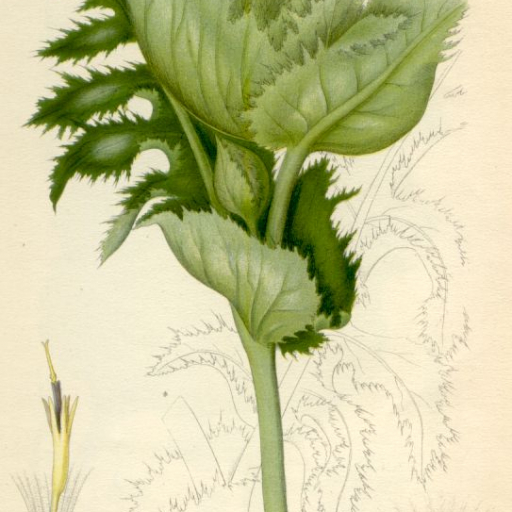
Plant Overview
Commonly known as the Cabbage Thistle, this unique perennial breaks the "prickly" stereotype of the thistle family. Its large, pale-yellow flower clusters are cradled by broad, leaf-like bracts that resemble a head of lettuce or cabbage, giving it its culinary nickname. Indigenous to Europe and parts of Asia, it is often found whispering in damp meadows and along misty riverbanks, acting as a beacon for local wildlife.
🔍 How to Identify
- 🥬 The Bracts: The most striking feature is the large, heart-shaped, yellowish-green leaves that wrap around the flower base like a protective cloak, mimicking the structure of a cabbage.
- 🌼 The Flowers: Unlike the typical purple hues of most thistles, these florets are a soft, creamy yellow or pale green, appearing from mid-summer to early autumn.
- 🍃 The Foliage: The leaves are broad and deeply lobed. While they look intimidating, the spines are relatively soft and flexible compared to the needle-sharp armor of its cousins, like the Bull Thistle.
🏡 In Your Garden
- 💧 Moisture Lover: This is not a plant for a dry rockery. It thrives in "heavy" soil that stays consistently damp. If you have a bog garden, a pond edge, or a low spot where water naturally collects, the Cabbage Thistle will flourish.
- 🦋 Pollinator Haven: While it may look subtle to human eyes, it is a five-star restaurant for bees, hoverflies, and butterflies. It provides high-quality nectar during the heat of summer when other water-loving plants might be fading.
- 🌱 Growth Habit: It is a tall, stately plant that can reach up to five feet. Because it spreads via a creeping rhizome, give it plenty of space where it won't crowd out smaller, delicate neighbors.
⚠️ Safety & Toxicity
- ✅ Status: Non-toxic and generally safe.
- 🐾 Pets & Kids: The Cabbage Thistle is considered safe for cats, dogs, and children. Unlike its "stinging" relatives, it won't cause painful punctures, though the slightly rough texture of the leaves can be a minor skin irritant for those with very sensitive skin.
✨ Fun Fact
In Siberia and parts of Eastern Europe, the Cabbage Thistle was historically prized as a wild vegetable. The young, tender leaves were boiled like spinach, and the fleshy roots were cooked as a nutritious substitute for parsnips or artichokes!

Detailed Care Instructions
| Humidity | Normal |
| Lighting | Part Sun |
| Difficulty | Medium |
| Temperature | 20°C - 27°C |
| Hardiness Zones | 6A - 10 |
To grow Cirsium oleraceum, also known as the marsh thistle or cabbage thistle, follow these steps:
- Choose a suitable location: Cirsium oleraceum thrives in moist and wet soils, making it suitable for marshy or boggy areas. Make sure the location receives full sun or partial shade.
- Prepare the soil: Clear the area of any weeds or debris. Cirsium oleraceum prefers slightly acidic soil, so if necessary, amend the soil with compost or peat moss to adjust the pH level.
- Sow the seeds: Cirsium oleraceum can be propagated by seeds. In early spring (or late autumn), scatter the seeds over the prepared soil. Do not cover the seeds with soil as they require light for germination.
- Water regularly: Keep the soil consistently moist, but not waterlogged. Watering lightly every few days should be sufficient, especially during dry periods.
- Control weeds: As the plants grow, mulching can help suppress weed growth. Be careful not to disturb the young seedlings when removing weeds manually.
- Provide support: As Cirsium oleraceum can grow quite tall, providing support such as stakes or trellises can prevent the plants from falling over.
- Monitor for pests and diseases: Keep an eye out for common thistle pests, such as aphids or caterpillars, and take appropriate measures if infestations occur. Additionally, watch for any signs of disease, such as powdery mildew or rust, and treat accordingly.
- Harvest flowers and seeds: Once the thistle flowers bloom, you may choose to harvest the flowers or wait for the seeds to develop. Harvesting the flowers can be done by cutting the stems just below the flower heads. For seed collection, allow the flowers to mature and dry on the plants. Harvest the seed heads when they start to turn brown and dry.
Following these steps should help you successfully grow Cirsium oleraceum.

Place in a bright room that is sun drenched almost all day. Or directly in a south-facing window.

Cirsium Oleraceum is a plant that requires regular watering to remain healthy and robust. The most effective way to water this plant is to provide it with a consistent and even supply of water, while also avoiding excess moisture that can cause root rot.
One method of watering Cirsium Oleraceum is to use a drip irrigation system that slowly delivers water to the soil over an extended period. This approach helps to avoid overwatering the plant, while also ensuring that the soil remains moist and nourishing throughout the day.
Another option is to water the plant from above, using a watering can or similar device to apply water directly to the soil surrounding the plant. It's important to avoid getting water on the leaves or other parts of the plant, as this can encourage the growth of harmful fungi and bacteria.
Regardless of the method you choose, it's important to monitor the moisture levels in the soil regularly, and adjust your watering schedule as needed to achieve optimal growth and health for your Cirsium Oleraceum plant.
To fertilize this plant, use a balanced fertilizer with equal amounts of nitrogen, phosphorous, and potassium. Apply the fertilizer once or twice during the growing season, making sure to water the plant thoroughly beforehand. Avoid over-fertilizing, as this can lead to excessive leaf growth and reduced blooming. Additionally, be careful not to get fertilizer on the plant's leaves, as this can damage them.
Cirsium oleraceum is a plant that prefers a well-draining soil type that is rich in organic matter. It thrives in soils that are slightly acidic to neutral, with a pH range of 5-7.5. The plant can grow in various soil textures, from sandy to loamy, as long as the soil is not waterlogged or too heavy.
When planting Cirsium oleraceum, it is recommended to amend the soil with compost or well-rotted manure to increase its fertility and moisture-retaining capacity. The plant also benefits from a layer of mulch to protect the roots and retain moisture in the soil.
Avoid using soils that are too high in alkalinity, clay content, or have poor drainage as they can lead to root rot, stunted growth, and poor overall health of the plant. It is also important to maintain proper soil moisture levels, keeping the soil consistently moist but not waterlogged.
Overall, a fertile, well-draining soil enriched with organic matter and mulched is recommended for the optimal growth and health of Cirsium oleraceum.
To propagate the plant, first select a healthy specimen that has strong roots. Cut a stem from the parent plant, making sure to take a piece that is at least 4 inches long. Remove any flowers or buds from the stem, as these can drain energy from the cutting. Dip the cut end of the stem into rooting hormone powder. Fill a small pot with well-draining soil, and make a hole in the center. Place the stem in the hole, and gently pack the soil around it. Water the cutting, and place a clear plastic bag over the top of the pot to create a humid environment. Put the pot in a warm, bright location, but out of direct sunlight. Keep the soil moist but not waterlogged, and mist the cutting occasionally. After a few weeks, check for root growth by gently tugging on the stem. Once there are strong roots, the cutting can be transplanted into a larger pot or into the garden.








