Plant Overview
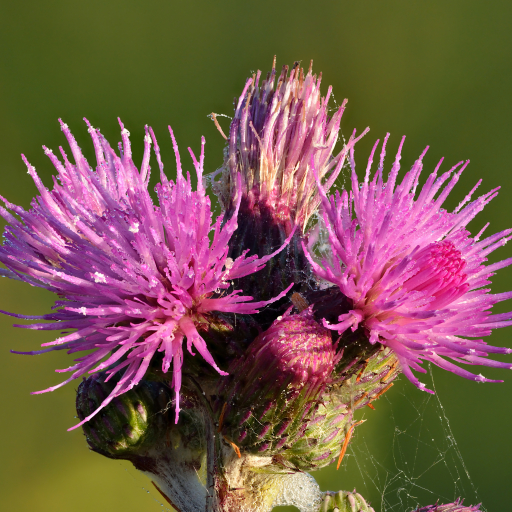
Often called the Marsh Thistle, this towering biennial is the rugged guardian of the wetlands. Known for its slender, spear-like silhouette and deep purple crowns, it thrives in the soggy soils where other plants might falter. While its prickly exterior may seem intimidating, it is a vital pillar of the ecosystem, acting as a high-energy nectar bar for local pollinators.
🔍 How to Identify
- 🏰 The Spiny Stem: Unlike many of its cousins, the stem is "winged" and covered in sharp, needle-like spines all the way up to the flower heads.
- 🍇 Clustered Crowns: It produces dense bunches of small, purple-to-crimson flower heads at the very top of the stalk, rather than one large "pom-pom."
- 🗡️ Narrow Foliage: The leaves are long, deeply lobed, and dark green, featuring a "hairy" texture that hides even more stinging bristles.
🏡 In Your Garden
- 💧 The Wet-Feet Wonder: This plant is an indicator of moisture. If you find it volunteering in your yard, it’s a sign that the soil remains consistently damp or has poor drainage.
- 🐝 Pollinator Magnet: If you have a wilder "rewilding" corner, keeping a few Marsh Thistles will attract long-tongued bees, hoverflies, and butterflies like the Painted Lady, who rely on its rich nectar.
- 🌬️ Seed Strategy: Be careful if you don't want a forest of them! A single plant can produce thousands of downy seeds that travel miles on the wind. Deadheading (removing flowers after they fade) is essential to control its spread.
⚠️ Safety & Toxicity
- 🛡️ Physical Hazard: While the plant is not chemically toxic to humans or pets, its spines are exceptionally sharp and can easily pierce gardening gloves or thin clothing.
- 🐾 Pet Safety: It is non-poisonous if nibbled, but the mechanical irritation from the bristles can cause mouth or paw discomfort for curious dogs or cats.
✨ Fun Fact
The thistle is the proud national emblem of Scotland. According to legend, a group of Norse raiders tried to sneak up on a Scottish camp at night but stepped on thistles with bare feet; their cries of pain alerted the Scots, who successfully defended their land!

Detailed Care Instructions
Here are some steps to help you grow Cirsium palustre, commonly known as the marsh thistle:
- Choose the right location: Marsh thistle prefers moist to wet soil conditions. Select a spot in your garden or landscape that receives ample sunlight and has well-draining soil.
- Prepare the soil: Clear the area of weeds, rocks, and debris. Loosen the soil to a depth of about 6-8 inches (15-20 cm) using a garden fork or tiller. Incorporate organic matter like compost or well-rotted manure to improve soil fertility.
- Sow the seeds: Cirsium palustre can be grown from seed. Sow the seeds in early spring or late summer/early fall. Lightly press the seeds into the soil, but do not cover them as they require light to germinate. Keep the soil consistently moist throughout the germination period.
- Watering and moisture: Marsh thistle is adapted to moist environments, so keep the soil consistently moist, but not waterlogged. Water the plant regularly, especially during dry spells.
- Provide sun exposure: Ensure the plant receives at least 6-8 hours of direct sunlight per day. Marsh thistle thrives in full sun conditions.
- Mulch: Apply a layer of organic mulch around the base of the plant to help retain soil moisture and suppress weed growth. Mulch also helps regulate soil temperature.
- Monitor for pests and diseases: Keep an eye out for common pests and diseases that may affect thistles, such as aphids or powdery mildew. Take appropriate actions if any issues arise.
- Support tall plants: As marsh thistle can grow quite tall, you may need to provide support like stakes or trellises to prevent the plant from falling or bending.
- Deadheading and propagation: Deadhead spent flowers to encourage continuous blooming. To propagate more plants, collect mature seeds after flowering and sow them in the desired area.
Remember to check if Cirsium palustre is suitable for your particular region and comply with any local regulations regarding growing invasive species.

Place in a bright room that is sun drenched almost all day. Or directly in a south-facing window.

To properly water the Cirsium Palustre plant, you should first assess the soil moisture level by sticking your finger into the soil up to the second knuckle. If the soil feels dry, it is time to water. It is recommended to water deeply, allowing the water to penetrate the soil to the root zone. You can use a watering can or a hose with a gentle spray attachment to water the plant. Avoid overhead watering as it can lead to fungal infections and damage to the leaves. In addition, ensure that the plant has good drainage to prevent waterlogging, which can also lead to root rot and other problems.
To fertilize this plant, apply a balanced fertilizer in early spring before new growth appears. Use a slow-release fertilizer with a ratio of 10-10-10 or 12-12-12. Apply the fertilizer at a rate of 1 pound per 100 square feet of soil. Water the soil after fertilizing to help the nutrients penetrate into the root zone. Repeat fertilization in mid-summer if needed. Avoid over-fertilizing as it may cause the plant to produce more foliage than flowers.
The recommended soil for growing this plant is a well-draining soil with a high organic matter content and a pH level between 5.5 and 7.5. The soil should be moist but not waterlogged and should be able to retain some moisture to support the plant during dry spells. A combination of sand, loam and peat moss mixed in equal proportions is ideal for this plant. Additionally, applying an organic fertilizer every few weeks can be helpful to stimulate growth and promote healthy foliage. It is important to monitor the soil moisture levels regularly and adjust watering as necessary to prevent over-drying or over-saturation of the soil.
Cirsium palustre can be propagated through seed or root division.
Seed propagation:
- Collect seeds from the plant when they are ripe and dry.
- Sow the seeds in a seed tray or small pots filled with a well-draining seed-starting mix.
- Cover the seeds with a thin layer of soil and water well.
- Place the tray or pots in a warm, bright location and keep the soil moist.
- Transplant the seedlings into individual pots once they have developed a few true leaves.
Root division: - Dig up an established plant in spring or fall when the soil is moist.
- Carefully divide the root system into sections using a sharp knife or spade.
- Replant each section in a prepared site with well-draining soil.
- Water the newly planted sections well and keep the soil moist until they are established.








