Plant Overview
Known commonly as the Bull Thistle or Spear Thistle, this plant is the ultimate "guarded beauty" of the meadow. While many modern gardeners view it as a stubborn intruder, it has a regal history and serves as a vital nectar bar for butterflies and goldfinches. In Scotland, it is celebrated as a legendary symbol of resilience, famously proving that even the most beautiful things can have a sharp defense.
🔍 How to Identify
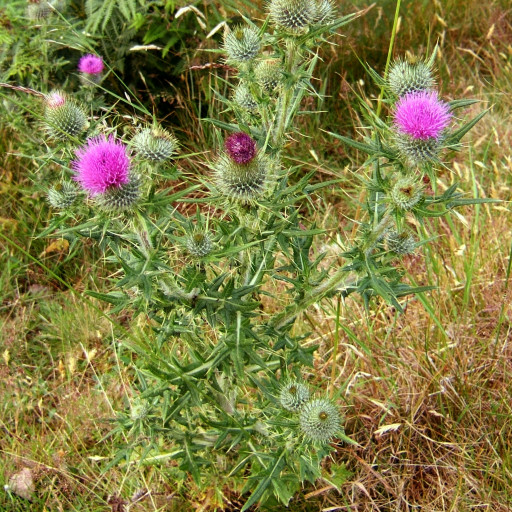
- 🌿 The Foliage: The leaves are deeply lobed, dark green, and finished with long, needle-sharp spines. The surface feels sandpapery, while the underside is covered in soft, white hairs.
- 🌸 The Bloom: The flower heads are large, "winged" globes topped with a dense brush of vibrant purple or pinkish florets. They look like colorful pincushions sitting in a protective green armor.
- 📏 The Stem: Unlike many other plants, the stems have "wings"—prickly, leafy ridges that run vertically along the stalk, making it nearly impossible to grab with bare hands.
🏡 In Your Garden
- 🦋 The Pollinator Café: If you have the space to let one grow in a wild corner, you will be rewarded with a parade of nature. It is a primary food source for the Painted Lady butterfly and provide "thistledown" for birds to line their nests.
- 🌱 The Taproot Challenge: This plant is a biennial, meaning it spends its first year as a flat rosette on the ground and its second year flowering. Because it has a massive, deep taproot, it is notoriously difficult to transplant or pull out once established.
- 🌾 Soil Indicator: Bull Thistles thrive in nitrogen-rich, disturbed soil. If they are popping up frequently, it’s often a sign that your soil is highly fertile but perhaps a bit compacted.
⚠️ Safety & Toxicity
- 🧤 Physical Hazard: While the plant is not chemically toxic or poisonous to the touch, the spines are formidable. They can easily pierce thin gardening gloves and cause painful skin irritation or "prickle-rash."
- 🐾 Pet & Livestock Safety: It is generally non-toxic if ingested, but the sharp spines usually act as a natural deterrent for curious dogs and cats. In pastures, it can be a nuisance as livestock will graze around it, allowing the thistle to spread.
✨ Fun Fact
⚔️ The Guardian of Scotland: Legend has it that in the 13th century, Norse invaders tried to sneak up on a Scottish camp barefoot at night. One soldier stepped on a Bull Thistle, let out a yell of pain, and alerted the Scots to the attack. The Scots won the battle, and the thistle was honored as the national emblem ever since!

Detailed Care Instructions
| Lighting | Full Sun |
| Toxicity | Poisonous |
To grow Cirsium Vulgare, also known as common thistle, follow these steps:
- Select a suitable location: Common thistle prefers full sun, so choose a sunny spot in your garden. It can tolerate a variety of soil types but prefers well-draining soil.
- Prepare the soil: Loosen the soil and remove any weeds or rocks. If the soil is heavy clay or compacted, consider adding organic matter, such as compost or well-rotted manure, to improve drainage and fertility.
- Sow seeds or transplant seedlings: Cirsium Vulgare can be grown from seeds or purchased as seedlings. Sow the seeds directly into the prepared soil in early spring or late fall. If transplanting seedlings, plant them at the same depth as they were in their containers, making sure to space them 12-18 inches apart.
- Water regularly: Keep the soil consistently moist but not waterlogged. Water deeply once or twice a week, depending on rainfall, to encourage healthy root growth.
- Mulch around the plants: Apply a layer of organic mulch around the base of the plants to help retain moisture, suppress weeds, and regulate soil temperature.
- Provide support if needed: Some species of Cirsium Vulgare can grow tall and may require support to prevent them from flopping over. Depending on the variety, you may need to stake or install a trellis nearby.
- Manage weeds: Despite being a hardy plant, common thistle can still be susceptible to competition from other aggressive weeds. Regularly weed the area around the plants to prevent them from being overshadowed or choked out.
- Monitor for pests and diseases: While Cirsium Vulgare is generally resistant to most pests and diseases, keep an eye out for common garden pests like aphids or slugs. If necessary, treat with organic pest control methods.
- Allow seed heads to develop (optional): If you want to collect seeds or attract wildlife, you can allow some of the flowers to go to seed. However, be aware that this may lead to self-seeding and potentially invasive growth in some regions.
Remember that Cirsium Vulgare, although it has beautiful purple flowers, can be considered invasive in some areas. Be sure to check with your local agricultural extension or invasive plant organization to ensure it is suitable for your region and to prevent spreading it unintentionally.

Place in a window with dappled sun or a spot in the middle of a room. Or directly in a window facing west or east.

To properly water this plant, you should first assess the amount of moisture the soil has. You can do this by sticking your finger into the soil about an inch or so. If it feels dry, it's time to water.
When watering, make sure to give the plant a deep watering rather than a shallow one. You want the water to reach the roots, which can be several inches below the surface.
To avoid getting the leaves wet, it is best to water at the base of the plant. You can use a watering can or a hose with a diffuser attachment.
During the growing season, you should aim to water this plant once a week. However, if there are periods of drought or extreme heat, you may need to water more frequently.
Overall, it's important to pay attention to the soil moisture and adjust your watering schedule accordingly. This will help ensure that your plant is healthy and thriving.
- Choose a well-draining soil that is rich in organic matter.
- Amend the soil with a balanced fertilizer high in nitrogen, phosphorus, and potassium.
- Apply fertilizer in early spring before new growth appears.
- Use a slow-release fertilizer to avoid burning the plant.
- Apply the fertilizer according to package instructions for the appropriate amount and frequency.
- Water the plant well after fertilizing to ensure the fertilizer gets to the roots.
- Avoid over-fertilizing as it can lead to excessive growth and disease susceptibility.
- Monitor the plant for signs of nutrient deficiencies, such as yellowing leaves, and adjust the fertilizing schedule accordingly.
For optimal growth and health of the Cirsium Vulgare plant, it is recommended to use a well-draining soil that is high in organic matter and has a neutral to slightly acidic pH level. An ideal soil mix can be created by combining equal parts of peat moss, perlite, and compost. This will provide a loose, light, and nutrient-rich soil that promotes healthy root growth and allows for proper air circulation. It is important to avoid using heavy clay soils or soils that are prone to waterlogging, as they can lead to root rot and other issues. Additionally, regular fertilization with a balanced, slow-release fertilizer can help to provide the necessary nutrients for optimal growth and blooming of the Cirsium Vulgare plant.
To propagate this particular plant, you can start by harvesting the seeds from mature flowers. Allow the seedheads to dry out on the plant and then carefully remove them and collect the seeds. After collecting the seeds, you can either directly sow them in the soil or start them indoors in a seed tray.
To start the seeds indoors, moisten a seed-starting soil and press them lightly into the surface of the soil. Cover the seeds with a small amount of soil and mist with water. Place the seed tray in a warm, bright spot and keep the soil moist until the seeds germinate.
Once the seedlings have grown large enough, they can be carefully transplanted into larger pots or directly into the garden. It's important to space the seedlings at least a foot apart to allow them ample growing room.
Another way to propagate Cirsium Vulgare is by taking stem cuttings. Select healthy, young shoots and cut them just below a node. Remove the lower leaves, leaving only a few on the top. Dip the end of the cutting into rooting hormone and plant it in a pot filled with moist soil. Place the pot in a bright, warm spot and keep the soil moist until roots form.
Transplant the rooted cuttings into larger pots or directly into the garden after they have become established.
Common pests of the spear thistle include Spider mites, aphids. Make a habit of checking your spear thistle frequently for pests so that any infestations can be caught and managed early.








