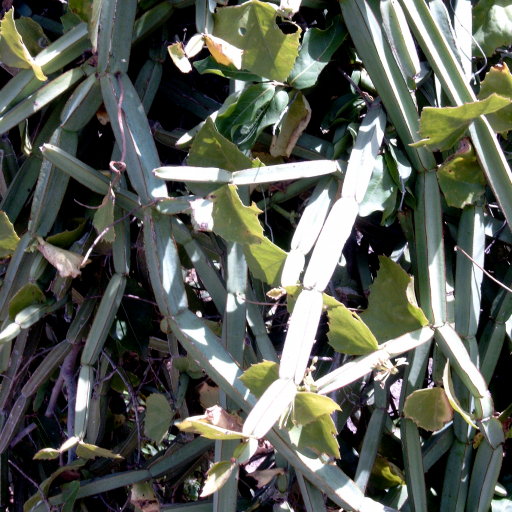
Plant Overview
Known as the "Veldt Grape" or "Devil’s Backbone," this peculiar succulent-like climber looks like it was designed by a minimalist architect. Native to tropical regions of Africa and Asia, it has been a staple in Ayurvedic medicine for centuries, earning the nickname "Bone Setter." Its striking, geometric stems make it a favorite for collectors who love plants that look more like living sculptures than traditional greenery.
🔍 How to Identify
- 🟩 Geometric Stems: The most defining feature is its thick, fleshy, and distinctly four-angled (quadrangular) stems that look like a chain of square green links.
- 🌿 Sparse Foliage: It produces small, heart-shaped leaves at the nodes, though it frequently drops them during dry spells to conserve moisture, leaving only the green "skeleton."
- 🧶 Whip-like Tendrils: Long, wiry tendrils emerge from the corners of the stems, which the plant uses to hitch a ride on trellises or nearby branches.
🏡 In Your Garden
- ☀️ Light Lover: This plant is a sun-worshipper. It thrives in bright, direct light, which helps keep the growth compact and the stems a vibrant, deep green.
- 🏜️ Drought Defier: Because its stems are designed for water storage, it is incredibly forgiving. It prefers the "soak and dry" method—wait until the soil is completely parched before watering again.
- 🪴 Trellis Training: While it can trail from a hanging basket, it is naturally a climber. Providing a moss pole or a small trellis allows you to see its architectural "joints" in their full glory.
⚠️ Safety & Toxicity
- 🌵 Mild Irritant: The sap contains calcium oxalate crystals. While it isn't considered highly poisonous, the sap can cause skin itching or redness upon contact for those with sensitive skin.
- 🐾 Pet Safety: If ingested by curious cats or dogs, it can cause mouth irritation and drooling. It’s best displayed on a high shelf or in a hanging pot away from nibbling pets.
✨ Fun Fact
In ancient Sanskrit, this plant is called Asthisamharaka, which literally translates to "that which saves the bones." Modern studies have actually investigated its ability to speed up the healing process of bone fractures!

Detailed Care Instructions

Place in a bright room that is sun drenched almost all day. Or directly in a south-facing window.

When the top few inches of soil dry out, water your plants. If the top few inches of soil are still moist, do not water your plant. Wait a few days, then poke your finger into the soil to see if anything has changed. Overwatering poses a disease risk, such as the development of fungal diseases in the roots. These plants have adaptations in there leaves that allow them to survive in low water supply.
Without the need of fertilizer, these plants can thrive and bloom. If a plant requires fertilization, it will display indicators of nutrient insufficiency, such as yellowing leaves. It is safe to apply slightly diluted fertilizers in these circumstances. Over fertilizing, on the other hand, should be avoided because excess nutrients might cause plant mortality. Slow-release fertilizers are therefore advised for these plants.
You may use Cactus Fertilizer for your Cissus Quaddrangularis
Common pests of the cissus quaddrangularis include Mealybugs, spider mites, thrips. Make a habit of checking your cissus quaddrangularis frequently for pests so that any infestations can be caught and managed early.







