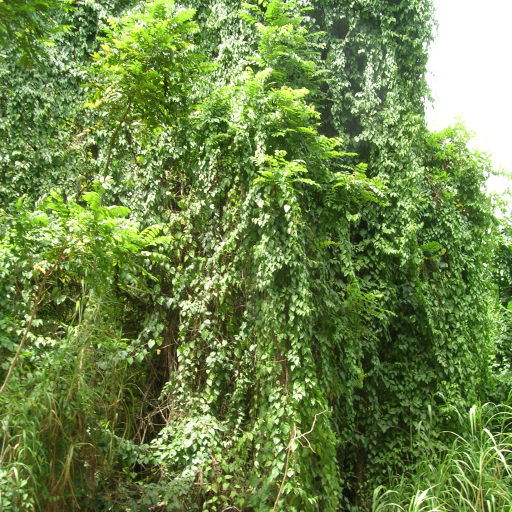
Plant Overview
Often called the Princess Vine or Season Vine, Cissus verticillata is a dramatic tropical climber known for its incredible ability to create living "curtains." Originally from the Caribbean and Central America, it is famous for its long, thread-like aerial roots that dangle from tree canopies like a botanical veil. Whether it’s draped over a fence or scaling a patio trellis, this vine brings an instant "jungle aesthetic" to any space.
🔍 How to Identify
- 🌿 The Leaves: Features glossy, heart-shaped or oblong leaves with slightly serrated (toothed) edges. They are typically a bright, vibrant green.
- 🧶 Aerial Roots: The most striking feature—long, slender, reddish-brown roots that grow downward from the stems toward the ground, looking like hanging strings.
- 🍇 The Fruit: Produces small, grape-like clusters of berries that transition from green to a deep, waxy black when mature.
🏡 In Your Garden
- 🧗 The Climber's Ambition: This is a vigorous grower that uses tendrils to hitchhike onto nearby structures. It is perfect for covering unsightly chain-link fences or creating a "living wall" on a sturdy trellis.
- ✂️ Maintenance Needs: Because it grows so fast, it requires regular "haircuts." If left unchecked, it can easily overwhelm slower-growing garden neighbors or even weigh down light structures with its mass.
- 💧 Humidity Lover: While it is surprisingly drought-tolerant once established, it produces those iconic hanging roots much more prolifically in humid environments.
⚠️ Safety & Toxicity
- 🚫 Status: Mildly toxic and skin-irritating.
- 🐾 Details: The sap of the Princess Vine contains calcium oxalate crystals. Touching the sap can cause skin redness or itching for some gardeners. If ingested by pets or curious children, it can cause swelling of the mouth and digestive upset. It is best handled with gloves during heavy pruning.
✨ Fun Fact
In many tropical regions, this plant is nicknamed the "Medicinal Grape." While the berries aren't for snacking, traditional folk medicine has used extracts from the stems and leaves to create skin washes, and in some cultures, the crushed stems are even used as a natural substitute for soap!

Detailed Care Instructions
Here is a step-by-step guide to growing Cissus Verticillata (also known as Princess Vine or Kangaroo Vine):
- Obtain a healthy cutting or start with seeds: Cissus Verticillata can be propagated through stem cuttings or from seeds. If using stem cuttings, choose a healthy vine with several leaves and make a clean cut just below a leaf node. If starting from seeds, follow the instructions on the packet.
- Prepare a suitable pot and soil: Select a well-draining pot with drainage holes at the bottom. Fill the pot with a well-draining soil mix that is rich in organic matter. A mix of perlite, peat moss, and potting soil works well.
- Insert the cutting or sow the seeds: If using a cutting, insert it into the prepared soil mix by pushing the cut end about 2 inches deep into the soil. If using seeds, follow the instructions on the packet for sowing depth and spacing.
- Provide the right environmental conditions: Cissus Verticillata thrives in bright, indirect light. Place the pot in a location with filtered sunlight or partial shade. Avoid direct sunlight, as it can scorch the leaves. Maintain a temperature range of 65-80°F (18-27°C) for optimal growth.
- Watering routine: Keep the soil evenly moist but not soggy. Water the plant when the top inch of soil feels dry to the touch. Avoid overwatering, as it can lead to root rot.
- Fertilize the plant: Feed your Cissus Verticillata with a balanced liquid fertilizer during the growing season (spring and summer). Follow the instructions on the fertilizer package for dosage and frequency.
- Training and support: As the vine grows, it will need support to climb. You can provide a trellis, stakes, or a moss stick for the tendrils to cling to. Regularly train and prune the plant to maintain the desired shape and prevent it from becoming unruly.
- Monitor for pests and diseases: Keep an eye out for common houseplant pests like mealybugs, scale, and spider mites. If any are detected, treat the plant with an appropriate insecticide or use organic pest control methods.
- Repotting: Cissus Verticillata prefers to be slightly pot-bound, so it does not require frequent repotting. Repot into a slightly larger pot only when necessary, usually every 1-2 years.
With proper care and attention, your Cissus Verticillata plant should grow and thrive, creating an attractive display of trailing vines and delicate leaves.

Place in a window with dappled sun or a spot in the middle of a room. Or directly in a window facing west or east.

To water the plant in question, make sure to check the soil moisture level before watering. Stick your finger into the soil to about an inch deep, and if the soil feels dry, it's time to water. Use a watering can or hose with a gentle stream to avoid disturbing the roots or soil. Water the soil thoroughly until you see water coming out of the drainage holes at the bottom of the pot or container. Avoid overwatering to prevent root rot and other diseases. Watering frequency may vary depending on the plant's environment, such as humidity, temperature, and sunlight. Always observe the plant's behavior and make adjustments accordingly.
- Use a balanced fertilizer, such as a 10-10-10, during the growing season.
- Apply the fertilizer according to package instructions.
- Water the plant thoroughly after fertilizing to help distribute the nutrients.
- Avoid over-fertilizing, as this can lead to root burn and other issues.
- Monitor the plant's growth and adjust fertilization as needed.
For optimal growth, the plant requires a well-draining, nutrient-rich soil mixture that is slightly acidic to neutral in pH. A recommended soil mixture includes a combination of perlite, peat moss, and compost, mixed in equal parts. The soil should be kept moist, but not overly wet, as this can cause root rot and other issues. A layer of mulch on top of the soil can help retain moisture and provide additional nutrients to the plant. It is also important to fertilize the plant regularly with a balanced, water-soluble fertilizer to ensure healthy growth.
To propagate this particular plant, you will need to take a stem cutting from a healthy and mature plant. Choose a stem that is about 4-6 inches long, and make sure it has at least 2-3 nodes (where leaves or branches grow out from the stem).
Use a clean and sharp pair of scissors or pruning shears to make a clean cut just below a node. Then remove any leaves or branches from the lower part of the stem, leaving only 1-2 leaves at the top.
Prepare a small pot or container with well-draining soil mix. You can also mix in some perlite or sand to improve drainage. Make a small hole in the center of the soil, and insert the stem cutting into the hole. Gently press the soil around the stem to secure it in place.
Water the cutting thoroughly, until the soil is moist but not waterlogged. You can cover the pot with a plastic bag or clear plastic wrap to create a mini greenhouse effect, which will help retain moisture and encourage rooting.
Place the pot in a warm and bright location, but away from direct sunlight. Check the soil regularly and water when it feels dry to the touch. Do not let the soil dry out completely, but also avoid over-watering which can cause fungal diseases or rot.
After a few weeks, you should start to see new growth and roots forming from the stem cutting. Once the plant is well-established and has several leaves and branches, you can transplant it into a larger pot or outdoors in a suitable location.
Common pests of the princess vine include Mealybugs, spider mites, thrips. Make a habit of checking your princess vine frequently for pests so that any infestations can be caught and managed early.








