Plant Overview
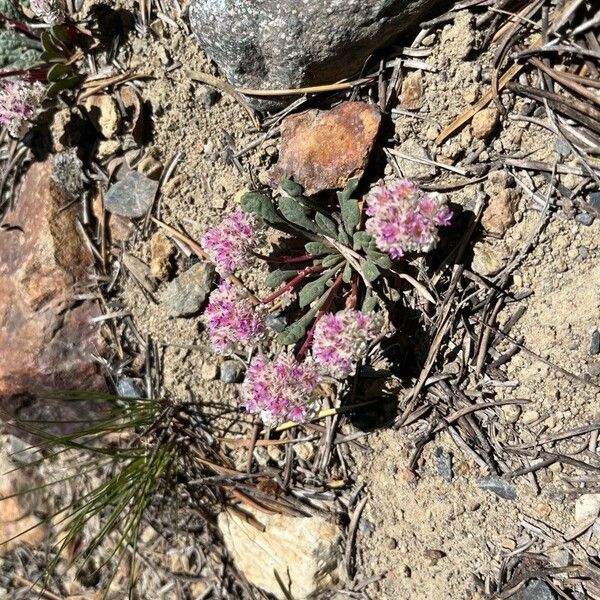
Often called "Pussy-paws," this charming wildflower looks exactly like its name suggests: soft, fluffy little feline feet resting on a bed of green. Native to the high-altitude landscapes of Western North America, it has a rugged soul hidden beneath its cuddly appearance. It is a favorite for rock gardeners and hikers who frequently stumble upon its cozy, sprawling mats in sandy, sun-drenched mountain clearings.
🔍 How to Identify
- 🐾 The "Paw" Flowers: The plant features tight, rounded clusters (umbels) of white-to-pink flowers. Long, silken stamens protrude from the petals, giving the blooms a distinctively fuzzy, "furry" texture.
- 🍃 Succulent Rosettes: The leaves are thick, fleshy, and paddle-shaped. They grow in a tight circular "rosette" that hugs the ground closely to conserve moisture and stay warm.
- 🍷 Radiating Stems: The flower stems often grow horizontally at first, radiating outward from the center like the spokes of a bicycle wheel before lifting their fuzzy heads toward the sky.
🏡 In Your Garden
- 🏜️ Drainage is Vital: Because it naturally thrives in volcanic ash and sandy mountain slopes, this plant will rot quickly in heavy clay. It craves "lean," gritty soil where water moves through almost instantly.
- ☀️ The Hot Spot: Pussy-paws are perfect for that "problem area" in a rock garden where the sun is intense and the soil is poor. It is a pioneer species, meaning it loves to colonize bare ground where other plants struggle to survive.
- 🏔️ Low Competition: While it is incredibly drought-tolerant, it is a sensitive neighbor. Avoid planting it near aggressive groundcovers or tall perennials that might shade it out or crowd its low-lying rosettes.
⚠️ Safety & Toxicity
- 🟢 Generally Safe: Cistanthe umbellata is not considered toxic to humans, cats, or dogs. It is a peaceful addition to a nature-focused backyard.
- 🧤 Delicate Structure: Though it lives in harsh environments, the plant itself is physically fragile. Its fleshy leaves can snap or bruise easily, so it should be placed in areas away from foot traffic or heavy-handed weeding.
✨ Fun Fact
Pussy-paws are "thermonastic," meaning their stems move in response to temperature. On cold mornings, the stems lay flat against the ground to soak up the earth's trapped warmth. As the sun heats the air, the stems rise upward to keep the flowers cool and visible to pollinators!

Detailed Care Instructions
To grow Cistanthe Umbellata plants, also known as summer forget-me-nots, you can follow these steps:
- Choose a suitable location: Cistanthe Umbellata prefers full sun to partial shade. Ensure there is well-draining soil in the chosen spot.
- Prepare the soil: Loosen the soil in the planting area, removing any weeds or rocks. Mix in some organic compost or well-rotted manure to enrich the soil.
- Sow the seeds: Scatter the seeds directly on the soil surface, as they need light to germinate. Do this in early spring or late fall for best results.
- Press the seeds into the soil: Gently press the seeds down into the soil so that they come in contact with it. However, do not cover them with additional soil, as they require light for germination.
- Water regularly: Keep the soil consistently moist until the seeds germinate and the plants establish. Watering every few days or as needed is usually sufficient.
- Thin the seedlings: Once the seedlings emerge and grow a few inches tall, thin them out to provide enough space for each plant to grow. Space them about 6-8 inches apart.
- Provide ongoing care: Continue to water the plants regularly, especially during dry periods. Avoid overwatering, as it may lead to root rot. In terms of fertilization, a balanced, slow-release fertilizer applied once a year may be beneficial.
- Enjoy the blooms: Cistanthe Umbellata plants typically produce clusters of delicate pink or white flowers from late spring into summer. These blooms attract pollinators like bees and butterflies.
Remember to monitor the plants for any pests or diseases and address issues promptly. With proper care, your Cistanthe Umbellata plants should thrive and add beauty to your garden.

Place in a bright room that is sun drenched almost all day. Or directly in a south-facing window.

To properly water this plant, it is important to first understand its watering needs. This plant prefers moist but well-draining soil, and can be sensitive to overwatering.
To water Cistanthe Umbellata, you should first check the soil moisture level by sticking your finger about an inch deep into the soil. If the soil feels dry at this depth, it is time to water.
When watering, avoid getting water on the foliage and instead aim to water the soil directly at the plant's base. Slowly pour water onto the soil until it begins to drain out the bottom of the pot. Allow the pot to drain fully before returning it to its saucer.
It is important not to let the soil become too saturated, as this can lead to root rot. You can help prevent overwatering by ensuring the plant's pot has proper drainage holes and by allowing the soil to dry out slightly between waterings.
To fertilize this plant, use a balanced fertilizer with equal parts nitrogen, phosphorous, and potassium. Apply the fertilizer in early spring just as the plant begins to emerge from its dormancy period. Afterward, apply the fertilizer once a month during the growing season until autumn. Be careful not to overfertilize, as this can damage the plant. Water the plant thoroughly after fertilization to help the nutrients penetrate the soil.
The ideal soil for Cistanthe Umbellata plant is a well-draining soil that is rich in organic matter. It needs a soil that is able to retain moisture but doesn't get waterlogged, as this can cause root rot. A pH level between 6.0 and 7.0 is optimal. It thrives in sandy soil with a mix of loam. A light soil with plenty of organic matter matter is beneficial, especially in dry areas. It grows best in soils that are nutrient-rich, and regularly fertilizing the plant should improve its growth. Additionally, adding soil amendments like compost and peat moss can also improve the soil quality.
To propagate this plant, start by collecting seeds from mature plants in the wild or from your own plant if it has produced seeds. You can also take stem cuttings in late spring or early summer.
For seed propagation, sow the seeds in a well-draining potting mix in early spring and cover with a thin layer of soil. Keep the soil moist but not waterlogged and place the container in a warm, bright location. The seeds should germinate in 2-3 weeks. Once they have grown to a suitable size, transplant the seedlings to individual pots or directly into the ground.
For stem cuttings, select a healthy stem and cut a section that is 2-4 inches long. Remove the leaves from the bottom half of the cutting and place it in a pot with well-draining potting mix. Water the cutting and place it in a warm, bright location out of direct sunlight. The cutting should root within a few weeks, and once it has developed a strong root system, it can be transplanted to its permanent location.








