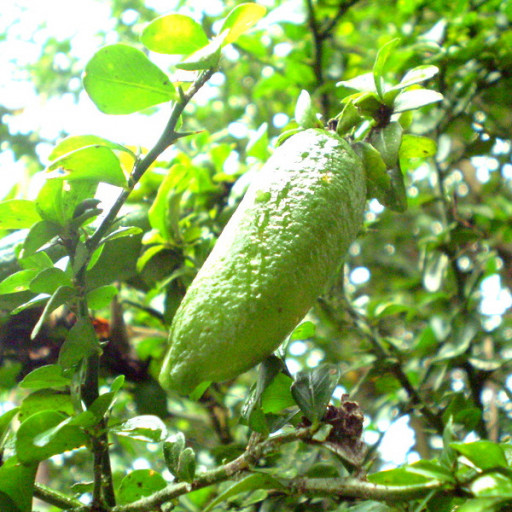
Plant Overview
Known widely as the "Caviar Lime" or the Australian Finger Lime, this unique citrus species is the crown jewel of the Australian rainforest. Unlike the round oranges or lemons we see in supermarkets, this plant produces elongated, finger-shaped fruits filled with tiny, translucent juice pearls. In high-end culinary circles, these pearls are prized for their "popping" sensation, releasing a burst of tart lime flavor that doesn't sog down the dish.
🔍 How to Identify
- 🍃 Small, Dainty Foliage: The leaves are significantly smaller than traditional citrus, often less than an inch long, giving the shrub a delicate, fine-textured appearance.
- 🧤 Thorny Defense: Watch your hands! The branches are heavily armed with sharp, slender thorns that emerge from the leaf axils.
- 🍋 The "Finger" Fruit: The fruit is unmistakable—cylindrical and roughly the size of a human finger, with skin colors ranging from vibrant green and yellow to deep purple or even black.
- 🌸 Blush Blossoms: It produces tiny, star-shaped white or pale pink flowers that carry a subtle, sweet citrus fragrance.
🏡 In Your Garden
- 🌱 Sensitive Roots: The Finger Lime has a sensitive taproot system and absolutely hates being transplanted once established. If you are growing it in a pot, choose a large one from the start to avoid moving it later.
- 🛡️ Natural Protection: Because of its dense, thorny growth habit, it makes an excellent "living security fence" or hedge that provides a safe nesting habitat for small birds away from predators.
- 💧 Rainforest Roots: Coming from the understory of subtropical forests, it enjoys high humidity and protection from harsh, drying winds which can scar the delicate fruit.
⚠️ Safety & Toxicity
- ✅ Safe for Consumption: The fruit is edible and highly nutritious, packed with Vitamin C and antioxidants.
- 🐾 Pet & Child Safety: While the plant is non-toxic if nibbled, the primary danger is physical. The thorns are incredibly sharp and hidden among the leaves, making it a "look but don't touch" plant for curious pets and toddlers.
- 🍋 Rind Oils: Like most citrus, the oils in the peel can occasionally cause mild skin irritation or photosensitivity in sensitive individuals if handled in direct sunlight.
✨ Fun Fact
Molecular biologists have discovered that Finger Limes possess a natural resistance to "Citrus Greening" (HLB), a disease currently devastating orange groves worldwide. This makes them a "super-plant" that scientists are studying to help save the future of our breakfast orange juice!

Detailed Care Instructions
| Lighting | Full Sun |
To grow a Citrus australasica plant, also known as the finger lime or caviar lime, follow these steps:
- Selection of seeds or seedlings: Choose healthy seeds or seedlings from a reputable nursery or supplier. Ensure they are disease-free and of good quality.
- Container selection: Citrus australasica plants can be grown in containers or directly in the ground. If growing in a container, choose one that has drainage holes to prevent waterlogging.
- Soil preparation: Finger limes prefer well-draining soil with a slightly acidic pH (around 6.0 to 6.5). Mix equal parts of potting soil, perlite, and sand to create a well-draining, nutrient-rich soil mixture.
- Planting depth: Plant the seeds or seedlings at a depth of about 0.5 inches (1.3 cm) in the soil. If planting multiple seeds, space them a few inches apart.
- Watering: Keep the soil consistently moist but not waterlogged. Finger limes require regular watering, especially during the growing season. Reduce watering during the winter months.
- Sunlight requirements: Place your plant in a sunny location where it can receive at least 6-8 hours of direct sunlight per day. If growing indoors, ensure the plant receives ample sunlight or place it under grow lights.
- Fertilization: Apply a slow-release citrus fertilizer to the soil every 2-3 months during the growing season. Follow the package instructions for proper application rates.
- Pruning: Prune any dead or diseased branches to maintain the plant's health. Additionally, shaping the plant by selective pruning can be done for aesthetic purposes.
- Pests and diseases: Monitor your plant for common citrus pests such as aphids, scale insects, and mites. Use organic methods or insecticidal soaps to control infestations. Citrus trees are susceptible to diseases like citrus canker or citrus greening. If detected, consult with a local extension office for proper treatment.
- Harvesting: Citrus australasica fruit is ready to harvest approximately 12-18 months after planting. The fruits will change color from green to their specific variety color when ripe. Gently twist or clip the fruits off the tree to avoid damaging the branches.
By following these steps, you can successfully grow a Citrus australasica plant and enjoy its unique finger-like fruits. Remember to provide the plant with adequate care, and be patient as it can take a couple of years for the plant to establish and bear fruits.

Place in a window with dappled sun or a spot in the middle of a room. Or directly in a window facing west or east.

Citrus Australasica is a plant that requires regular watering to thrive. The best way to water this plant is to ensure that the soil is evenly moist but not waterlogged. This can be achieved by watering deeply, then allowing the soil to dry out slightly before watering again. It is important to avoid letting the soil completely dry out or becoming too waterlogged, as this can lead to problems such as leaf drop, wilting, or root rot. The frequency of watering will depend on several factors such as the size of the plant, pot size, and environmental conditions. It is recommended to check the soil moisture regularly by sticking your finger about an inch into the soil. If it feels dry, then it's time to water. Consider using a moisture meter to help gauge the level of moisture in the soil. When watering, use room temperature water and pour it straight into the soil until it reaches the bottom of the pot. Avoid getting water on the foliage to prevent fungal diseases. In general, Citrus Australasica will require more water in hotter, drier weather and less water in cooler, more humid conditions. As the plant grows, adjust the watering frequency accordingly to ensure it remains healthy and lush.
When fertilizing this plant, it is important to use a balanced fertilizer that contains nitrogen, phosphorus, and potassium. The fertilizer should also have a trace amount of micronutrients such as iron, copper, and zinc. During the growing season, fertilize every two weeks with a diluted solution of the fertilizer. In winter, fertilize once a month. Always follow the manufacturer's instructions for the amount of fertilizer to use. Over-fertilizing can lead to damage to the plant and under-fertilizing can lead to slow growth.
The recommended soil composition for the plant should have a slightly acidic pH level, ranging between 5.5 to 7.5, as it prefers soil with a low to moderate pH level. The soil should also be well-draining to prevent waterlogging, which can cause root rot. Sandy loam or loamy soil is preferred for the plant's growth and development, and adding organic matter such as compost or peat moss can improve the soil's fertility. Additionally, the soil should be rich in nutrients such as potassium, phosphorus, and nitrogen, which are essential for the plant's growth and fruit production. A regular application of citrus-specific fertilizer is recommended to ensure the plant receives the necessary nutrients to thrive.
To propagate this plant, take cuttings from the parent plant, using a sharp and sterile pair of pruning shears. Choose a healthy stem, about 4-6 inches in length, and make a clean cut just below a node. Remove the leaves from the lower half of the stem to provide better conditions for rooting.
Once you have your cuttings, dip the cut end into a rooting hormone powder to encourage root growth. Then, plant the cutting into a well-draining potting mix, burying the lower half of the stem, and water thoroughly.
Place the pot in a warm, humid location, where it will receive indirect sunlight. Keep the relative humidity around the cutting by using a plastic bag or a covered container. Ensure the soil is moist but not waterlogged, checking frequently and watering as needed.
After 4-6 weeks, your cutting should start showing signs of new growth, such as small leaves and roots. Once the new plant is growing well, it can be transplanted into its permanent home. Remember to continue providing it with proper care, including a well-draining soil mix, regular watering, and bright, indirect light.
Common pests of the australian finger lime include Scale insect, mealybugs, spider mites, aphids. Make a habit of checking your australian finger lime frequently for pests so that any infestations can be caught and managed early.








