Plant Overview
Known as the "Desert Lime," Citrus glauca is the ultimate survivor of the citrus world. Native to the arid outback of Australia, this resilient shrub has traded the lush, broad leaves of its cousins for a narrow, silvery silhouette designed to withstand scorching heat and drought. It is a favorite among "bushfood" foragers and gardeners looking for a tough, architectural plant with a gourmet kick.
🔍 How to Identify
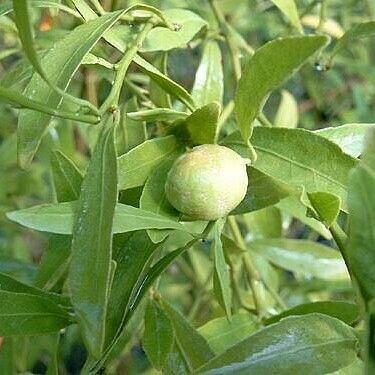
- 🍃 The Leaves: Unlike standard citrus, the leaves are tiny, leathery, and grey-green (glaucous). This waxy coating helps the plant retain moisture in high-evaporation environments.
- 🌵 Armed Branches: In its youth, the plant is heavily guarded by long, needle-like thorns. As the tree matures and grows above the reach of grazing animals, it often becomes less "thorny."
- 🍋 The Fruit: It produces small, marble-sized green or yellow fruits. Notably, these fruits have very thin skins and almost no pith, meaning they can be eaten whole for an instant burst of tart, lime-like flavor.
🏡 In Your Garden
- 🏜️ Drought Strategy: This plant is famous for its deep taproot, which seeks out underground water. Because of this, it is notoriously difficult to transplant once established—always pick a "forever home" with sandy, well-draining soil.
- ☀️ Heat and Light: To get a good harvest, the Desert Lime needs full, baking sun. While it is surprisingly frost-tolerant for a citrus, a lack of heat will result in a stunted plant with little to no fruit.
⚠️ Safety & Toxicity
- ✅ Safe for Consumption: The fruit is highly acidic and vitamin-rich, safe for humans to eat raw or cooked into marmalades and sauces.
- 🐾 Pet Caution: While the fruit is non-toxic, the sharp thorns are a significant physical hazard for pets. Additionally, like all citrus, the leaves contain essential oils that can cause digestive upset in cats and dogs if chewed.
✨ Fun Fact
The Desert Lime is the fastest-growing citrus species in the world! It has evolved to "bolt" during brief rainy seasons, quickly putting on new growth and flowers before the desert dry returns.

Detailed Care Instructions

Place in a bright room that is sun drenched almost all day. Or directly in a south-facing window.

Some plants require more regular watering than others, which should be done every few days. It's critical to maintain the soil moist all of the time. The water requirements of the same plant placed in pots with varying sizes will differ. Because the water in the smaller pot evaporates faster than the water in the larger pot, it will require more watering. Regardless of pot size, the surface should constantly be maintained moist.







