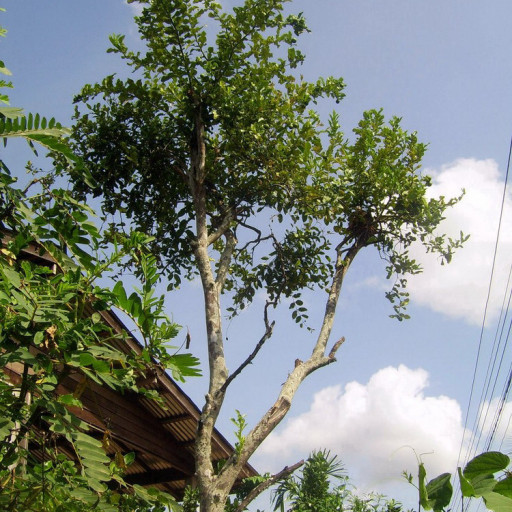
Plant Overview
Known as the "Makrut Lime" or the "Double Leaf Plant," Citrus hystrix is the aromatic soul of Southeast Asian cuisine. Unlike most citrus trees grown for their juice, this plant is cherished for its incredibly fragrant, hourglass-shaped leaves and its uniquely bumpy, brain-like fruit. In many cultures, it is believed to ward off bad luck and cleanse the spirit, making it a staple in both the kitchen and the garden.
🔍 How to Identify
- 🍃 The "Double" Leaf: The most striking feature is the leaf, which looks like two leaves joined end-to-end. This "winged petiole" creates a distinct hourglass silhouette.
- 🟢 Warty Fruit: The limes are dark green, small, and covered in deep ridges and bumps, looking more like a rough stone than a smooth lemon.
- ⚔️ Sharp Spines: Look closely at the stems; this plant protects itself with short, stiff, and very sharp thorns hidden among the foliage.
🏡 In Your Garden
- 🪴 Container Champion: Because it grows slowly and reaches a modest size, it is a perfect candidate for large pots. This allows you to move it indoors if temperatures drop, as it has a low tolerance for frost.
- 💦 Drainage is Vital: This plant suffers quickly from "wet feet." It prefers a gritty, well-draining soil mix. If the roots sit in water, the leaves will yellow and drop almost overnight.
- ✂️ Harvesting Nuance: When picking leaves for cooking, try to snip entire small branches rather than individual leaves. This encourages the plant to bush out and produce more of that prized aromatic foliage.
⚠️ Safety & Toxicity
- 🌵 Physical Hazard: The thorns are sharp and can easily puncture skin. Wear gloves when pruning or moving the pot.
- 🐾 Pet Safety: Like most citrus, the essential oils (limonene) and psoralens found in the leaves and fruit are toxic to dogs and cats if ingested in large quantities, potentially causing digestive upset.
- ☀️ Skin Sensitivity: The oils in the rind can cause "margarita burn" (phytophototoxicity). If you get the juice or oil on your skin and go into the sun, it may cause a blistering rash.
✨ Fun Fact
In traditional Thai medicine and culture, the juice of the Makrut lime was used as a natural shampoo. The high acidity and essential oils are excellent for cleaning the scalp and were historically believed to repel leeches while working in the fields!

Detailed Care Instructions
| Color | Green Shiny Foliage, White Flowers With Pink Spots |
| Soil Ph | 5.0-6.0 |
| Lighting | Full Sun |
| Toxicity | Toxic |
| Soil Type | Moist, Loamy, Well-Draining |
| Bloom Time | Year-Round In Appropriate Conditions |
| Plant Type | Broadleaf Evergreen, Perennial |
| Mature Size | Bushes Grow 6 To 35 Feet Long And 5 To 12 Feet Broad |
| Native Area | Southeast Asia |
| Sun Exposure | Full Sun, Partial Shade |
| Hardiness Zones | 9-12 |
Growing a Citrus Hystrix plant, also known as the Kaffir lime tree, is relatively easy. Here are some steps to help you grow this plant:
- Obtaining a plant: Purchase a healthy Citrus Hystrix plant from a local nursery or online retailer. You can also start from seed, but it may take longer to establish and produce fruit.
- Choose the right location: Find a suitable location for your plant. It requires at least 6-8 hours of direct sunlight daily. Ensure the area has good drainage as the roots don't like to stay constantly wet.
- Prepare the soil: Citrus Hystrix prefers well-draining soil with a slightly acidic pH (around 6.0-7.0). You can amend the soil with compost or organic matter to improve drainage and fertility.
- Planting: Dig a hole twice as wide and deep as the root ball. Gently remove the plant from its container and place it in the hole, ensuring the top of the root ball is level with or slightly above the ground. Backfill the hole with soil, firming it gently around the plant.
- Watering: Keep the soil consistently moist but not waterlogged. Water deeply, allowing the top layer of soil to dry out slightly before watering again. Avoid overwatering, as it can cause root rot.
- Fertilization: Use a citrus-specific fertilizer to provide nutrients to your plant. Follow the instructions on the packaging for application rates and timing. Feed regularly during the growing season (spring and summer) and reduce frequency during fall and winter.
- Pruning: Prune your Citrus Hystrix plant to maintain its shape and promote healthy growth. Remove any dead, damaged, or crossing branches. Pruning can be done in late winter or early spring, before new growth emerges.
- Pests and diseases: Monitor your plant for pests like aphids, scales, or mealybugs. If you notice any infestation, treat it early with organic insecticides or insecticidal soaps. Citrus Hystrix plants are generally resistant to diseases, but proper care and maintenance can prevent issues.
- Harvesting: Once your plant is mature, usually after a few years, you can start harvesting the aromatic leaves and fruit. The leaves are widely used in Southeast Asian cooking, while the fruit is less commonly used due to its bitter taste.
Remember to provide proper care, regular watering, and appropriate fertilization to promote healthy growth and optimal fruit production. With time and patience, a Citrus Hystrix plant can provide you with fresh and fragrant foliage for various culinary uses.

Place in a bright room that is sun drenched almost all day. Or directly in a south-facing window.

Citrus Hystrix plant should be watered regularly and thoroughly, ensuring that the soil is consistently moist but not waterlogged. The best way to determine when to water the plant is to check the soil moisture level by sticking your finger about an inch deep into the soil. If the soil feels dry to the touch, it is time to water the plant. It is important to avoid letting the soil dry out completely, as this can cause stress to the plant and lead to leaf drop or other issues. However, overwatering should also be avoided, as this can lead to root rot and other diseases. When watering the plant, use room temperature or slightly lukewarm water and avoid getting the leaves wet, as this can lead to fungal growth and other problems. It is also recommended to use a well-draining soil mix and to ensure that the plant is not sitting in standing water after watering.
- Choose a high-quality citrus fertilizer that is specifically formulated for acidic plants.
- Apply the fertilizer in the early spring, before new growth begins.
- Follow the instructions on the fertilizer packaging for the correct amount and method of application.
- Water the plant thoroughly after fertilizing to allow the nutrients to penetrate the roots.
- Monitor the plant throughout the growing season and fertilize again if necessary, but avoid over-fertilization, which can damage the plant.
Citrus Hystrix prefers well-draining soil with a pH level between 5.5 and 7.5. The soil should be nutrient-rich, with a high level of organic matter. A mixture of peat moss, perlite, and sand is often recommended to provide the appropriate drainage and nutrient levels. It is important to avoid soils that are heavy and retain too much moisture, as this can lead to root rot. Additionally, Citrus Hystrix should be planted in a location with full to partial sun exposure.
Citrus Hystrix is a tropical plant that can be propagated through several methods such as stem cuttings, air layering, and seed sowing.
To propagate the plant using stem cuttings, select a healthy branch that is about 10-12 inches long and has a few nodes. Remove the leaves from the lower half of the branch and dip the cut end in a rooting hormone powder. Plant the cutting in a well-draining potting mixture and keep it moist. After a few weeks, the cutting will start to root and new growth will appear.
For air layering, choose a healthy branch and make a small cut just below a node. Wrap wet sphagnum moss around the cut and wrap it with plastic wrap. Keep the moss moist and after a few weeks, roots will start to grow from the cut. Once the roots are about an inch long, cut the branch just below the roots and plant it in a potting mixture.
To propagate using seeds, sow the seeds in a potting mixture and keep it moist. The seeds will germinate in about 2-3 weeks and sprout new growth. Once the seedlings have grown a few inches tall, transplant them to individual pots.
Regardless of the propagation method used, Citrus Hystrix requires warmth and moisture to grow and thrive.
Common pests of the kaffir lime include Scale insect, mealybugs, spider mites, aphids. Make a habit of checking your kaffir lime frequently for pests so that any infestations can be caught and managed early.








