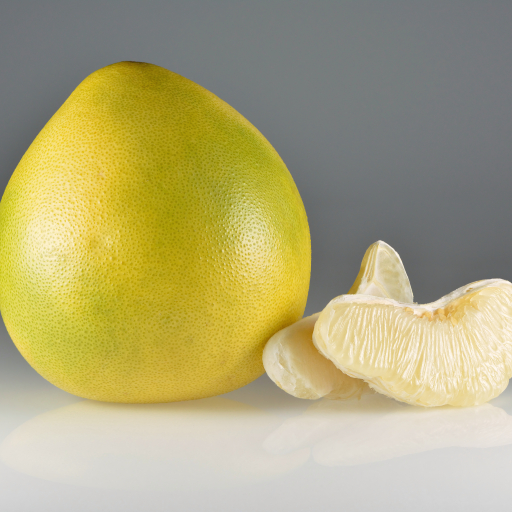
Plant Overview
The "Grandfather of Citrus," the Pomelo (Citrus maxima) is the largest and oldest ancestor of the citrus family. Often called the "Shaddock" after the sea captain who introduced it to the West Indies, this tree produces fruits that can grow as large as a soccer ball. Native to Southeast Asia, it carries a deep cultural significance, often representing prosperity and good fortune during Lunar New Year celebrations.
🔍 How to Identify
- 🍃 Winged Leaves: The dark green, glossy leaves feature a very distinct "winged" petiole—a smaller, heart-shaped leaf structure at the base of the main leaf.
- 🌸 Giant Blossoms: It produces some of the largest flowers in the citrus genus; they are creamy white, highly fragrant, and grow in clusters.
- 🍋 The Pithy Fruit: The fruit is often tear-drop or pear-shaped with an incredibly thick, spongy rind (pith) that protects the sweet, low-acid segments inside.
🏡 In Your Garden
- 🌳 Space Requirements: Unlike dwarf citrus varieties, the Pomelo is a vigorous grower that can reach 50 feet in height. It needs plenty of "elbow room" and should be planted away from power lines or structures.
- ☀️ Heat for Sweetness: While most citrus likes sun, the Pomelo specifically requires long, hot summers to develop its signature sweetness. In cooler climates, the fruit may remain sour or fail to ripen entirely.
- 💧 Sensitive Roots: It has a relatively shallow root system that hates "wet feet." Well-draining soil is a must, as standing water can quickly lead to root rot and yellowing leaves.
⚠️ Safety & Toxicity
- 🐾 Pet Warning: Like most citrus trees, the leaves, skin, and stems contain essential oils and psoralens that are toxic to dogs, cats, and horses if ingested, potentially causing digestive upset or skin irritation.
- 💊 Medication Interaction: Much like its descendant, the grapefruit, Pomelo contains compounds that can interfere with certain medications (such as statins). If you are on a restricted diet regarding grapefruit, consult a doctor before consuming Pomelo.
✨ Fun Fact
The Pomelo is one of the four "original" citrus species. Almost every citrus you eat today—including oranges, lemons, and grapefruits—is a hybrid descendant of the Pomelo, the Mandarin, the Citron, or the Papeda!

Detailed Care Instructions
| Humidity | Normal |
| Lighting | Full Sun |
| Difficulty | Medium |
| Hibernation | Cold Period |
| Temperature | 25°C - 30°C |
| Hardiness Zones | 11 - 12 |
To grow a Citrus Maxima plant, also known as pomelo, you can follow these steps:
- Obtain seeds or a young pomelo tree from a local nursery or online. Make sure the seeds or tree are of a healthy variety.
- Select a suitable location: Pomelo plants require full sun and well-drained soil. Choose a spot in your garden or a container with enough space for the plant to grow and receive at least 6-8 hours of sunlight each day.
- Prepare the soil: Use a high-quality potting mix or amend the garden soil with organic matter to improve drainage and fertility. Pomelos prefer slightly acidic soils, so consider adding compost or peat moss to achieve the desired pH level.
- Sow the seeds or plant the young tree: If you have seeds, plant them about 1 inch deep in the soil or a small pot. If you have a young tree, dig a hole in the ground or the container that is large enough to accommodate the root ball. Place the plant in the hole, making sure that it is at the same level it was growing before.
- Watering: Keep the soil consistently moist but not waterlogged. Water the plant deeply when the top inch of soil feels dry. Avoid overwatering as it can lead to root rot.
- Fertilization: Pomelo plants benefit from regular fertilization. Apply a balanced citrus fertilizer or a slow-release fertilizer specifically formulated for citrus plants according to the package instructions. Feed the plant every 4-6 weeks during the growing season.
- Pruning: Pomelos generally require minimal pruning. Remove any dead, damaged, or crossing branches. Prune the tree to maintain a desired shape and promote airflow.
- Pests and diseases: Watch out for common citrus pests such as aphids, mites, and citrus leaf miners. These can be controlled with organic insecticides or by encouraging natural predators like ladybugs. Regularly inspect the plant for any signs of diseases such as citrus canker or citrus greening, and take appropriate measures if needed.
- Harvesting: Depending on the variety, pomelos can take several months to ripen. Harvest the fruit when it reaches full size and the skin changes from green to yellow or yellow-orange. Twist the fruit gently from the tree, or cut it using sharp, clean garden shears.
Remember to provide regular care and maintenance to ensure the healthy growth of your Citrus Maxima plant.

Place in a window with dappled sun or a spot in the middle of a room. Or directly in a window facing west or east.

Citrus Maxima plant is a type of tree that requires regular watering. To water this plant, you should water it deeply and thoroughly, ensuring that the soil is moist but not waterlogged. It's recommended to water Citrus Maxima plant every two to three days, or whenever the topsoil feels dry to the touch. When watering, avoid getting water on the leaves or flowers as this can cause damage or encourage fungal growth. It's also important to avoid overwatering as this can lead to root rot. Instead, allow the soil to dry out slightly before watering again. Overall, Citrus Maxima plant requires consistent and moderate watering to ensure healthy growth and fruiting.
- Fertilize your plant during the growing season, typically in the spring and summer.
- Use a citrus-specific fertilizer, as these plants have unique nutrient requirements.
- Apply the fertilizer according to the manufacturer's instructions, taking care not to overdose.
- Water your plant immediately after fertilization to help the nutrients penetrate the soil.
- Consider using organic fertilizers, such as compost or fish emulsion, to provide a slower-release source of nutrients.
- Avoid fertilizing your plant during the dormant season, as this can encourage new growth that may be damaged by cold temperatures.
- Monitor your plant closely for signs of over-fertilization, such as yellowed leaves or stunted growth, and adjust your fertilization schedule accordingly.
The ideal soil for growing Citrus Maxima plants should be well-draining and enriched with organic matter. It should have a slightly acidic pH level between 5.5 and 6.5. The soil should be loose and friable to allow air and water to penetrate easily. It is important to avoid heavy clay soils as they can retain excess moisture, leading to root rot and other diseases. The soil should also be free from any contaminants or pollutants that could harm the plant. Additionally, regular fertilization with a balanced citrus fertilizer is recommended to maintain plant growth and health.
Citrus Maxima plants can be propagated through various means, including seed propagation, cutting propagation, and air layering propagation.
Seed propagation involves collecting the seeds from a mature citrus fruit and planting them in a well-draining potting mix. It is important to keep the soil moist, but not waterlogged, and maintain a temperature of around 75-85°F. It may take several weeks or up to a few months for the seeds to germinate.
Cutting propagation involves taking a cutting from a healthy citrus tree and planting it in a mix of sand and peat moss. It is important to remove any leaves that may wilt and to keep the soil moist while the cutting establishes roots. Once the cutting has rooted and new growth appears, it can be gradually acclimated to full sunlight.
Air layering propagation involves creating a small wound in a branch of a mature citrus tree and applying rooting hormone to the exposed surface. A moist peat moss and sand mixture is then applied around the wound and wrapped in plastic to maintain moisture. Once roots have established, the propagated branch can be cut from the tree and planted in a well-draining soil mix.
Common pests of the pomelo include Scale insect, mealybugs, spider mites, aphids. Make a habit of checking your pomelo frequently for pests so that any infestations can be caught and managed early.








