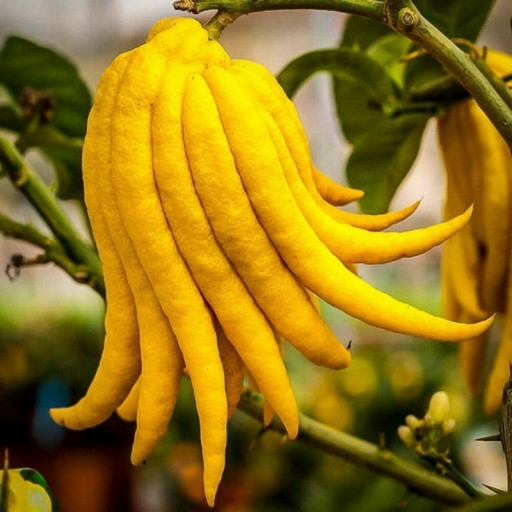
Plant Overview
The Citron, or Citrus medica, is one of the three "ancestor" citrus species from which almost all modern citrus fruits—like lemons and limes—descended. Known for its massive, rugged fruit and heavenly fragrance, it has been cultivated for millennia, featuring prominently in ancient Roman mosaics and the Jewish festival of Sukkot. Unlike its juicy cousins, the Citron is prized almost entirely for its thick, aromatic rind rather than its sparse pulp.
🔍 How to Identify
- 🍋 The Fruit: Unlike the smooth skin of a lemon, the Citron is large, oblong, and covered in a thick, bumpy, or "warty" yellow rind. It feels heavy but contains very little juice.
- 🍃 The Foliage: The leaves are large, pale green, and slightly serrated at the edges. When crushed, they emit a potent, spicy citrus scent that is much deeper than a standard orange leaf.
- 🌸 The Blooms: The flowers are quite large and beautiful, usually appearing white on the inside with a distinct purplish or pinkish tint on the outer petals.
🏡 In Your Garden
- ☀️ Sun Seekers: Because it is an ancient species, the Citron is more sensitive to cold than modern hybrids. It requires a very warm, sheltered spot with maximum sunlight to develop that signature thick, fragrant rind.
- 💧 Drainage is Key: This plant is prone to root rot if left in standing water. Use a gritty, well-draining potting mix; it prefers to have its "feet" dry out slightly between deep waterings rather than sitting in a soggy bog.
⚠️ Safety & Toxicity
- 🐾 Pet Warning: Like most citrus trees, the Citrus medica contains essential oils and psoralens that are toxic to dogs, cats, and horses if ingested.
- 👶 Human Safety: The fruit is perfectly safe (and delicious when candied!) for humans. However, be cautious of the sharp thorns that often hide along the branches, which can cause nasty scratches during pruning.
✨ Fun Fact
The Citron is the "Great-Grandfather" of the citrus world! Through natural cross-breeding over centuries, the Citron combined with the Pomelo and Mandarin to create nearly every citrus fruit we eat today, including the common lemon.

Detailed Care Instructions
| Humidity | Normal |
| Lighting | Full Sun |
| Difficulty | Medium |
| Hibernation | Cold Period |
| Temperature | 18°C - 28°C |
| Hardiness Zones | 10 - 11 |
To grow a Citrus Medica plant commonly known as Citron, here are the steps you can follow:
- Choose a suitable location: Citron plants thrive in warm and sunny conditions. Select a spot in your garden that receives at least six hours of direct sunlight daily.
- Soil preparation: Citron plants prefer well-draining soil. Prepare the soil by mixing in organic matter like compost or aged manure to improve fertility and drainage.
- Planting: You can grow Citrus Medica from seeds or by purchasing a young plant from a nursery. If growing from seeds, soak them in warm water for a few hours before planting to improve germination. Plant the seeds or young plant in a hole slightly larger than its root ball, ensuring that the top of the root ball is slightly above the soil surface.
- Watering: Young plants require frequent and consistent watering to establish their root systems. However, avoid overwatering, as Citron plants are susceptible to root rot. Once established, water the plant deeply but infrequently, allowing the top few inches of soil to dry before watering again.
- Fertilization: Citron plants benefit from regular fertilization during the growing season. Use a balanced citrus fertilizer or a slow-release fertilizer according to the package instructions. Apply the fertilizer around the base of the plant, avoiding direct contact with the trunk.
- Pruning: Prune Citron plants to maintain a desired shape and remove any dead or diseased branches. Be cautious not to remove too much foliage, as this may reduce fruit production.
- Protection from frost: Citron plants are sensitive to cold temperatures and frost. If you live in a colder climate, consider growing Citron in a pot that can be moved indoors during colder months or cover the plant with a frost cloth during freezing weather.
- Pest and disease management: Regularly inspect the plant for any signs of pests or disease, such as aphids, scale insects, or fungal infections. Treat any issues promptly using appropriate organic or chemical control methods.
- Harvesting: Citron fruits take several months to mature and should be harvested when fully ripe. The fruit will have a lemon-like appearance and a thick rind. You can use the fruit for culinary purposes or for making preserves or candied citron.
Remember that Citrus Medica plants require patience, as they can take several years to start producing fruits. However, with proper care and attention, you can successfully grow and enjoy this unique citrus plant.

Place in a bright room that is sun drenched almost all day. Or directly in a south-facing window.

Citrus Medica plant requires regular watering to thrive. The soil around the plant should be kept moist but not waterlogged. This can be achieved by watering deeply once or twice a week, depending on the weather and the soil drainage. The best time to water the plant is early in the morning or in the evening. It is important to avoid wetting the leaves as this can promote fungal growth and other diseases. The soil around the plant should also be well-draining to prevent waterlogging, which can lead to root rot and other problems. During the winter months, the plant may require less frequent watering, but it should not be allowed to dry out completely. It is important to monitor the plant's moisture levels and adjust the watering schedule as needed to maintain a healthy, hydrated plant.
To fertilize the Citrus Medica plant, apply a balanced fertilizer with equal amounts of nitrogen, phosphorus, and potassium in a 3:3:3 ratio every 4-6 weeks during the growing season. Make sure to water the plant thoroughly before and after fertilizing to avoid root burn. Avoid applying fertilizer during the dormant season. Additionally, use a soil pH tester to ensure the soil's pH level is between 6 and 7, which is the optimal range for the plant's nutrient uptake.
Citrus Medica plant requires well-draining soil that is rich in nutrients and organic matter. It prefers a soil pH between 5.5 and 7.5. The soil should be loose and well-aerated to ensure proper root growth. Avoid using heavy, compacted or clay soils, as these can lead to poor drainage and root rot. A good soil mix for Citrus Medica plant would include a blend of peat moss, perlite or vermiculite, and sand to improve drainage. Additionally, adding organic matter such as compost, aged manure, or leaf mold will provide the plant with essential nutrients and improve soil structure. It is important to ensure the soil remains moist but not waterlogged, as this can lead to root rot.
To propagate this plant, you will first need to obtain a healthy stem cutting, preferably from the tip of the branch. Using a sharp, sterilized knife or cutting tool, carefully remove a 4-6 inch cutting that includes at least one node. Remove the lower leaves from the cutting to leave only two or three at the top.
Next, dip the cut end of the stem in a rooting hormone powder to encourage root growth. Insert the stem cutting into a well-draining potting mix, leaving the top leaves exposed. Water the cutting thoroughly and place it in a warm, bright location that is protected from direct sunlight.
Keep the soil moist and mist the leaves regularly to maintain humidity. After several weeks, new growth should appear, indicating that the cutting has successfully taken root. Once the roots have developed and the plant has grown to a suitable size, it can be transplanted into a larger container or into the ground if you live in a suitable climate.
Common pests of the lemon include Scale insect, mealybugs, spider mites, aphids. Make a habit of checking your lemon frequently for pests so that any infestations can be caught and managed early.








