Plant Overview
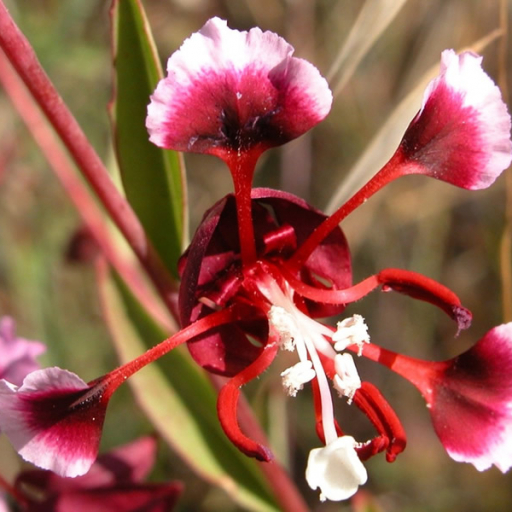
Known as the Springville Clarkia, this rare and elegant wildflower is a true California native with a very limited "home address." Found naturally only in a small portion of the Sierra Nevada foothills, it acts as a seasonal clock, bursting into bloom just as the lush green of spring begins to turn to golden brown. It is a member of the evening primrose family, carrying a delicate, papery grace that belies its hardy mountain upbringing.
🔍 How to Identify
- 🌸 Petal Pattern: It features four fan-shaped petals that are typically a vivid lavender-pink, often decorated with a small, darker purple "brushstroke" at the base.
- 🌿 Wiry Stature: The plant grows on slender, upright stems that can reach up to three feet tall, making the flowers look like they are floating above the grass.
- 🍃 Narrow Foliage: The leaves are thin, lance-shaped, and relatively sparse, ensuring all the visual attention remains on the striking blossoms.
🏡 In Your Garden
- ⛰️ Endemic Specialist: Because this plant is federally listed as a threatened species, it is rarely found in standard nurseries. If you are lucky enough to grow it from a specialized native seed mix, it requires well-draining, gritty soil that mimics the decomposed granite of its mountain home.
- ☀️ The Sun-Drought Balance: It thrives in full sun but prefers the cooling influence of "half-shade" provided by oak trees. Once established, it is exceptionally drought-tolerant, as it is programmed to bloom and set seed before the harsh heat of the California summer arrives.
⚠️ Safety & Toxicity
- ✅ Safe Status: The Springville Clarkia is generally considered non-toxic to humans, dogs, and cats. It does not possess thorns, stinging hairs, or irritating sap.
- 🛑 Legal Protection: The primary "danger" associated with this plant is legal. Because it is an endangered species, it is protected by law. Removing these plants or their seeds from the wild is prohibited and can result in heavy fines.
✨ Fun Fact
The genus name Clarkia honors Captain William Clark, of the legendary Lewis and Clark Expedition. While Clarkia flowers are often nicknamed "Farewell-to-Spring," this specific Springville variety is so rare that it occupies a total range of only about 15 square miles in the entire world!

Detailed Care Instructions








