Plant Overview
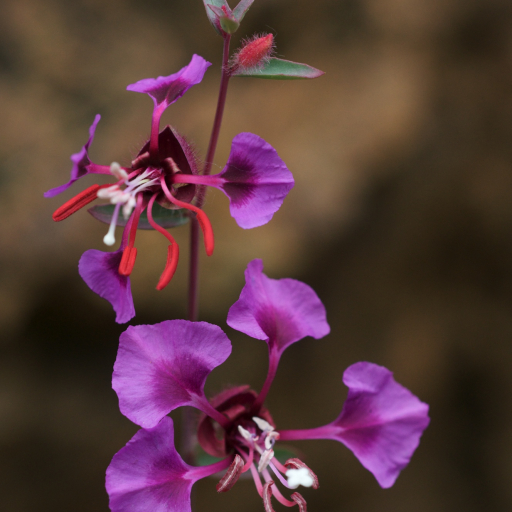
The Elegant Clarkia, often called "Mountain Garland," is a striking California native that paints woodlands and hillsides in shades of magenta, pink, and lavender. Its botanical name, unguiculata, translates to "clawed," referring to the unique, long-handled shape of its delicate petals. This wiry annual is a favorite for wildflower meadows and cottage gardens because it provides effortless height and a romantic, airy feel.
🔍 How to Identify
- 🌸 The "Clawed" Petal: Each of the four petals has a wide blade at the end of a very narrow, stalk-like base, giving the flower a distinctively spaced-out, dainty appearance.
- 🎋 Wiry Stems: The plant grows on slender, reddish-tinted stems that can reach up to 3 feet tall, often appearing slightly zig-zagged or nodding at the tips.
- 🌿 Lance-Shaped Leaves: The foliage is sparse and narrow, with a grayish-green hue that allows the vibrant blooms to take center stage.
🏡 In Your Garden
- 🏜️ Drought Specialist: Once established, the Elegant Clarkia is incredibly water-wise. It actually prefers "lean" soil—if the ground is too rich or over-fertilized, you’ll get plenty of leaves but very few of those iconic flowers.
- 🌱 Look but Don't Touch: This plant develops a sensitive taproot early on. Because of this, it hates being transplanted; it is best to sow seeds directly into the garden where you want them to stay forever.
- 🐝 Pollinator Magnet: It is a vital nectar source for native bees and butterflies, making it a "must-have" for anyone looking to support local biodiversity.
⚠️ Safety & Toxicity
- 🐾 Pet & Human Safe: Clarkia unguiculata is generally considered non-toxic to dogs, cats, and humans. It is a safe choice for family-friendly landscapes.
- 👶 Low Irritant: While it doesn't pose a poisoning risk, the stems can be a bit fibrous and the taste is bitter, which usually discourages curious toddlers or pets from taking more than one nibble.
✨ Fun Fact
📜 This genus was named in honor of Captain William Clark, of the famous Lewis and Clark Expedition, who helped document the botanical wonders of the American West in the early 19th century.

Detailed Care Instructions
To grow Clarkia unguiculata, also known as farewell-to-spring, follow these steps:
- Choose a suitable location: Clarkia unguiculata grows best in a sunny area with well-draining soil. It can tolerate some shade, but for optimal growth and blooming, full sun is preferred.
- Prepare the soil: Before planting, prepare the soil by loosening it with a garden fork or tiller. Incorporate organic matter such as compost or aged manure to improve soil fertility and drainage.
- Sow the seeds: Clarkia unguiculata is typically grown from seeds. Sow the seeds directly into the garden bed in spring after the last frost date. Scatter the seeds over the soil and lightly press them into the ground. Maintain a spacing of about 6-12 inches between plants.
- Watering: Keep the soil consistently moist but not waterlogged, especially during the germination period. Water thoroughly whenever the top inch of soil feels dry.
- Mulching: Apply a layer of organic mulch around the plants to help conserve soil moisture and suppress weed growth. This is particularly important during the hot summer months.
- Fertilizer: Clarkia unguiculata generally doesn't require much fertilizer. However, if your soil is lacking in nutrients, you can apply a balanced, slow-release fertilizer during the growing season.
- Pinching: To encourage bushier growth and more flowers, you can pinch back the tips of young plants when they reach around 6 inches in height.
- Deadheading: Remove spent flowers regularly to prolong blooming and prevent self-seeding. This can also help redirect the plant's energy towards producing more blooms.
- Pest and disease control: Clarkia unguiculata is relatively resistant to pests and diseases. However, keep an eye out for common garden pests like aphids or powdery mildew. If necessary, treat affected plants with organic or chemical solutions according to the pest or disease.
- Maintenance: Clarkia unguiculata is an annual plant, meaning it completes its life cycle in one year. Once it finishes flowering and setting seed, the plant will die. However, it often self-seeds, so you may find new seedlings emerging in the following growing season.
Following these steps should help you successfully grow Clarkia unguiculata in your garden, adding beautiful blooms to your landscape.

Place in a bright room that is sun drenched almost all day. Or directly in a south-facing window.

Clarkia Unguiculata plants should be watered regularly, but not excessively. It is important to allow the top inch or so of soil to dry out before watering again. When watering, aim to saturate the soil thoroughly, but avoid getting water on the foliage as this can lead to disease. The best time to water is in the morning or early evening, as this allows the plant to absorb the moisture before the heat of the day. During periods of prolonged drought, it may be necessary to water more frequently. It is important to monitor the plant closely and adjust watering accordingly.
When fertilizing this plant, use a balanced fertilizer with equal parts nitrogen, phosphorus, and potassium. Apply the fertilizer once a month during the growing season, from early spring to mid-summer. Avoid over-fertilizing as this can lead to excessive growth and weaken the plant's overall health. Water the plant thoroughly before and after fertilization, and avoid getting fertilizer on the leaves or flowers.
Clarkia unguiculata is a plant that prefers soil that is well-drained and slightly acidic. It does not do well in heavy, clay soil or soil that is constantly wet. The ideal soil for this plant should be rich in organic matter, which can help it retain moisture and nutrients without becoming waterlogged. A sandy loam soil is often recommended, as it allows for good drainage and adequate aeration, while also providing enough organic matter to support healthy growth. It's also important to note that this plant prefers full sun to partial shade, so the soil should be in a location that receives plenty of sunlight throughout the day. Additionally, regular watering is important to keep the soil moist but not waterlogged, as the plant can be sensitive to drought conditions.
To propagate this plant, you will need to collect mature seed pods from the parent plant once they have dried and turned brown. The seeds should be small and black in color. Carefully open the pods to collect the seeds.
Next, prepare a seed starting mix by combining peat moss, perlite, and vermiculite in equal parts. Fill small seed trays or pots with the mixture and moisten with water.
Place one or two seeds on top of the soil in each tray or pot and cover lightly with additional soil. Keep the soil moist but not waterlogged and place the trays or pots in a warm, bright location, such as a sunny windowsill.
The seeds should germinate within one to three weeks. Once the seedlings have developed their second set of leaves and are strong enough to handle, they can be transplanted into individual pots or directly into a garden bed.
The new plants will need to be watered regularly and kept in a sunny location to encourage healthy growth. With proper care, they should begin to flower in their first year.
Common pests of the elegant clarkia include Spider mites, aphids. Make a habit of checking your elegant clarkia frequently for pests so that any infestations can be caught and managed early.








