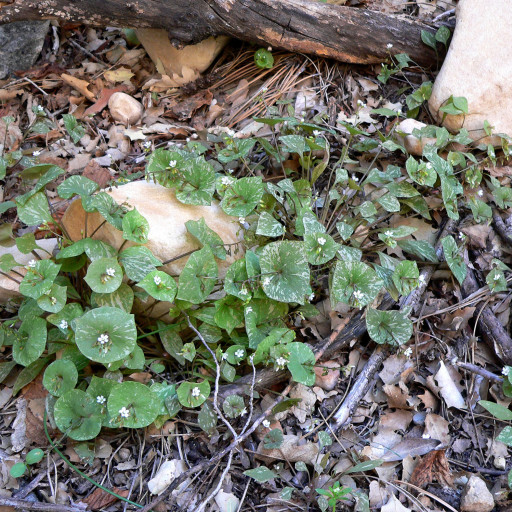
Plant Overview
Often called "Miner’s Lettuce" or "Winter Purslane," this charming North American native is a succulent treasure found in damp, shady corners. During the California Gold Rush, miners devoured this plant to stay healthy, as its high Vitamin C content was a literal lifesaver against scurvy. Today, it is beloved by foragers and gardeners alike for its mild, spinach-like flavor and its unique "leaf-through-stem" look.
🔍 How to Identify
- 🍃 The "Perfoliate" Leaf: Its most iconic feature is the pair of succulent leaves that grow together, forming a perfect green circle that appears to be pierced through the center by the flower stem.
- 🌸 Centerpiece Blooms: In the very middle of the circular leaf "plate," tiny clusters of white or pale pink five-petaled flowers emerge on short stalks.
- 🌱 Growth Habit: It forms lush, bright green mounds. The early basal leaves are spade-shaped, but as the plant matures, it develops its signature circular wrap-around leaves.
🏡 In Your Garden
- 💧 Moisture Lover: This plant thrives in the "difficult" spots of a garden—cool, damp, and shady areas where other plants might struggle with damp feet.
- 🌡️ Ephemeral Nature: It is a cool-season specialist. It will carpet your garden in early spring but tends to disappear or turn a reddish hue once the summer heat arrives, leaving seeds behind for next year.
- 🧺 Self-Sowing Success: If you plant it once, you likely won't have to again; it is a prolific self-seeder that acts as a wonderful, edible "living mulch" for permaculture setups.
⚠️ Safety & Toxicity
- 🥗 Status: Generally considered safe and highly edible for humans.
- 🐶 Details: While safe for human consumption, like spinach, it contains oxalates. In very large quantities, it could potentially cause issues for pets with kidney sensitivities or grazing livestock, though it is rarely a problem in typical garden settings.
✨ Fun Fact
Miner's Lettuce isn't just a survival food; it was actually introduced to Europe in the 18th century by the naturalist Archibald Menzies. It became so popular in English gardens that it naturalized there and is still grown across the UK as a salad green today!

Detailed Care Instructions
| Color | Bright Green Foliage With White Blooms |
| Soil Ph | 6.1-7.8 |
| Lighting | Full Sun |
| Soil Type | Well-Draining, Sandy, Clay, Loamy, Rocky |
| Bloom Time | Early Spring To Mid-Summer |
| Plant Type | Herbaceous Annual |
| Mature Size | Up To 12 Inches Tall |
| Native Area | North America |
| Sun Exposure | Full Sun |
| Hardiness Zones | 6-10 |
Claytonia perfoliata, also known as miner's lettuce or Indian lettuce, is a relatively easy plant to grow. Here are some steps you can follow to successfully grow this plant:
- Climate and Soil: Claytonia perfoliata prefers cool weather and grows best in USDA hardiness zones 3-9. It can tolerate different soil types, but prefers well-drained, rich, and slightly acidic soil.
- Location: Choose a location with partial shade to full sun. If you live in a warmer climate, provide some shade during the hottest part of the day.
- Planting: You can start Claytonia perfoliata from seeds or transplants. If starting from seeds, sow them directly into the garden bed in early spring after the last frost date. Scatter the seeds over the soil surface and lightly press them into the soil. Keep the soil moist until germination, which typically takes about 7-10 days.
- Water: Keep the soil evenly moist throughout the growing season, but avoid overwatering to prevent root rot. Watering once or twice a week should be sufficient, depending on the weather conditions.
- Mulching: Apply a layer of organic mulch, such as straw or wood chips, around the plants to help retain moisture and suppress weed growth.
- Fertilizer: Apply a balanced, organic fertilizer before planting or top-dress with compost during the growing season to provide necessary nutrients. Avoid using high nitrogen fertilizers, as it can lead to excessive foliage growth and reduced flower production.
- Pests and Diseases: Claytonia perfoliata is relatively resistant to pests and diseases. However, keep an eye out for slugs, snails, and aphids. If necessary, use organic methods to control them, such as handpicking, applying insecticidal soap, or using companion planting with pest-repellent plants.
- Harvesting: You can start harvesting the outer leaves of Claytonia perfoliata once they reach about 2-4 inches in length. This can be done by carefully pinching off the leaves or by cutting them with sharp scissors. Harvesting from the outer leaves will allow for continuous growth and harvest throughout the season.
By following these guidelines, you can successfully grow Claytonia perfoliata and enjoy its fresh and nutritious leaves in salads or as an edible garnish.

Place in a bright room that is sun drenched almost all day. Or directly in a south-facing window.

To water the plant that belongs to the Claytonia Perfoliata species, it is important to ensure that the soil is moist but not waterlogged. Provide water to the plant only when the topsoil feels dry to the touch. When watering, make sure to avoid getting water on the leaves as this may cause damage to the plant. It is best to water the plant early in the morning or late in the afternoon to prevent the plant from drying out during the hottest part of the day. Use a watering can or a hose with a gentle flow of water to avoid disturbing the soil and roots. Finally, make sure that the plant is positioned in a well-draining soil to prevent the roots from being waterlogged.
The best time to fertilize the Claytonia Perfoliata plant is during its growing season. Use a balanced fertilizer with equal amounts of nitrogen, phosphorus, and potassium. Apply the fertilizer every two weeks, following the instructions on the label. Do not over-fertilize, as this can damage the plant. Water the plant well after each fertilization to help the nutrients reach the roots.
The ideal soil for growing Claytonia perfoliata is well-draining, nutrient-rich, and slightly acidic. A mixture of loamy soil and organic compost is recommended, with a pH range between 5.5 and 6.5. The soil should be lightweight and fluffy to allow for good absorption of nutrients and oxygen to the plant's roots. Avoid heavy clay soils that can cause waterlogging and rotting of roots. Soil should also be kept evenly moist to prevent wilting and to promote healthy growth.
To propagate this plant, you can collect the seeds from the mature plant and sow them in a well-draining soil. You may also divide the mature plant during the early spring using a sharp and sterile knife. Cleanly cut the plant into sections, making sure that each section has viable roots and several stems. Plant these sections in individual pots and keep them in a cool but bright area with moderate moisture until they have established themselves and can be planted in their permanent location.
Common pests of the miner's lettuce include Mealybugs, aphids, thrips, snails. Make a habit of checking your miner's lettuce frequently for pests so that any infestations can be caught and managed early.








