Plant Overview
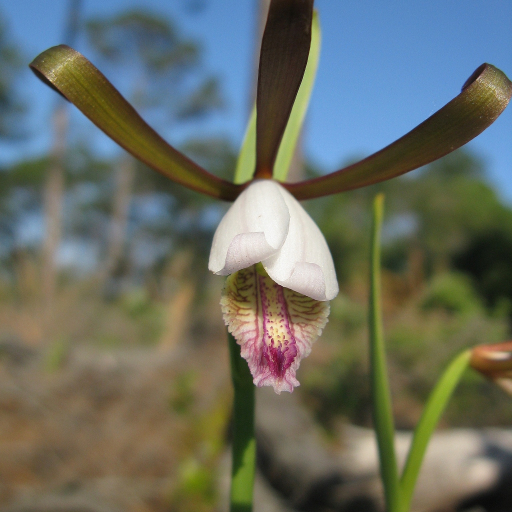
The Rosebud Orchid (Cleistesiopsis divaricata) looks like a delicate ballerina caught mid-twirl in a sun-drenched bog. Known for its striking, architectural petals, this North American native is a crown jewel of the damp pine barrens and wet savannas of the Southeast. Often called the "Large Spreading Pogonia," it is cherished by botanists for its dramatic, "spider-like" sepals that frame a soft, rose-colored heart.
🔍 How to Identify
- 🌸 The Flower: A single, nodding flower sits atop the stem, featuring three long, narrow, brownish-purple sepals that spread wide, contrasting with upright pink or white petals.
- 👅 The Lip: The central "lip" (labellum) is beautifully veined with dark rose or purple, often displaying a splash of yellow or crest-like ridges to guide curious insects.
- 🍃 The Foliage: Look for a single, waxy, blue-green leaf that clasps the stem about halfway up. The stem itself is usually smooth and tinted with a purplish hue.
🏡 In Your Garden & Habitat
- 💧 Wild Spirit: This orchid is notoriously difficult to grow in traditional gardens because it relies on a complex symbiotic relationship with specific soil fungi (mycorrhizae). It is far more successful when left to thrive in its natural, undisturbed habitat.
- 🍄 Boggy Roots: It thrives in "pocosins" and wet pine flatwoods where the soil is highly acidic, sandy, and nutrient-poor. It hates competition, often blooming best in areas where occasional natural fires have cleared out thicker brush.
⚠️ Safety & Toxicity
- ✅ Safe Status: Cleistesiopsis divaricata is generally considered non-toxic to humans, cats, and dogs.
- 🚫 Conservation Warning: While it isn't poisonous, it is a sensitive and often rare species. Digging it up from the wild is usually illegal in many states and almost always results in the plant’s death due to its specific soil requirements.
✨ Fun Fact
🐝 Pollination Trickery: The Rosebud Orchid is a master of "food deception." It uses its bright colors and sweet scent to lure in bumblebees, but it actually produces no nectar! The bee enters the flower hoping for a meal, gets dusted with pollen, and leaves empty-handed—only to be fooled again by the next orchid down the trail.

Detailed Care Instructions

Place in a window with dappled sun or a spot in the middle of a room. Or directly in a window facing west or east.

Some plants require more regular watering than others, which should be done every few days. It's critical to maintain the soil moist all of the time. The water requirements of the same plant placed in pots with varying sizes will differ. Because the water in the smaller pot evaporates faster than the water in the larger pot, it will require more watering. Regardless of pot size, the surface should constantly be maintained moist.








