Plant Overview
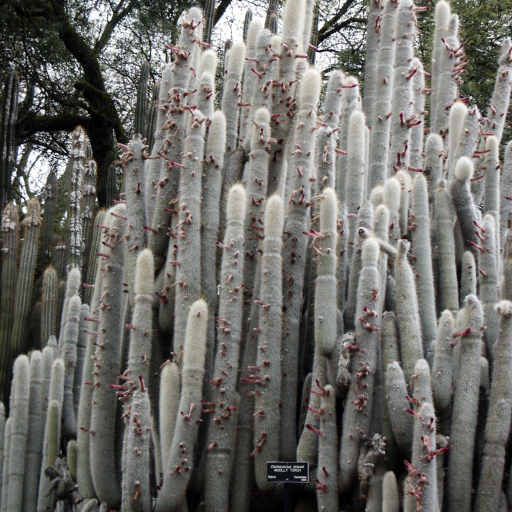
Known affectionately as the Silver Torch or the Snow Pole, this Bolivian beauty is one of the most striking columnar cacti in the botanical world. It looks like a shimmering pillar of white velvet rising from the earth, mimicking a frozen lightning bolt. While it hails from the high, chilly altitudes of the Andes Mountains, it has become a superstar in modern minimalist home decor.
🔍 How to Identify
- 🌵 Columnar Shape: It grows in slender, upright columns that can reach up to 10 feet tall in the wild, though it stays much smaller in indoor pots.
- ❄️ Silvery Bristles: The entire surface is densely packed with short, hair-like white spines. This gives the plant a distinct "fuzzy" or "glowing" appearance from a distance.
- 🌺 Horizontal Blooms: Unlike many cacti that have bowl-shaped flowers, this one produces narrow, deep-red tubular flowers that protrude horizontally from the sides of the stem.
🏡 In Your Garden
- ☀️ The "Sunscreen" Coat: Those white spines aren't just for looks—they act as a natural sunscreen, reflecting intense UV rays. To keep the "hair" bright white and thick, ensure the plant gets plenty of direct sunlight; otherwise, the new growth may look thin and green.
- 🏔️ Mountain Hardiness: Because it originates from high-altitude slopes, it is surprisingly cold-tolerant compared to desert cacti. It actually appreciates a cooler, dry rest period during the winter to encourage those vibrant red flowers to bloom in the spring.
⚠️ Safety & Toxicity
- 🟢 Chemical Safety: The Silver Torch is generally considered non-toxic to cats, dogs, and humans. There are no known poisonous saps or alkaloids to worry about.
- 🧤 Physical Hazard: Don't let the soft, "furry" look fool you! Beneath the white hairs are tiny, sharp bristles that can easily pierce the skin or get stuck in a pet's paw. Always handle this plant with thick leather gloves or a folded newspaper "sling" when repotting.
✨ Fun Fact
The genus name Cleistocactus comes from the Greek word kleistos, which means "closed." This is because the flowers barely open their petals at all—they stay mostly closed, perfectly shaped for the long, thin beaks of mountain hummingbirds to reach the nectar inside!

Detailed Care Instructions
To grow Cleistocactus straussii, follow these steps:
- Choose the right location: Cleistocactus straussii prefers lots of sunlight, so choose a spot with full sun exposure. Make sure the temperature is warm, ideally around 70-80°F (21-27°C).
- Soil: Use a well-draining soil mix. A cactus or succulent potting mix is suitable. You can also create your own mix using equal parts of regular potting soil, coarse sand, and perlite.
- Planting: Select a container with drainage holes to prevent water accumulation. Place the plant in the pot, ensuring the roots are covered with soil. Gently firm the soil around the base of the plant.
- Watering: Cleistocactus straussii doesn't require frequent watering. Water deeply and let the soil completely dry before watering again. During the growing season (spring and summer), water once every 2-3 weeks. In the winter, reduce watering to once a month or even less depending on the temperature.
- Fertilization: Use a balanced, diluted fertilizer specifically formulated for cacti and succulents. Apply the fertilizer once a month during the growing season, following the instructions on the package.
- Pruning: Trim off any dead or dried-out stems to maintain a neat appearance. Be cautious when handling the plant, as Cleistocactus straussii has sharp spines.
- Propagation: Cleistocactus straussii can be propagated through stem cuttings. Wait until the cutting calluses over (forms a protective covering), then place it in a well-draining soil mix and water lightly until roots develop.
- Pests and diseases: Cleistocactus straussii is relatively resistant to pests and diseases. However, keep an eye out for common succulent pests, such as mealybugs or spider mites. Treat infestations with an appropriate pesticide or insecticidal soap.
Remember to research any potential challenges specific to your region and adjust your care accordingly.

Place in a bright room that is sun drenched almost all day. Or directly in a south-facing window.

Cleistocactus Straussii should be watered deeply but infrequently, allowing soil to dry out before watering again. This desert plant prefers well-draining soil and should not be left standing in water. Water from the base of the plant rather than from above to avoid introducing water into the crown of the plant, which can lead to rot and fungal diseases. In the winter, cut back on watering to account for reduced growth rates.
To fertilize the Cleistocactus Straussii plant, apply a balanced fertilizer with equal amounts of nitrogen, phosphorus, and potassium every two weeks during the growing season. Dilute the fertilizer to half the recommended strength and water the plant thoroughly before and after application to prevent burning the roots. Keep in mind that the plant does not require feeding during the winter dormant period.
Cleistocactus Straussii plant requires well-draining soil that is rich in nutrients. The soil should be slightly acidic with a pH between 5.5 and 6.5. It is recommended to use a mixture of cactus soil, sand, and perlite to ensure proper drainage and prevent waterlogging. The soil should be kept moist but not waterlogged, as this can cause root rot. It is also important to avoid fertilizing the plant during the winter months when it is dormant.
First, identify a healthy and mature Cleistocactus Straussii plant with strong stems and healthy foliage. To propagate, use a sharp and sterilized cutting tool to make a clean cut at a 45-degree angle on a stem section that is at least 6 inches long. Allow the cuttings to dry and callus over for a few days before placing them in a well-draining, sandy potting mix. Water sparingly until the roots start to grow.
Alternatively, propagating Cleistocactus Straussii through seeds is an option. Collect mature seeds from the fruit of a healthy plant and plant them in a seedling tray using a well-draining, sandy soil mix. Keep the soil moist and warm, and cover the tray with plastic wrap until the seeds germinate. Transplant the seedlings into individual pots once they grow to a sufficient size.
Common pests of the cleistocactus straussii include Scale insect, mealybugs, spider mites. Make a habit of checking your cleistocactus straussii frequently for pests so that any infestations can be caught and managed early.








