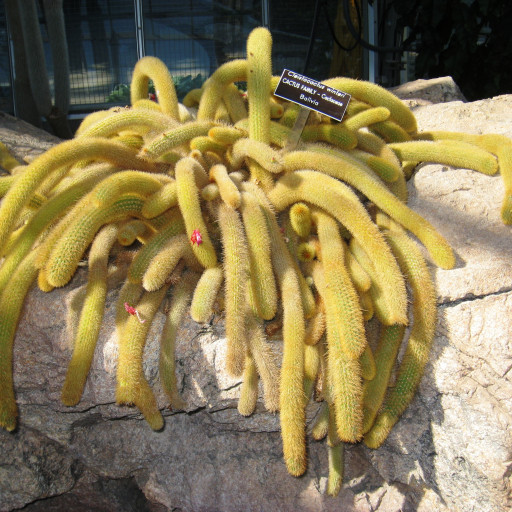
Plant Overview
Known affectionately as the Golden Rat Tail Cactus, this Bolivian beauty is a showstopper in any succulent collection. With its cascading, sun-kissed stems that look like shimmering golden tails, it brings a touch of dramatic movement to indoor and outdoor gardens. It is one of the few cacti that truly "flows" as it grows, making it a favorite for those who want a desert vibe with a trailing, elegant twist.
🔍 How to Identify
- 🐍 Trailing Stems: Unlike upright cacti, its long, slender, cylindrical branches grow up to 3 feet long and hang gracefully downward, creating a "waterfall" effect.
- ☀️ Golden Bristles: The stems are densely packed with short, hair-like spines in a vibrant golden-yellow hue, giving the entire plant a warm, glowing appearance even when not in bloom.
- 🌸 Tubular Blooms: In the spring and summer, it produces striking salmon-orange or pinkish-red flowers. These blooms are narrow and tube-shaped, specifically designed to attract hummingbirds in the wild.
🏡 In Your Garden
- 🧺 The Hanging Specialist: Because of its pendulous habit, this cactus is happiest in hanging pots or high ledges where its "tails" can dangle freely. It dislikes being cramped against a wall or the floor.
- 🏜️ Sun & Drainage Nuance: It craves bright, direct light to maintain its signature golden color; in low light, the stems will turn pale and thin. It requires a very gritty, fast-draining potting mix, as it is particularly prone to root rot if the soil stays damp for more than a day or two.
- 💧 Seasonal Thirst: While it is a desert native, it appreciates slightly more frequent watering during the peak of summer than other cacti. However, it must be kept almost completely dry during the winter "rest" period to prevent fungal issues.
⚠️ Safety & Toxicity
- 🌵 Deceptive Softness: The spines look like soft fur or golden hair from a distance, but they are actually stiff and sharp. They can easily lodge in the skin and are difficult to remove.
- 🐾 Physical Hazard: While the plant is not chemically toxic to pets or children, the mechanical irritation from the spines can cause significant discomfort to curious paws or fingers. It is best kept out of reach in a high-hanging basket.
✨ Fun Fact
This plant was named in honor of Hildegard Winter, the sister of the famous German botanist Friedrich Ritter. Ritter discovered the species during his extensive expeditions through South America in the mid-20th century.

Detailed Care Instructions
| Humidity | Normal |
| Difficulty | Medium |
| Hibernation | Cold Period |
| Hardiness Zones | 9A - 11B |
To grow a Cleistocactus Winteri plant, also known as the Silver Torch cactus, follow these steps:
- Choose the right location: Cleistocactus Winteri prefers bright indirect sunlight. Place it near a window with filtered light or in a location with partial shade. Avoid placing it in direct sunlight, as it can cause scorching of the plant.
- Soil selection: Use a well-draining cactus mix or create your own by combining equal parts of cactus soil, sand, and perlite. This will ensure good drainage and prevent root rot.
- Pot selection: Select a pot with drainage holes to allow excess water to escape. The pot should be slightly larger than the root ball.
- Planting: Carefully remove the plant from its current container, being cautious not to damage the roots. Place the plant in the new pot and fill in the gaps with the prepared cactus soil mixture. Gently press the soil around the base of the plant to hold it in place.
- Watering: Water the Cleistocactus Winteri sparingly, allowing the soil to dry out between watering. Overwatering can lead to root rot. During the winter months, reduce watering to once every month or two.
- Temperature and humidity: Cleistocactus Winteri prefers average room temperatures, ranging from 65-80°F (18-27°C). It can tolerate slightly lower temperatures during the winter months. Humidity is not a major factor, but it should be kept in a relatively dry environment.
- Fertilization: Fertilize the plant during the growing season (spring and summer) with a balanced cactus fertilizer diluted to half strength. Follow the instructions on the fertilizer package for proper application.
- Pruning: Prune the Silver Torch cactus sparingly, if needed, to maintain its shape and remove any dead or damaged parts.
- Pests and diseases: Watch out for common cactus pests such as mealybugs, scale insects, and spider mites. Treat any infestations promptly with an appropriate insecticide or by manually removing the pests.
- Repotting: As the plant grows, it may outgrow its current pot. Repot it in a slightly larger container, following the same steps as mentioned above.
Remember, Cleistocactus Winteri is a slow-growing cactus, so be patient with its growth. With proper care and attention, it will flourish and become a beautiful addition to your plant collection.

Place in a bright room that is sun drenched almost all day. Or directly in a south-facing window.

1. Check the soil moisture regularly - Cleistocactus Winteri plant prefers well-draining soil that is not consistently damp or too dry.
2. Water thoroughly but infrequently - When you do water, make sure to give enough so that water runs from the bottom of the container, but be careful not to overwater.
3. Use room temperature water - Cleistocactus Winteri plant dislikes cold water, so make sure to use room temperature water.
4. Time watering for the morning - Watering in the morning allows excess moisture to evaporate, which can help prevent disease.
5. Avoid wetting the foliage - Cleistocactus Winteri plant has spines on the stem and should not be sprayed directly with water. Instead, focus watering at the base of the plant.
6. Modify watering frequency based on the season - Watering frequency should be adjusted based on the season and the amount of sun and humidity the plant receives. During the winter, the plant may need less water due to cooler temperatures and less sunlight.
7. Watch for signs of overwatering - If the soil stays wet for too long, the roots may rot and the plant could die. Signs of overwatering include yellowed leaves and a mushy stem.
8. Use a well-draining pot with a drainage hole - To prevent water from sitting in the bottom of the pot, use a container with a drainage hole and ensure that there is drainage material at the bottom of the pot to allow excess water to flow out.
The best time to fertilize the plant is during the growing season, which is typically from spring to early fall. You can use a balanced fertilizer with equal amounts of nitrogen, phosphorus, and potassium. It's recommended to dilute the fertilizer to half strength before applying it to the soil. Water the plant thoroughly before and after fertilization to prevent burning the roots. Avoid fertilizing during the winter months when the plant is dormant.
The most suitable type of soil for the plant is a well-draining one, with good aeration and nutrient retention properties. The soil should be composed of a mixture of organic matter, such as compost, and inorganic matter such as sand or perlite. It should be slightly acidic and have a pH range of 6 to 7. The plant prefers dry and rocky soil conditions, so the soil should not be too rich or dense, which can lead to root rot and other problems. A sandy or coarse-grained soil mix is ideal for this plant, and regular feeding with a balanced fertilizer during the growing season can help the plant thrive.
To propagate this plant, you will need to take stem cuttings. Begin by selecting a healthy stem on the plant that is at least 4 inches long and has no flowers or buds. Using a sterilized knife or scissors, cut the stem at a 45-degree angle.
Allow the cutting to dry and callus for a few days before planting it. To plant, use a well-draining potting soil and a small container. Make a small hole in the soil and insert the bottom of the cutting into the hole. Firmly press the soil around the cutting to ensure it has enough support.
Water the cutting gently, making sure not to oversaturate the soil. Place the container in a bright area with indirect sunlight. The ideal temperature for Cleistocactus winteri propagation is between 68-77°F (20-25°C).
Wait a few weeks for the cutting to root. You can check this by gently tugging on it. If it resists, the roots have formed, and you can continue to care for it as a mature plant. Over time, it will grow into a healthy, flowering Cleistocactus winteri.
Common pests of the golden rat tail cactus include Scale insect, mealybugs, spider mites. Make a habit of checking your golden rat tail cactus frequently for pests so that any infestations can be caught and managed early.








