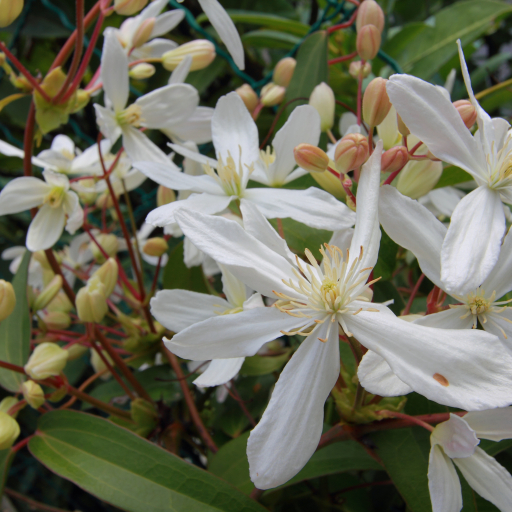
Plant Overview
Often called the Evergreen Clematis, this vigorous climber is a true harbinger of spring. Unlike its deciduous cousins that leave bare, skeletal vines in winter, Clematis armandii blankets fences and pergolas in glossy, leathery green foliage year-round. When it blooms, it fills the garden with an intoxicating fragrance often compared to vanilla, almonds, or orange blossoms.
🔍 How to Identify
- 🌿 Leathery Foliage: The leaves are dark green, glossy, and grow in groups of three lance-shaped leaflets. They hang vertically, giving the plant a lush, "curtain-like" appearance.
- 🌸 Star-Shaped Blooms: In early spring, the plant is smothered in clusters of creamy white flowers, each about 2 inches wide with a distinct center of yellow stamens.
- Twining Petioles:** It doesn't use tendrils; instead, the stems of its leaves (petioles) act like tiny hands, twisting around wires, trellises, or branches to pull the plant upward.
🏡 In Your Garden
- 👟 Cool Feet, Sunny Head: This plant follows the classic Clematis rule—it loves having its "feet" (roots) in the shade and its "head" (vines) in the sun. Use mulch or flat stones at the base to keep the soil cool and moist.
- 🏗️ Heavy Lifting: Because this is an evergreen, the vines can become very heavy, especially after rain. Ensure your trellis or fence is sturdy enough to handle the weight of a 20-foot-tall mass of foliage.
- ✂️ Post-Bloom Pruning: It blooms on the previous year’s wood. To keep it from becoming a tangled mess, prune it back immediately after it finishes flowering in late spring. This gives it the rest of the year to grow the wood that will carry next year's flowers.
⚠️ Safety & Toxicity
- 🐾 Toxic to Pets: Clematis armandii contains protoanemonin, which is toxic to dogs, cats, and horses. If ingested, it can cause drooling, vomiting, and oral distress.
- 🧤 Skin Irritant: The sap can cause localized skin irritation or "Clematis dermatitis" in humans. It is always a good idea to wear gloves when pruning or handling broken stems.
✨ Fun Fact
This botanical beauty was named in honor of Father Armand David, a 19th-century French missionary and naturalist who is most famous for being the first Westerner to describe the Giant Panda to science!

Detailed Care Instructions
To grow Clematis Armandi (also known as Evergreen Clematis), follow these steps:
- Planting location: Choose a suitable location for planting Clematis Armandi. It prefers a sunny or partially shaded spot with well-drained soil. Consider providing some kind of support, like a trellis or fence, for the plant to climb on.
- Soil preparation: Prepare the soil by adding organic matter like compost or well-rotted manure. This will improve drainage, fertility, and moisture retention.
- Planting: Dig a hole that is large enough to accommodate the root ball of the plant. Place the Clematis Armandi in the hole at the same depth as it was in the nursery container. Backfill the hole with soil and firm it gently around the roots.
- Watering: Water the plant thoroughly after planting and keep the soil consistently moist, especially during the first year of growth. Clematis Armandi does not tolerate drought well, so regular watering is essential.
- Mulching: Apply a layer of organic mulch, like wood chips or straw, around the base of the plant. This helps to conserve moisture, suppress weeds, and regulate soil temperature.
- Pruning: Prune Clematis Armandi after it finishes flowering in late winter or early spring. Remove any dead or damaged wood and cut back the remaining stems to maintain the desired shape and size. Avoid heavy pruning, as this may result in reduced blooming.
- Fertilizing: Apply a balanced fertilizer in early spring to promote healthy growth and blooming. Follow the instructions on the fertilizer package for proper application rates.
- Pest and disease control: Monitor the plant regularly for any signs of pest infestations or diseases such as powdery mildew. Treat any issues promptly using organic or chemical control methods as necessary.
- Support and training: As the plant grows, gently tie the stems to the support structure to encourage upward growth and prevent tangling. Clematis Armandi vines can reach several meters in height, so providing sturdy support is crucial.
- Winter care: Clematis Armandi is generally hardy and can withstand mild frost, but in colder regions, it may benefit from protection during winter. Provide a layer of mulch around the base of the plant and consider covering it with a frost blanket or burlap if temperatures drop significantly.
Following these guidelines should help you successfully grow Clematis Armandi. Remember to regularly evaluate its growing conditions and adjust care as needed to ensure a healthy and thriving plant.

Place in a bright room that is sun drenched almost all day. Or directly in a south-facing window.

Watering Clematis Armandi involves providing the plant with adequate moisture while ensuring that it is not overwatered. Here are some details on how to water this plant:
1. Watering Frequency: Clematis Armandi requires regular watering, especially during its active growth period. Water the plant deeply and thoroughly, rather than frequently sprinkling it with small amounts of water. This helps ensure that the water reaches the root system.
2. Soil Moisture: Before watering, check the moisture level of the soil. Insert your finger about an inch into the soil, near the base of the plant. If the soil feels dry at this depth, it's time to water. However, if it feels slightly moist, wait for a day or two before watering.
3. Watering Methods: The most effective way to water Clematis Armandi is by using a soaker hose or drip irrigation system. These methods allow water to be delivered directly to the root zone, preventing water loss due to evaporation or runoff.
4. Watering Time: Water the plant in the early morning or late afternoon when temperatures are cooler. Avoid watering during the hottest part of the day as this can lead to water evaporating before it reaches the roots.
5. Watering Quantity: Aim to provide the plant with sufficient water to moisten the soil to a depth of at least 6 inches. This promotes healthier root growth and ensures that the roots have access to adequate moisture.
6. Avoid Overwatering: Although Clematis Armandi requires regular watering, it is important not to overwater the plant. Overwatering can lead to root rot and other diseases. Ensure that the soil is well-draining, as excessive moisture retention can harm the plant.
7. Mulching: Apply a layer of organic mulch around the base of the plant to help retain moisture and regulate soil temperature. This can reduce water evaporation and the need for frequent watering.
It's important to note that specific watering requirements may vary depending on factors such as climate, soil type, and plant size. Regularly monitor the condition of the plant and adjust the watering schedule accordingly.
To fertilize Clematis Armandi, you can follow these fertilizing instructions:
- Before applying fertilizer, ensure the soil is moist but not soggy. It is best to water the plant thoroughly a day before fertilizing.
- Choose a balanced, slow-release fertilizer that is specifically formulated for flowering vines or general-purpose plant fertilizers with a balanced N-P-K ratio (nitrogen-phosphorus-potassium).
- Read the fertilizer packaging instructions to determine the recommended amount and frequency of application.
- Usually, it is recommended to apply fertilizer in early spring, just as new growth begins, and again after the first bloom.
- Scatter the granules evenly around the base of the plant, ensuring they do not come into direct contact with the stems or leaves.
- Gently work the fertilizer into the top layer of soil using a hand tool, being careful not to disturb the plant's roots.
- Water the fertilizer into the soil thoroughly after application to activate its release.
- Avoid over-fertilizing, as excessive nutrients can burn the roots and foliage of the plant.
- Regularly inspect the plant for any signs of nutrient deficiencies or excesses, adjusting the fertilization schedule accordingly.
- Keep in mind that factors like soil quality, sunlight, and water availability influence the fertilizer's effectiveness, so it is essential to monitor the plant's response and make adjustments as needed.
When it comes to choosing the right soil for Clematis Armandi plant, it is important to consider its specific requirements. This plant thrives in well-draining soil that is rich in organic matter. It prefers a slightly acidic to neutral pH level within the range of 6.0-7.0.
To promote healthy growth, it is recommended to use a soil mix comprising a combination of garden soil and organic compost or well-rotted manure. This ensures that the soil is sufficiently nutritious and retains moisture without becoming waterlogged. Additionally, incorporating perlite or coarse sand into the soil mix can help improve drainage and prevent waterlogging.
Avoid using heavy clay soils as they tend to retain too much water, leading to root rot and poor growth. However, if you have clay soil in your garden, you can amend it by adding organic matter, such as compost, to improve its texture and drainage.
Furthermore, Clematis Armandi plants have shallow roots, so it is essential to ensure that the soil is loose and friable, allowing the roots to spread easily. Applying a layer of mulch around the base of the plant helps conserve moisture, suppress weed growth, and maintain a more stable soil temperature.
Overall, a well-drained, nutrient-rich soil with a slightly acidic to neutral pH is optimal for the healthy growth and development of Clematis Armandi.
Propagation of Clematis armandii can be done through various methods such as seed propagation, division, and layering. Here, we will outline the steps for propagating the plant through layering:
- Select a healthy and vigorous vine from the Clematis armandii plant that you wish to propagate. Look for a mature stem that is flexible and long enough to be bent down to the ground without breaking.
- Prepare the chosen stem by removing any leaves or lateral branches from the lower half of the stem. This will provide a clear area for rooting.
- Choose a suitable location near the base of the Clematis armandii plant where the stem can be layered. Dig a small hole about 5-6 inches deep and remove any rocks or debris from the area.
- Gently bend the prepared stem down to the ground, ensuring that it remains attached to the parent plant. The tip should extend beyond the hole while the lower section is buried within it.
- Secure the stem in the hole using a U-shaped wire or a small stone. This will help keep it in place and ensure contact with the soil.
- Cover the buried section of the stem with soil. The soil should be loose and well-draining to promote root development.
- Water the newly layered stem thoroughly to ensure that the soil is evenly moist but not waterlogged. Be consistent with watering throughout the rooting process.
- Check the layered stem regularly for signs of root growth. This typically takes several months. To test for root development, gently scrape away a small section of soil near the base and look for white, fibrous roots.
- Once extensive root growth is observed, sever the rooted stem from the parent plant using a sharp, sterile knife or pruning shears. Make the cut just below the rooted section.
- Transplant the newly propagated Clematis armandii to its desired location, ensuring it has adequate support, such as a trellis or fence, to climb as it grows.
Remember to provide the propagated Clematis armandii plant with proper care, including regular watering, mulching, and protection from extreme temperatures or harsh environmental conditions, to help establish it successfully and promote healthy growth.
Common pests of the armand clematis include Spider mites, aphids, thrips, larvae. Make a habit of checking your armand clematis frequently for pests so that any infestations can be caught and managed early.







