Plant Overview
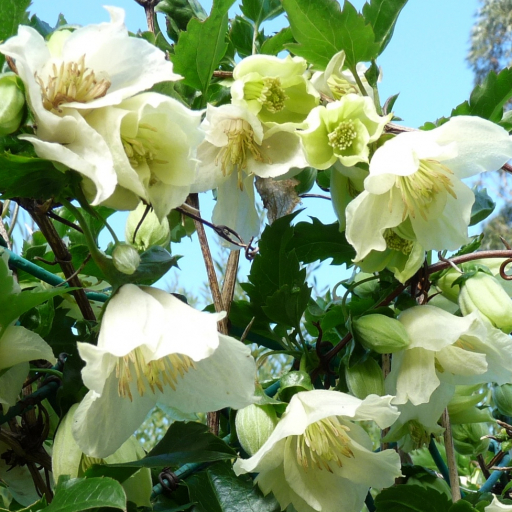
Often called the Fern-leaved Clematis or Early Virgin’s Bower, this Mediterranean native is a true winter rebel. While most of your garden is sleeping under the frost, this vigorous climber is waking up, draping fences and pergolas in delicate, nodding bells. It is a prized choice for gardeners who want to keep their landscape lush and blooming during the darkest months of the year.
🔍 How to Identify
- 🔔 The Flowers: Large, nodding, bell-shaped blooms that are typically creamy-white or pale yellow. Some varieties, like 'Freckles,' are famously splattered with maroon spots on the inside.
- 🌿 Evergreen Foliage: Unlike many of its cousins, this Clematis keeps its leaves all year. They are dark green, glossy, and deeply lobed, giving them a fern-like appearance.
- 🌪️ Silky Seed Heads: Once the flowers fade, they are replaced by decorative, fluffy, silver seed heads that look like wisps of smoke or "old man's beard."
🏡 In Your Garden
- 🌞 The Summer Siesta: This plant is unique because it often goes dormant in the hot summer months to conserve water—a process called "estivation." Don't be alarmed if it looks a bit thin in July; it’s just resting for its winter show.
- 🧗 Low Maintenance Climbing: It belongs to "Pruning Group 1," which means it requires very little cutting. It blooms on the previous year's growth, so you only need to tidy it up immediately after it finishes flowering in the spring.
⚠️ Safety & Toxicity
- 🐾 Mildly Toxic: All parts of the Clematis plant contain a compound called protoanemonin. If ingested, it can cause mouth irritation, drooling, and digestive upset in cats, dogs, and horses.
- 🧤 Skin Irritant: The sap can cause localized skin redness or a burning sensation for some people. It is always a good idea to wear gardening gloves when pruning or handling the vine.
✨ Fun Fact
In the language of flowers, Clematis represents "mental beauty" and "ingenuity." This is likely because of the plant’s clever ability to climb almost any surface by wrapping its leaf stalks tightly around whatever it touches!

Detailed Care Instructions
To grow a Clematis Cirrhosa plant, follow these steps:
- Choose a suitable location: Clematis Cirrhosa prefers a sunny or partially shaded spot with well-draining soil. It is also best to provide some support for the plant to climb on, such as a trellis or fence.
- Prepare the soil: Dig a hole that is two times wider and deeper than the root ball of the plant. Add organic matter, such as compost or well-rotted manure, to improve soil fertility and drainage.
- Planting: Place the root ball in the hole, making sure that the top of the root ball is level with or slightly above the soil surface. Fill the hole with soil, gently firming it around the roots.
- Watering: Give the plant a thorough watering after planting to settle the soil. Keep the soil consistently moist but not waterlogged, especially during the plant's first growing season.
- Mulching: Apply a layer of organic mulch, such as wood chips or straw, around the base of the plant to help retain moisture, suppress weeds, and regulate soil temperature.
- Support: Install a trellis, arbor, or other support structure near the plant for it to climb on. Make sure it is sturdy enough to support the weight of the plant as it grows.
- Pruning: Clematis Cirrhosa blooms on the previous year's growth, so prune it after flowering in late winter or early spring. Remove any dead or damaged branches and lightly shape the plant if necessary.
- Fertilizing: Feed the plant with a balanced, slow-release fertilizer in early spring and again in midsummer to promote healthy growth and abundant blooms. Avoid over-fertilizing, as it may result in excessive foliage growth but fewer flowers.
- Winter care: In colder climates, protect the plant from harsh winter conditions by mulching around the base and covering it with burlap or a plant cover. This will help insulate the roots and prevent winter damage.
- Regular maintenance: Provide regular care by watering, monitoring for pests and diseases, and removing any dead or damaged foliage.
Following these steps should help you successfully grow and care for your Clematis Cirrhosa plant. Remember that each plant is unique, so adjust your care routine based on the specific needs of your plant.

Place in a bright room that is sun drenched almost all day. Or directly in a south-facing window.

To water this plant, the soil should be kept consistently moist but not waterlogged. It is important to water deeply and thoroughly, allowing the water to soak into the soil rather than just surface watering. It is also recommended to water the plant in the morning or early afternoon to avoid the risk of high humidity and fungal growth. Additionally, it is important to avoid splashing water on the leaves as this can also promote fungal growth.
To fertilize this plant, use a balanced fertilizer with equal proportions of nitrogen, phosphorus, and potassium. Apply the fertilizer in early spring before the growing season begins and again in mid-summer to promote healthy growth and flowering. Avoid fertilizing when the plant is dormant and always follow the manufacturer's instructions for application rates. Water the plant after fertilization to help distribute the nutrients throughout the soil.
The ideal soil for Clematis Cirrhosa plants should be well-draining and loamy. It should also be rich in nutrients, with a pH level between 6 and 7.5. A mix of sandy soil and organic matter, such as compost, would be a good choice. It is important to avoid heavy clay soils, as they can lead to drainage problems and root rot. Additionally, the soil should be kept moist but not waterlogged, and mulching can help retain moisture and prevent weed growth.
To propagate this plant, you will need to take a stem cutting in the early summer months. Choose a healthy stem that is approximately 6 inches long and has a few leaves. Cut the stem at a 45-degree angle with clean, sharp scissors. Remove the lower leaves from the stem, leaving only a few at the top. Dip the cut end of the stem into rooting hormone powder and gently tap off any excess. Plant the stem cutting into a container filled with well-draining soil and mist it with water. Cover the container with a plastic bag to create a greenhouse effect and place it in a warm, bright location out of direct sunlight. Check the soil frequently and keep it moist but not waterlogged. After a few weeks, roots should start to grow from the cut end of the stem. Once the plant has established a healthy root system, it can be transplanted into a larger pot or directly into the ground.








