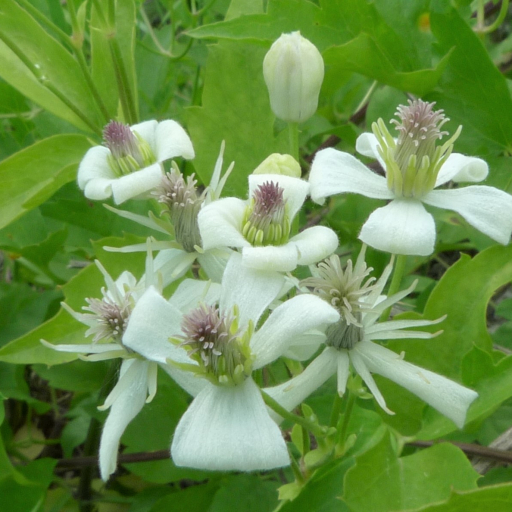
Plant Overview
Often called "Western White Clematis" or "Old Man's Beard," this vigorous native vine is a staple of Western North American landscapes. In late summer, it transforms fences and riverbanks into a frothy sea of white blossoms, followed by silvery, feathery seed heads that glow in the autumn light. It is a favorite for gardeners looking to add vertical interest and a touch of wild romance to their outdoor spaces.
🔍 How to Identify
- 🌿 Leaf Structure: Features compound leaves, usually with 3 to 7 toothy, heart-shaped leaflets that grow in a swirling, climbing pattern.
- 🌸 Flower Clusters: Produces dense, starry clusters of small, creamy white flowers that lack true petals but have four showy, petal-like sepals.
- 🌬️ Silky Seed Heads: Once the flowers fade, the plant develops its most famous feature—long, silky, plume-like tails attached to the seeds that look like a tangled grey beard.
🏡 In Your Garden
- 🧗 The Twining Habit: Unlike vines that use suckers or tendrils, this Clematis climbs by twisting its leaf stalks around supports. It requires a sturdy trellis, fence, or a large shrub to scramble over.
- 💧 Cool Feet, Hot Head: This plant follows the classic Clematis rule; it thrives when its roots are kept cool and shaded (by mulch or stones) while its foliage basks in the bright sun.
- ✂️ Vigorous Screening: Because it grows so rapidly, it is excellent for creating a natural privacy screen. However, it can become aggressive in small spaces, so don't be afraid to prune it back hard in the early spring.
⚠️ Safety & Toxicity
- 🚫 Toxic to Pets: This plant contains protoanemonin, which is irritating to the mouth and digestive tract of cats, dogs, and horses.
- 🧤 Skin Irritation: The sap can cause localized redness or even blistering on sensitive skin. It is best to wear gloves when pruning or handling large amounts of the vine.
- ⚠️ Ingestion Warning: All parts of the plant are considered toxic if consumed, leading to stomach upset, nausea, and burning of the mouth.
✨ Fun Fact
🌶️ The Pepper Vine: Early pioneers and travelers sometimes used the acrid shavings of the root or crushed leaves as a substitute for black pepper when supplies were low, earning the plant the nickname "Pepper Vine." However, the "spice" was more of a chemical burn than a flavor!

Detailed Care Instructions
To grow Clematis ligusticifolia (Western Virgin's Bower), follow these steps:
- Choose the right location: Clematis ligusticifolia prefers a sunny or partially shaded spot in the garden. Ensure that the soil is well-draining and fertile.
- Prepare the soil: Amend the soil with organic matter, such as compost or well-rotted manure, to improve its fertility and drainage.
- Planting: Dig a hole that is roughly twice the size of the plant's root ball. Place the plant in the hole and backfill with soil, firming it gently around the plant. Make sure the root ball is level with the ground.
- Watering: Water the plant deeply immediately after planting to help settle the soil. Afterward, water regularly, keeping the soil consistently moist but not waterlogged.
- Mulching: Apply a layer of mulch around the base of the plant to retain moisture, suppress weeds, and regulate soil temperature. Use organic mulch like wood chips or straw, keeping it a few inches away from the stem.
- Pruning: Prune Clematis ligusticifolia lightly in early spring to remove any dead or damaged growth. It can also benefit from pruning after blooming to maintain its shape and encourage more vigorous growth.
- Support: Depending on the growth habit of your Clematis ligusticifolia, provide support such as a trellis, fence, or arbor for the plant to climb on. This will help it reach its full potential and display its beautiful flowers.
- Fertilizing: Apply a balanced, slow-release fertilizer in early spring to provide necessary nutrients for healthy growth. Follow the package instructions for application rates.
- Regular Care: Monitor the plant regularly for pests or diseases. Clematis ligusticifolia is generally pest-resistant but keep an eye out for aphids or powdery mildew. Water regularly, especially during dry periods, to keep the soil moist.
- Propagation: If desired, Clematis ligusticifolia can be propagated by collecting and planting seeds or by taking softwood cuttings in early summer.
By following these steps, you can successfully grow Clematis ligusticifolia and enjoy its lovely flowers in your garden.

Place in a bright room that is sun drenched almost all day. Or directly in a south-facing window.

To water this plant, ensure that the soil is moist but not waterlogged. This can be achieved by watering the soil at the base of the plant, rather than watering from above. Additionally, it is important to water the plant deeply and infrequently, rather than providing shallow, frequent waterings. This will encourage deep root growth and ensure the plant can withstand periods of drought. It is also important to ensure proper drainage to prevent waterlogging, which can lead to root rot. Finally, consider using a layer of mulch to help retain soil moisture and prevent the soil from drying out too quickly.
For best growth and flower production, apply a balanced fertilizer with equal amounts of nitrogen, phosphorus, and potassium in early spring before new growth appears. Dilute the fertilizer according to the package instructions and apply around the base of the plant, avoiding contact with the leaves and stems. Water thoroughly after fertilizing. Avoid fertilizing during the growing season as it may cause excessive vegetative growth and reduce flowering.
The ideal soil for the plant would be well-draining and moist, with a slightly acidic pH between 6.0 and 7.0. It should be rich in organic matter, such as compost or peat moss, to ensure that the plant has enough nutrients to grow and thrive. Additionally, the soil should be deep enough to accommodate the plant's extensive root system, which can stretch up to 3 feet deep and 6 feet wide. It is important to avoid compacted soils or heavy clay, which can impede drainage and stunt the plant's growth. Finally, since the plant likes to climb, it is also recommended to provide some form of support, such as a trellis or fence, to help it reach its full potential.
- Gathering Supplies and Preparing for Propagation: To propagate this plant, you will need a few supplies. These include clean and sharp pruning shears, rooting hormone powder, a small container, and a well-draining soil mix. You can also prepare a small greenhouse or use a clear plastic bag to create a humid environment for the plant to grow in.
- Identifying the Right Stem for Propagation: Look for a healthy stem that is around 4-6 inches long. It should be green, flexible, and without any signs of damage or yellowing leaves.
- Preparing the Stem for Propagation: Using clean and sharp pruning shears, cut a stem from the parent plant. Make the cut at a 45-degree angle and ensure that it is clean and straight. Remove any lower leaves or buds on the stem as they can reduce the amount of energy available for the rooting process.
- Applying Rooting Hormone Powder: Dip the cut end of the stem into a rooting hormone powder to help stimulate root growth. Follow the instructions on the packet carefully and tap off any excess powder.
- Placing the Stem in Soil: Make a small hole in the well-draining soil mix with your finger or a pencil and gently insert the stem into the hole. Make sure that at least half of the stem is below the soil surface.
- Watering the Stem: Water the newly planted stem well, making sure that the soil is moist but not waterlogged.
- Creating a Humid Environment: Cover the container with a clear plastic bag or place it in a small greenhouse to create a humid environment. This will help the plant retain moisture and reduce water loss through transpiration.
- Monitoring the Plant's Growth: Keep an eye on the plant's progress over the next few weeks. Check the soil regularly, making sure it stays moist but not wet. If the rooting is successful, new growth should start to appear within a month or two.
- Transplanting the New Plant: Once the plant has developed a few new leaves and roots, it should be ready to be transplanted into a larger pot or directly into the garden. Gradually acclimate the plant to its new location by exposing it to increasing amounts of sunlight over a week or two before planting it outdoors.








