Plant Overview
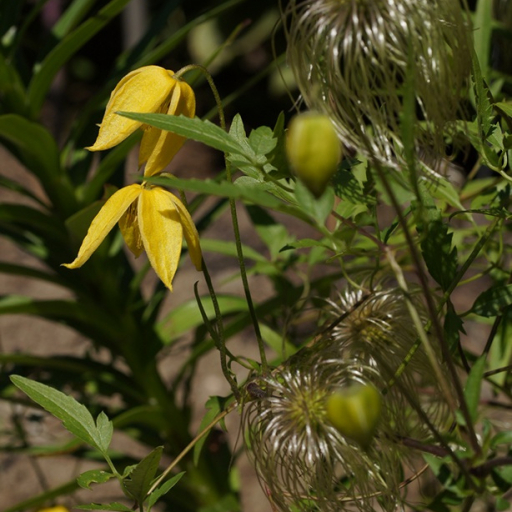
Known affectionately as the "Orange Peel Clematis," Clematis tangutica is a show-stopping climber that brings a touch of wild, rustic elegance to any garden. Unlike the flat, plate-like blooms of many hybrid varieties, this vigorous vine produces nodding, golden lanterns that look as if they were hand-crafted from citrus rinds. It is a champion of the "late-season garden," providing a burst of color and whimsical texture just as other plants begin to fade.
🔍 How to Identify
- 🌼 Lantern-Style Blooms: Small, four-petaled yellow flowers that hang downward, resembling tiny golden bells or thick pieces of orange peel.
- 🧶 Silky Seed Heads: As the flowers fade, they transform into large, fluffy, silver-white seed plumes that shimmer in the wind, often lasting well into winter.
- 🌿 Lacy Foliage: Delicate, compound leaves with a bright green hue that create a dense, textured screen perfect for covering trellises or unsightly fences.
🏡 In Your Garden
- ✂️ The "Hard Prune" Rule: This plant belongs to Pruning Group 3, meaning it flowers on new growth. You can cut the entire plant back to about 12 inches from the ground in late winter. This keeps the vine from becoming a tangled "nest" and encourages a massive flush of summer blooms.
- 👣 Cool Feet, Hot Head: This Clematis follows the golden rule of its genus: it wants its roots in the cool, moist shade and its vines reaching for the full sun. Use mulch, flat stones, or low-growing perennials to shade the base of the plant.
⚠️ Safety & Toxicity
- 🐾 Toxic to Pets: Like all Clematis species, C. tangutica contains protoanemonin. If ingested by dogs, cats, or horses, it can cause drooling, vomiting, and mouth pain.
- 🧤 Skin Irritant: The sap can cause minor skin irritation or "Clematis dermatitis" in sensitive individuals. It is best to wear gardening gloves when pruning or handling broken stems.
✨ Fun Fact
The feathery, whimsical seed heads are so persistent and beautiful that they are often used in dried floral arrangements. In the wild, these "wig-like" plumes help the seeds catch the wind to travel long distances, earning the plant the folk name "Old Man's Beard."

Detailed Care Instructions
To grow Clematis Tangutica plants, follow these steps:
- Choose a suitable location: Clematis Tangutica prefers a sunny or partially shaded spot in your garden. The soil should be well-draining and rich in organic matter.
- Prepare the soil: Amend the soil with compost or well-rotted manure to improve its fertility and drainage. Make sure to remove any weeds or large rocks.
- Planting the vine: Dig a hole that is about twice the size of the root ball. Gently place the plant in the hole, ensuring that the crown (where the roots meet the stem) is level with or slightly above the soil surface. Fill the hole with soil, firming it gently around the plant.
- Watering: After planting, water the plant thoroughly to settle the soil. Clematis Tangutica requires regular watering, especially during dry periods. Aim to keep the soil evenly moist, but not waterlogged.
- Mulching: Apply a layer of organic mulch around the base of the plant to help retain moisture, suppress weeds, and regulate soil temperature. Keep the mulch a few inches away from the stem to prevent rot.
- Support: Most clematis varieties require some form of support, such as a trellis, fence, or arbor. Install the support system near the plant, ensuring that it is sturdy enough to hold the vine as it grows.
- Pruning: Clematis Tangutica blooms on new wood, so it can be pruned back hard in late winter or early spring before new growth begins. Cut back the entire plant to a height of 12-18 inches (30-45 cm). Regular pruning helps maintain a compact shape and encourages new growth and blooming.
- Fertilization: Fertilize the plant with a balanced, slow-release fertilizer in early spring and late summer according to the package instructions. Clematis Tangutica does not typically require heavy fertilization, but a light feeding can promote healthy growth.
- Pests and diseases: Monitor the plant regularly for pests such as aphids or caterpillars. Treat infestations with insecticidal soap or other appropriate methods. Clematis can also be susceptible to fungal diseases, so provide good air circulation and avoid overhead watering.
By following these steps and providing proper care, you can successfully grow a Clematis Tangutica plant and enjoy its beautiful yellow flowers and feathery seed heads.

Place in a bright room that is sun drenched almost all day. Or directly in a south-facing window.

First, make sure the soil around the plant is moist before watering. If it is already moist, hold off on watering until the soil has partially dried out. When you do water, water the base of the plant rather than overhead to avoid getting water on the foliage or flowers. Use a watering can or hose with a gentle spray attachment to give a slow, steady stream of water. Allow the water to soak into the soil deeply to encourage the roots to grow deeper. Do not overwater the plant as this can lead to root rot. Monitor the soil regularly and adjust the watering frequency depending on the weather conditions and the moisture level of the soil.
For best results, fertilize this plant with a balanced all-purpose fertilizer in early spring, just as it begins to emerge from dormancy. Use a slow-release fertilizer and apply it according to the manufacturer's instructions. Avoid over-fertilizing as this can damage the plant. Water well after fertilizing to help the nutrients reach the roots. You can also apply a light mulch around the base of the plant to help retain moisture and nutrients.
The ideal soil for Clematis Tangutica plant should be well-draining, fertile, and rich in organic matter. It should have a pH level between 6.0 and 7.0. The plant prefers a soil that is slightly alkaline. It is best to avoid using heavy clay soil, as it can retain too much moisture and may cause root rot. Sand or loamy soil mixed with compost and perlite can provide good drainage and soil structure. Additionally, adding mulch around the base of the plant can help maintain soil moisture and regulate temperature.
To propagate this plant, take a cutting from a healthy and mature specimen. Cut the stem at an angle, making sure that the cutting is at least 4 inches long. Remove the lower leaves from the stem, leaving only two or three on the top. Dip the cut end of the stem in rooting hormone powder and plant it in a pot filled with moist soil mix. Cover the pot with a plastic bag or a clear plastic container to create humidity and place it in a cool and shaded spot. Keep the soil moist but not too wet. After a few weeks, check if the cutting has developed roots by gently tugging on it. Once roots have formed, transplant the new plant to a larger pot or directly into the garden, ensuring that it receives enough sunlight, water, and nutrients to thrive.








