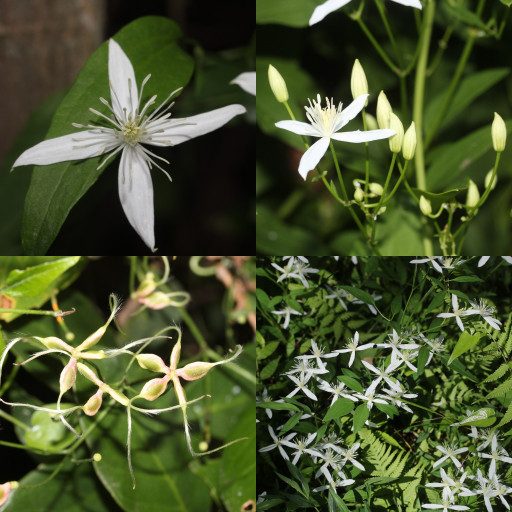
Plant Overview
Often called the Sweet Autumn Clematis or "Snow in Autumn," this vigorous climber is famous for turning fences and trellises into frothy white blankets just as the rest of the garden begins to fade. Unlike its large-flowered spring cousins, this variety waits for the late summer heat to release its intense, vanilla-like fragrance. While it is a beloved ornamental, its enthusiasm for growth is legendary, often earning it the nickname "Mile-a-Minute Clematis."
🔍 How to Identify
- 🌸 The Bloom: Masses of small, creamy-white flowers shaped like four-pointed stars. They lack true petals; what you see are actually four petal-like sepals surrounding a burst of delicate stamens.
- 🍃 The Foliage: Glossy, leathery, dark green leaves that grow in opposite pairs. The leaves are typically compound with 3 to 5 leaflets, staying green well into the late autumn.
- 🌬️ The Seed Heads: Once the flowers fade, they are replaced by striking, feathery silver seed heads (styles) that look like wispy clouds and catch the light beautifully in the winter sun.
🏡 In Your Garden
- 🧗 Climbing Mechanics: This plant is a "leaf-tendril" climber. Instead of using thorns or suction cups, it wraps its flexible leaf stalks around thin supports like wire or lattice to pull itself upward.
- ✂️ Pruning Strategy: It belongs to "Pruning Group 3." Because it blooms on new growth produced during the current season, you should cut the entire plant back to about 12 inches from the ground in early spring to prevent it from becoming a tangled, woody mess.
- 🌞 The Goldilocks Rule: Like most Clematis, it prefers "cool feet and a warm head." Plant it where the vine can reach the sun, but keep the root zone shaded with mulch or low-growing perennials.
⚠️ Safety & Toxicity
- 🐾 Toxic to Pets: Contains protoanemonin, which is toxic to dogs, cats, and horses. If ingested, it can cause drooling, vomiting, and digestive upset.
- 🧤 Skin Irritant: The sap can cause localized skin redness or a mild burning sensation for some gardeners. It is always wise to wear gloves when pruning large quantities of this vine.
✨ Fun Fact
The Sweet Autumn Clematis doesn't just "grow"—it travels. In the right conditions, a single vine can grow up to 30 feet in a single season, and its feathery seeds are designed to be carried miles away by the wind to start new colonies.

Detailed Care Instructions
| Color | Creamy White |
| Soil Ph | 6 To 7 (Slightly Acidic To Neutral) |
| Humidity | Normal |
| Lighting | Full Sun |
| Toxicity | Toxic |
| Soil Type | Average, Medium Moisture, Well-Draining |
| Bloom Time | August To September |
| Difficulty | Medium |
| Plant Type | Perennial Flowering Vine |
| Hibernation | Cold Period |
| Mature Size | 15 To 30 Feet Long |
| Native Area | Japan |
| Temperature | 18°C - 25°C |
| Sun Exposure | Full Sun To Part Shade |
| Hardiness Zones | 5-9 |
To grow Clematis Terniflora (also known as Sweet Autumn Clematis) successfully, follow these steps:
- Choose the right location: Select a spot with full sun to partial shade, and ensure the soil is well-drained and rich in organic matter. Clematis Terniflora prefers a slightly acidic to neutral pH.
- Prepare the soil: Improve the soil by adding compost or well-rotted manure before planting. This helps enrich the soil with nutrients and organic matter.
- Planting: Dig a hole twice the width and depth of the root ball. Place the plant in the hole, making sure the crown (where the roots meet the stems) is level with or slightly above the soil surface. Backfill the hole with soil, gently firming it around the roots.
- Watering: Water the plant thoroughly after planting and continue to water regularly, especially during dry periods. Clematis Terniflora prefers evenly moist soil but should not be waterlogged.
- Mulching: Apply a layer of mulch around the base of the plant to help retain moisture and suppress weed growth. Use organic mulch like wood chips, straw, or bark.
- Support: Provide a suitable support structure for the plant to climb on, such as a trellis, fence, or pergola. Secure the stems to the support as they grow to encourage upward growth.
- Pruning: Clematis Terniflora blooms on new growth, so pruning is encouraged in late winter or early spring before new growth begins. Prune back the plant to about 12 to 18 inches above the ground, removing dead or weak stems.
- Fertilizing: Feed the plant with a balanced fertilizer, such as a 10-10-10 formula, in early spring before new growth starts. Follow the instructions on the fertilizer packaging for application rates.
- Pests and diseases: Monitor the plant for common pests like aphids, slugs, and snails, and take appropriate measures to control them. Ensure good air circulation around the plant to prevent fungal diseases.
- Enjoy the blooms: Clematis Terniflora typically blooms in late summer to early fall, producing masses of small white flowers with a sweet fragrance. Sit back and enjoy the beautiful display and the pleasant scent.
Remember to provide regular care and maintenance to ensure the health and vitality of the Clematis Terniflora plant.

Place in a bright room that is sun drenched almost all day. Or directly in a south-facing window.

To properly water this plant, first make sure that the soil is well-draining. If the soil is too wet, it can cause root rot and damage the plant. Water deeply, but infrequently, allowing the soil to dry out slightly between waterings. When watering, try to avoid getting water on the leaves and flowers as this can cause disease and damage to the plant. Use a watering can or hose with a gentle flow to ensure the water penetrates deep into the soil. It is also important to water the plant in the morning or evening when the sun is not as intense, as this helps to prevent evaporation and allows the plant to absorb the water more effectively.
To fertilize this plant, it is best to use a slow-release granular fertilizer that is high in phosphorus and potassium. Fertilize once a month during the growing season, being careful not to over-fertilize as this can damage the plant. Apply the fertilizer to the soil at the base of the plant and water thoroughly after fertilization.
Clematis Terniflora plant requires a well-drained and nutrient-rich soil. Preferably, the soil should have a slightly acidic to neutral pH level. The soil should be loose, aerated, and moist, but not waterlogged. It should contain organic matter and mulch to help retain moisture and improve soil fertility. It should also be free of weeds and debris. To ensure optimal growth, it's recommended to feed the plant with a balanced, slow-release fertilizer.
Clematis Terniflora is propagated through a process called layering. First, identify a stem that is flexible and pliable. Bend the stem down towards the ground, and bury the portion of the stem that is closest to the tip in a hole about 4 inches deep. Use a small stone or piece of wire to hold the stem in place. Cover the hole with soil and water the area. In a few months, the buried portion of the stem should sprout roots. Once roots have developed, cut the stem from the mother plant and transplant it to its new location. It is important to note that layering should be done in early spring or late fall when the plant is not actively blooming.
Common pests of the sweet autumn clematis include Spider mites, aphids, thrips, larvae. Make a habit of checking your sweet autumn clematis frequently for pests so that any infestations can be caught and managed early.








