Plant Overview
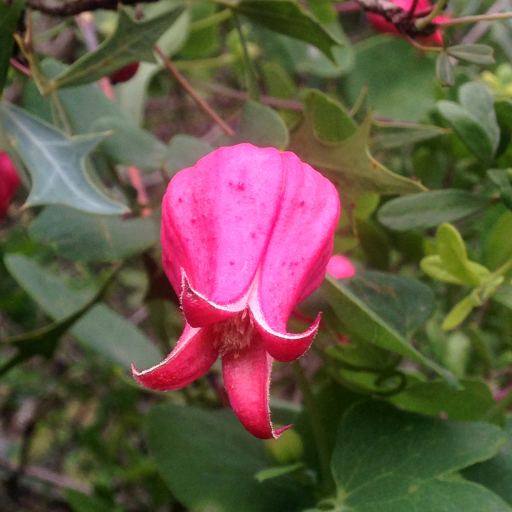
The Clematis texensis, affectionately known as the "Scarlet Leather Flower," is a rugged beauty native to the rocky limestone cliffs of Texas. Unlike the large, dinner-plate blooms of many garden hybrids, this species offers delicate, urn-shaped flowers that look like tiny hanging lanterns. It is a prized possession for gardeners looking to add a touch of wild, Southern elegance to their trellises.
🔍 How to Identify
- 🌺 The Bloom Shape: Look for distinct, nodding "bells" or urn-shaped flowers. The petals are unusually thick and fleshy, giving them a leather-like texture.
- 🎨 Vibrant Color: The flowers are a striking scarlet to rose-pink on the outside, often fading to a creamy yellow or pale pink on the inside tips.
- 🌿 Folliage & Form: The leaves are typically bluish-green and rounded. As a "sub-shrubby" climber, it uses its leaf stalks (petioles) like tiny hands to twist around wires and fences.
🏡 In Your Garden
- 🧗 The "Cool Feet" Rule: Like most Clematis, this Texan native loves having its "head in the sun and feet in the shade." Use mulch or low-growing perennials to keep the soil around its base cool and moist.
- ⛰️ Soil Preference: It is a fan of alkaline conditions. If your soil is very acidic, a bit of garden lime can help it feel more at home, mimicking its native limestone habitat.
- ✂️ Pruning Style: This is a "Group 3" Clematis. This means it blooms on new growth produced each year. You can cut it back hard (to about 12 inches from the ground) in late winter or early spring to encourage a flush of fresh, flowery vines.
⚠️ Safety & Toxicity
- 🐾 Toxicity Level: Low to Moderate. Most Clematis species contain protoanemonin, which is an irritant.
- 👄 Symptoms: If ingested by pets or curious children, it can cause mouth sores, drooling, or digestive upset. The sap may also cause mild skin irritation for some gardeners, so wearing gloves while pruning is a smart move.
✨ Fun Fact
The Scarlet Leather Flower is the "secret ingredient" in many famous garden hybrids! Most notably, it is a parent of the world-famous 'Princess Diana' Clematis, passing down its iconic tulip-shaped bloom and heat-loving DNA.

Detailed Care Instructions
To grow Clematis Texensis, also known as Scarlet Clematis, follow these steps:
- Choose a suitable location: Select a spot that receives full to partial sunlight. Ensure the soil is well-draining, rich in organic matter, and slightly acidic to neutral pH (around 6.0 to 7.0).
- Prepare the soil: Before planting, till the soil to improve its quality and remove any weeds or grass. Incorporate compost or well-rotted manure to enhance fertility.
- Planting: Dig a hole twice as wide and deep as the plant's root ball. Place the plant into the hole, ensuring that the crown (where the stems meet the roots) is level with the ground. Backfill the hole with soil, lightly firming it around the roots.
- Watering: Provide an ample amount of water immediately after planting, and continue to water regularly to keep the soil evenly moist. Avoid overwatering, as the plant does not tolerate waterlogged conditions.
- Mulching: Apply a layer of organic mulch, such as wood chips or shredded leaves, around the base of the plant. Mulch helps conserve moisture, suppress weeds, and insulate the roots from extreme temperatures.
- Support: Depending on the variety and growth habit, provide a trellis, arbor, or other support structure for the vine to climb. Secure the stems gently to the support as they grow.
- Pruning: Clematis Texensis generally requires minimal pruning. In late winter or early spring, remove any dead or damaged stems and cut back healthy stems to a pair of strong buds. This promotes vigorous growth and better blooming.
- Fertilizing: Feed the plant with a balanced, slow-release fertilizer in spring, following the manufacturer's instructions. Avoid excessive nitrogen fertilizers that can result in lush foliage but fewer flowers.
- Pests and diseases: Monitor the plant regularly for signs of common pests like aphids or slugs. Treat as needed using eco-friendly pest control methods. Avoid overwatering, as wet foliage can lead to fungal diseases. If necessary, apply fungicides according to label instructions.
- Harvesting seeds (optional): If you'd like to collect seeds, allow the flowers to dry on the vine and collect the seed heads. Sow them in a well-draining seed-starting mix indoors, or directly plant them in the garden in early spring.

Place in a bright room that is sun drenched almost all day. Or directly in a south-facing window.

One way to water this particular plant is to ensure that the soil is consistently moist, but not overly saturated. This can be achieved by regularly providing water directly at the base of the plant, avoiding the foliage as much as possible. It is important to allow excess water to drain, as this species can be sensitive to waterlogged soil. Additionally, during periods of excessive heat or drought, it may be necessary to increase the frequency of watering to prevent the plant from becoming stressed or drying out.
To fertilize this plant, use a balanced fertilizer with equal parts nitrogen, phosphorus and potassium. Apply the fertilizer at a rate of 1 tablespoon per gallon of water once a month during the growing season. Be sure to water the plant thoroughly before and after fertilizing. Avoid applying fertilizer when the plant is in bloom or when the soil is dry.
Clematis Texensis is a plant that requires a well-draining soil with a high level of organic matter. It grows best in soil that is slightly acidic with a pH of around 6.5 to 7.0. It also needs a soil that can retain moisture, but should never be waterlogged, as this could lead to root rot. It is recommended to amend the soil with compost or well-rotted manure to improve its overall quality. Additionally, it is important to ensure that the soil is consistently moist, but not wet, as Clematis Texensis is sensitive to drought.
To propagate this plant, take a cutting of a mature stem in the early summer, making sure it has at least two nodes and the stem is about 6 inches in length. Remove the leaves from the bottom half of the stem and dip the cut end in rooting hormone. Place the cutting in a pot filled with well-draining soil or a mix of perlite and peat. Keep the soil moist but not waterlogged and place the pot in a shaded area with indirect sunlight. Mist the cutting daily with water to prevent it from drying out and cover the pot with plastic wrap to create a humid environment. After 3-4 weeks, check for roots by gently tugging the stem. Once roots have formed, transplant the cutting into a larger pot or directly into the ground.








