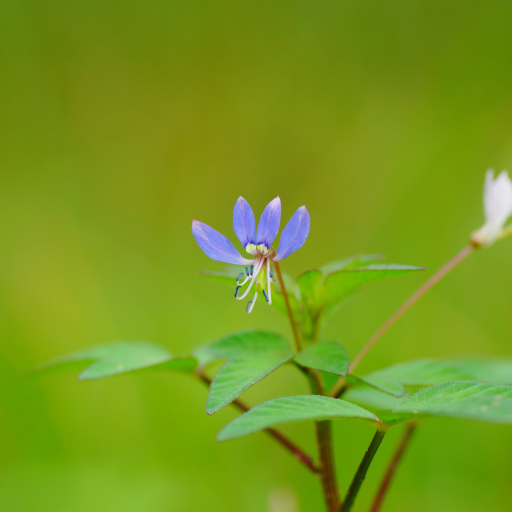
Plant Overview
Often called the Fringed Spider Flower, this delicate purple wildflower is a master of survival. While some gardeners dismiss it as a common weed, nature lovers cherish it for its "spindly" charm and its role as a vital pit stop for tropical butterflies. Native to Africa but now a global traveler, it brings a touch of wild, airy elegance to any sunny corner it inhabits.
🔍 How to Identify
- 🌸 Asymmetrical Blooms: Look for small, vibrant violet or blue-purple flowers with four distinct petals that all point upward, creating a "fringed" or fan-like appearance.
- 🍃 Trifoliate Leaves: The foliage consists of three small, diamond-shaped leaflets on a single stalk, often with a slightly textured or "hairy" surface.
- 🌱 Spidery Seed Pods: After the flowers fade, they leave behind long, thin, upward-pointing capsules that look like tiny green bean pods or spindly spider legs.
🏡 In Your Garden
- 🦋 Pollinator Paradise: This plant is a primary host for various "White" and "Yellow" butterfly species. If you find it in your garden, you aren't just growing a plant; you are maintaining a butterfly nursery.
- 💧 Disturbed Soil Specialist: It thrives in the "in-between" spaces—cracks in pavement, garden edges, or rocky patches. It prefers moist soil but is incredibly resilient against heat and neglect.
- 🌿 Self-Sowing Nature: It is a prolific seed producer. If you don't want it to spread, be sure to snip the seed pods before they turn brown and "pop" open to scatter their contents.
⚠️ Safety & Toxicity
- ✅ Generally Safe: The Fringed Spider Flower is not known to be toxic to humans, cats, or dogs. It is often handled safely by gardeners without issue.
- 🧤 Skin Sensitivity: While not poisonous, some individuals with sensitive skin may experience very mild irritation from the tiny hairs on the stems. A quick hand wash after gardening is usually all that’s needed.
✨ Fun Fact
The seeds of the Fringed Spider Flower are "ant-powered!" They contain a tiny, oily attachment called an elaiosome that ants find delicious. Ants carry the seeds back to their underground homes, eat the treat, and leave the seed in their nutrient-rich waste tunnels to grow—a process known as myrmecochory.

Detailed Care Instructions
To grow Cleome Rutidosperma plant, also known as Spider Flower, you can follow these steps:
- Select the right location: Cleome Rutidosperma plants thrive in full sun and well-draining soil. Choose a spot in your garden that receives at least 6-8 hours of direct sunlight per day.
- Prepare the soil: Spider Flowers prefer slightly acidic to neutral soil (pH 6.0-7.0). Before planting, loosen the soil and amend it with organic matter, such as compost, to improve drainage and nutrient content.
- Sow seeds: Cleome Rutidosperma is usually grown from seeds. Directly sow the seeds in the garden after the last frost date in your area. Lightly press the seeds into the soil surface or cover them with a thin layer of soil. Space the seeds about 1 foot apart.
- Watering and fertilizing: Keep the soil consistently moist but not waterlogged until the seeds germinate. Once the plants are established, water them deeply but infrequently, allowing the top inch of soil to dry out before watering again. Spider Flowers do not generally require much fertilizer, but you can apply a balanced slow-release fertilizer during the growing season if desired.
- Provide support: Cleome Rutidosperma plants can grow tall, reaching up to 4-6 feet. As they grow, they may need support to prevent them from falling over. Consider installing stakes or a trellis near the plants to support their height.
- Remove spent flowers: Deadheading or removing spent flowers will encourage the plant to produce more blooms and extend the blooming period.
- Watch out for pests and diseases: Spider Flowers are generally resistant to pests and diseases but may occasionally be affected by aphids, spider mites, or powdery mildew. Regularly inspect the plants for any signs of infestation or disease, and take appropriate measures if necessary.
- Harvesting seeds: At the end of the season, allow some of the Cleome Rutidosperma flowers to mature and develop seed pods. Collect the seeds for future plantings by harvesting the pods when they turn brown and dry.
To properly water Cleome Rutidosperma, it is important to understand its water requirements. This plant prefers moist soil and requires consistent watering during the summer months. However, it is important to not overwater the plant as this can lead to root rot or other issues. When watering the plant, it is best to aim for the soil surrounding the base of the plant and avoid getting water on the leaves or flowers. To avoid soil compaction, it is recommended to water deeply rather than frequently. Additionally, it is important to allow the soil to dry out slightly before watering again. This will prevent waterlogging and promote healthy root growth. It is also a good idea to water in the morning or evening when temperatures are cooler to minimize water loss through evaporation.
To fertilize the Cleome rutidosperma plant, use a balanced fertilizer with equal amounts of nitrogen, phosphorus, and potassium. Apply the fertilizer to the soil around the base of the plant, avoiding direct contact with the plant's leaves or stems. Water the plant thoroughly after fertilizing to help the nutrients penetrate the soil and reach the roots. Do not over-fertilize, as this can cause damage to the plant and lead to excessive growth. Follow the plant's specific fertilization needs based on its growth stage and the surrounding environmental conditions.
The soil recommended for the Cleome Rutidosperma plant should have good drainage and be well-aerated. It should be rich in organic matter and have a slightly acidic pH level between 6.0 and 6.5. A mixture of soil, sand, and peat moss is ideal for growing this plant. It is best to avoid heavy clay soils as they do not drain well and can cause root rot. The soil should be kept moist but not waterlogged, and the plant should be fertilized regularly during the growing season to promote healthy growth and flowering.
To propagate this plant, you will need to collect the seeds after the flower has finished blooming. The seeds can then be planted directly into the soil or started indoors in pots to ensure they have a better chance of germinating. The best time to plant the seeds is in the spring, after the last frost has passed.
To plant the seeds directly into the soil, choose a sunny location with well-draining soil. Prepare the soil by loosening it to a depth of 6 inches and removing any debris. Place the seeds on top of the soil and cover lightly with soil. Water the area thoroughly and keep the soil evenly moist until the seeds germinate.
If starting the seeds indoors, use small pots or a seed tray with good quality potting soil. Place one or two seeds in each pot, covering lightly with soil. Water thoroughly and cover with plastic to create a greenhouse effect. Keep the pots in a warm, sunny location and check daily to ensure the soil stays moist. Once the seeds have germinated, remove the plastic and allow the seedlings to grow.
Once the seedlings have reached a height of 3-4 inches, they can be transplanted outdoors into their permanent location. Choose a sunny location with well-draining soil and space the plants 18-24 inches apart. Water the area thoroughly after planting and keep the soil evenly moist until the plants become established.
Cleome Rutidosperma is a hardy plant that requires little care once established. It prefers full sun and well-draining soil. It can also tolerate drought and heat, making it a great choice for xeriscaping.








