Plant Overview
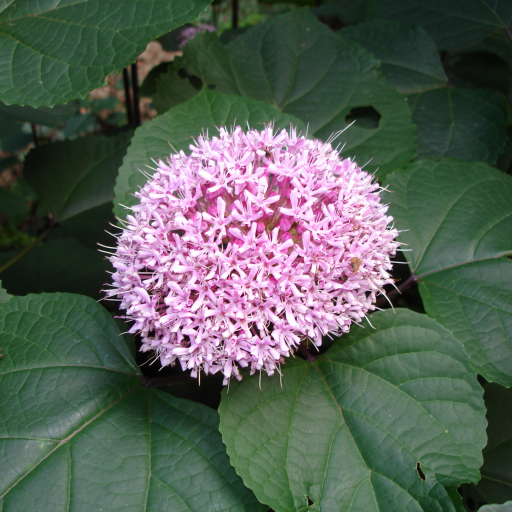
Known as the "Rose Glory Bower" or "Mexican Hydrangea," this vibrant shrub is a sensory contradiction that surprises every gardener. While its massive, rounded pink flower clusters emit a perfume as sweet as jasmine, its dark green leaves release a pungent, peanut-butter-like odor when crushed. Originally hailing from China, it has become a favorite in temperate gardens for its dramatic late-summer blooms and lush, tropical silhouette.
🔍 How to Identify
- 🌸 The Blooms: Large, dome-shaped clusters (corymbs) packed with dozens of tiny, rose-pink, star-shaped flowers with long, elegant stamens.
- 🍃 The Foliage: Broad, heart-shaped leaves with coarsely toothed edges; they are often a deep forest green with a velvety texture and a subtle purple tint on the undersides.
- 🌿 Growth Habit: An upright, deciduous shrub that can reach up to 6 feet tall, often spreading wide through underground runners to form a dense thicket.
🏡 In Your Garden
- 🏃 Space to Wander: This plant is a "spreader." It sends out underground suckers (runners) and can quickly claim a large area of the garden, making it excellent for filling empty corners but a challenge for small, tidy borders.
- ☀️ Light & Winter: While it loves a sunny spot to maximize flower production, it is famously resilient. In colder climates, the stems may die back to the ground in winter, but it reliably regrows from the roots in spring like a perennial.
⚠️ Safety & Toxicity
- 🐾 Mildly Toxic: Like many members of the Clerodendrum genus, the plant contains compounds that can cause stomach upset if leaves or flowers are ingested.
- 👶 Keep Watch: It is best to keep this plant out of reach of curious pets or toddlers who might be tempted by the bright flower clusters. Some gardeners also report mild skin irritation when handling the foliage extensively.
✨ Fun Fact
Despite its common nickname "Mexican Hydrangea," this plant has no biological relation to true Hydrangeas and has never naturally grown in Mexico—it was simply given the name because its flower shape mimics the classic mophead Hydrangea!

Detailed Care Instructions
| Humidity | High |
| Lighting | Full Sun |
| Difficulty | Medium |
| Hibernation | Cold Period |
| Hardiness Zones | 7 - 9 |
To grow Clerodendrum Bungei plant, also known as Glorybower or Rose Glorybower, follow these steps:
- Plant Selection: Choose a healthy Clerodendrum Bungei plant from a reputable nursery or garden center. Look for a plant with lush green foliage and no signs of pests or diseases.
- Planting Spot: Select a location that receives full to partial sun, preferably with afternoon shade to protect the plant from extreme heat. Ensure the area has well-draining soil.
- Soil Preparation: Prepare the planting area by loosening the soil to a depth of around 12 inches (30 cm). Add organic matter such as compost or well-rotted manure to improve soil fertility and drainage.
- Planting: Dig a hole as deep and wide as the nursery container the plant came in. Place the Clerodendrum Bungei plant in the hole, ensuring the top of the rootball is level with or slightly above the soil surface. Backfill the hole with soil and gently firm it around the plant.
- Watering: Water the newly planted Clerodendrum Bungei thoroughly to settle the soil around the roots. Afterward, water regularly to keep the soil evenly moist but avoid overwatering as it can lead to root rot.
- Fertilization: Feed the plant with a balanced slow-release fertilizer in spring. Follow the manufacturer's instructions to determine the appropriate amount to apply. Additionally, you can supplement with liquid fertilizer every 4-6 weeks during the growing season to promote healthy growth.
- Pruning: Prune the Clerodendrum Bungei plant in late winter or early spring before new growth appears. Remove any dead, damaged, or diseased branches. Additionally, you can shape the plant to your desired form by pruning the tips of the branches after flowering.
- Mulching: Apply a layer of organic mulch around the plant, keeping it a few inches away from the stem. Mulching helps retain moisture, suppress weeds, and protect the roots from temperature fluctuations.
- Winter Protection: In colder climates where temperatures drop below freezing, provide winter protection to the Clerodendrum Bungei plant by mulching heavily around the base and covering it with burlap or frost cloth.
- Propagation: Clerodendrum Bungei can be propagated through stem cuttings in spring or early summer. Take 4-6 inch (10-15 cm) cuttings from healthy, non-flowering shoots and plant them in well-draining soil or a rooting medium.
By following these guidelines, you can successfully grow and enjoy your Clerodendrum Bungei plant.

Place in a window with dappled sun or a spot in the middle of a room. Or directly in a window facing west or east.

To properly water this plant, it is important to first understand the needs of the species. Clerodendrum Bungei plants prefer to be consistently moist but not waterlogged. It is important to only water the plant when the top inch of soil feels dry to the touch. When watering, do so slowly and evenly, allowing the water to fully saturate the soil. It is recommended to use room temperature water to avoid shocking the plant’s roots. Avoid overhead watering as this can increase the risk of disease. Finally, be sure to allow excess water to drain from the pot to prevent root rot.
- Choose a balanced fertilizer with equal amounts of nitrogen, phosphorus, and potassium.
- Follow the instructions on the fertilizer package and mix it with water.
- Water the plant thoroughly before applying the fertilizer.
- Apply the fertilizer solution to the soil around the plant, avoiding the leaves and stem.
- Use a dilute solution to avoid overfertilization.
- Repeat the fertilization process once every month during the growing season (spring and summer).
- Reduce the frequency to once every other month during the dormant season (fall and winter).
- Monitor the plant for any signs of nutrient deficiency or excess, such as yellowing leaves or stunted growth.
Clerodendrum bungei thrives in well-draining soil with a slightly acidic pH level. It prefers soil that is rich in nutrients, but not overly rich, as this can lead to excessive growth and weak stems. A mix of garden soil, sand, and peat moss can be used to create a suitable medium for this plant. Avoid using heavy clay soils, as they can retain too much water and lead to root rot. It is best to amend heavy soils with organic matter to improve drainage. When planting, make sure to spread out the roots in the soil and ensure that the plant is at the same level as it was in its previous container.
To propagate this plant, you will need to take stem cuttings from a healthy mature plant during the growing season. Choose a stem that is at least 4-5 inches long and has several nodes. Remove the lower leaves and cut the stem at a 45-degree angle just below a node. Dip the cutting in rooting hormone powder and plant it in a well-draining potting mix. Water the cutting lightly and place a clear plastic bag over the pot to create a mini greenhouse. Place the pot in bright, indirect light and mist the cutting occasionally to keep it moist. After a few weeks, the cutting should start to develop roots. You can then remove the plastic bag and continue to care for the new plant as you would any other Clerodendrum Bungei plant.
Common pests of the glory-flower include Spider mites, aphids, whiteflies. Make a habit of checking your glory-flower frequently for pests so that any infestations can be caught and managed early.








