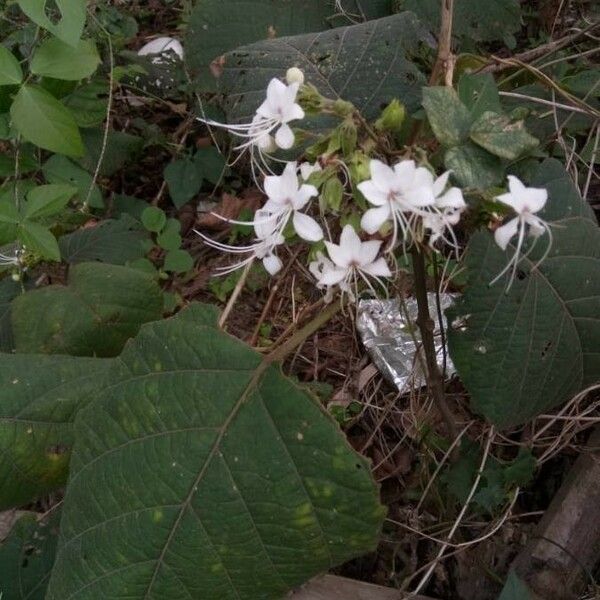
Plant Overview
Known by the whimsical name "Turk’s Turban" or the dramatic "Skyrocket," Clerodendrum indicum is a slender, vertical showstopper. Originating from the grasslands and open forests of Southeast Asia, it adds an architectural, almost alien beauty to a landscape with its incredibly long, tubular blossoms. It is a plant that truly "reaches" for the sun, standing tall and thin like a floral lightning rod.
🔍 How to Identify
- 🎺 The Flowers: Its most striking feature is the clusters of creamy white, extremely long (up to 4 inches) tubular flowers that dangle gracefully, looking like delicate trumpets.
- 🍃 The Foliage: The leaves are narrow, lance-shaped, and usually grow in whorls of three or four around the stem, giving the plant a very tidy, symmetrical appearance.
- 👳 The "Turban" Fruit: After the flowers fade, the calyx (the base of the flower) turns a brilliant, fleshy red and cradles a dark, metallic-blue or black berry, which resembles a tiny beaded turban.
🏡 In Your Garden
- 🚀 Vertical Growth: True to its nickname, this plant prefers to grow straight up rather than out. It is perfect for narrow garden beds or as a background "accent" plant, though it may require occasional pinching to prevent it from becoming too "leggy."
- 💧 Moisture Needs: It is a thirsty species that thrives in humid environments. It prefers consistently moist, rich soil; if it stays dry for too long, it will quickly shed its lower leaves to conserve energy.
- 🌱 Spreading Habit: Gardeners should be mindful that it can produce underground "suckers." It may occasionally "walk" across your garden, with new shoots popping up a short distance from the parent plant.
⚠️ Safety & Toxicity
- 🐾 Mild Toxicity: While not typically considered deadly, the berries and leaves contain compounds that can cause digestive upset if eaten by curious pets or small children.
- 🧤 Skin Care: The sap is generally harmless, but some individuals with sensitive skin may experience mild irritation when pruning. It is always best to wash your hands after handling the foliage.
✨ Fun Fact
In traditional Ayurvedic medicine, the roots of Clerodendrum indicum have been used for centuries to treat respiratory ailments. Its genus name, Clerodendrum, actually translates from Greek as "Chance Tree," reflecting the unpredictable medicinal successes early botanists had with different species in this family!

Detailed Care Instructions
To grow Clerodendrum Indicum (also known as Turk's Turban or Rotheca myricoides), follow these steps:
- Location: Select a sunny to partially shaded spot with well-draining soil. This plant prefers warm and tropical climates.
- Soil preparation: Prepare the soil by adding organic matter such as compost or well-rotted manure to enhance drainage and fertility.
- Planting: Dig a hole slightly larger than the plant's root ball. Place the Clerodendrum Indicum in the hole, ensuring the top of the root ball is level with or slightly above the soil surface. Backfill the hole with soil, gently firming it around the plant.
- Watering: Water the plant thoroughly after planting and keep the soil consistently moist but not waterlogged. Water deeply and less frequently, allowing the top inch of soil to dry out between waterings.
- Fertilizer: Feed the plant with a balanced, slow-release fertilizer in the spring and mid-summer. Follow the manufacturer's instructions for application rates.
- Pruning: Prune the plant in late winter or early spring to remove any dead or damaged branches. Regular pruning helps maintain its shape and promotes healthy growth.
- Mulching: Apply a layer of organic mulch such as wood chips or straw around the base of the plant to conserve moisture, suppress weeds, and protect the roots from temperature fluctuations.
- Pests and diseases: Monitor the plant for any signs of pests, such as aphids or mealybugs, and treat them accordingly. Clerodendrum Indicum is generally resistant to most diseases but may be susceptible to root rot if over-watered.
- Propagation: Propagate the plant through stem cuttings in late spring or early summer. Take cuttings from healthy stems, remove the lower leaves, and place them in a well-draining potting mix. Keep the cuttings moist and warm until they develop roots.
By following these steps, you can successfully grow Clerodendrum Indicum and enjoy its beautiful flowers and foliage.

Place in a bright room that is sun drenched almost all day. Or directly in a south-facing window.

To water this plant, you should first assess its soil moisture level by touching the top layer of soil. If it feels dry, you should water it thoroughly until water drains out from the bottom of the pot. However, if the soil feels moist, you should avoid watering it and check again after a day or two. It is vital to water this plant consistently, but not excessively, as overwatering may lead to root rot. Moreover, it is best to use room temperature and filtered water instead of cold or hot water straight from the tap. Lastly, it would help if you allowed the soil to dry out slightly before watering again to prevent waterlogging and maintain soil health.
Fertilize the plant every two weeks during the growing season with a balanced liquid fertilizer. Dilute the fertilizer to half its strength and apply it to the soil around the base of the plant. Water the plant after fertilizing to allow the nutrients to penetrate the soil. Avoid fertilizing the plant during the dormant season.
Clerodendrum Indicum is a flowering plant that grows well in a well-drained, fertile soil that is rich in organic matter. The soil should be slightly acidic with a pH ranging from 5.5 to 6.5. It is important to avoid using soils that are heavy, compacted, or retain excessive moisture as they may lead to root rot and other diseases. The plant prefers soils that are moist but not waterlogged, and it is important to water it regularly to ensure proper growth. A good quality potting mix or garden soil mixed with compost or leaf mold can provide the ideal growing conditions for Clerodendrum Indicum. Additionally, regular fertilization with a balanced fertilizer can help to promote vigorous growth and abundant flowering.
To propagate this plant, select a healthy stem that is about 6 inches long and has a few nodes. Cut the stem at a 45-degree angle just below a node using a clean, sharp blade. Remove the lower leaves to expose at least one node. Dip the cut end in rooting hormone powder and plant it in a container with well-draining soil. Water the soil and cover the container with a plastic bag or dome to create a mini greenhouse. Place the container in a warm, bright spot but avoid direct sunlight. Mist the cutting with water to keep the humidity high. After a few weeks, gently tug the cutting to see if it has rooted. If it resists, roots have formed and you can remove the plastic cover. Gradually acclimate the plant to lower humidity and brighter light until it is ready to be transplanted to a larger pot or outdoors.








