Plant Overview
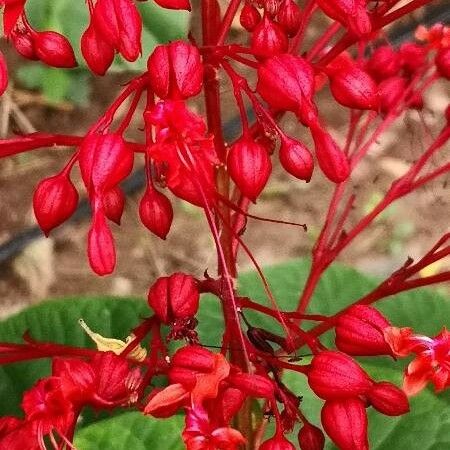
Known affectionately as the Pagoda Flower for its towering, temple-like clusters of blossoms, Clerodendrum japonicum is a tropical showstopper. Native to East Asia, it has traveled the world as a symbol of elegance and architectural beauty. Its massive, velvety leaves and fiery red flower towers make it an unmistakable centerpiece in any warm-climate garden or large conservatory.
🔍 How to Identify
- 🍃 Lush Foliage: The leaves are impressively large, broad, and heart-shaped, often reaching the size of a dinner plate with a slightly fuzzy, matte texture.
- 🗼 The "Pagoda" Bloom: The plant produces dramatic, upright, pyramid-shaped clusters (panicles) of brilliant scarlet or orange-red flowers that look like miniature oriental towers.
- 🧚 Whiskered Flowers: Each individual floret features exceptionally long, delicate stamens that arch outward, giving the entire cluster a soft, ethereal "halo" effect.
🏡 In Your Garden
- 🌞 Dappled Sunlight: While it craves brightness to produce those iconic red towers, its large leaves are prone to scorching. It performs best in "Goldilocks" conditions—bright, filtered light or morning sun with afternoon shade.
- 🦋 Pollinator Magnet: The nectar-rich, tubular flowers are an absolute favorite for butterflies and hummingbirds, turning your garden into a buzzing hub of activity during the summer months.
- 🌱 Spreading Nature: This plant is a "wanderer." It spreads via underground runners (suckers), meaning it can eventually form a lush thicket. If you have a small space, consider planting it in a large container to keep its adventurous roots in check.
⚠️ Safety & Toxicity
- 🟢 Safe for Most: Clerodendrum japonicum is generally considered non-toxic to humans and common household pets like cats and dogs.
- 🧤 General Caution: While not inherently poisonous, the sap can occasionally cause mild skin irritation for those with high sensitivity. It is always wise to wear gloves when pruning woody shrubs and to discourage pets from chewing on the large, fibrous leaves.
✨ Fun Fact
Despite its botanical name "japonicum," many historians believe this plant actually originated in India and China. It was introduced to Japan so many centuries ago and became so integral to Japanese temple gardens that early European botanists assumed it was a native species!

Detailed Care Instructions
To grow Clerodendrum Japonicum plant, also known as Harlequin Glorybower, you can follow these steps:
- Climate and Sunlight: This plant thrives in a humid and subtropical climate. It prefers full sun to partial shade. Choose a location in your garden that receives at least 4-6 hours of direct sunlight each day.
- Soil: Harlequin Glorybower prefers well-draining soil that is rich in organic matter. Amend the soil with compost or well-rotted manure to improve its fertility and drainage.
- Planting: Dig a hole that is slightly larger and deeper than the plant's root ball. Place the plant in the hole, making sure the top of the root ball is level with the soil surface. Backfill the hole with soil, gently firming it around the plant's base.
- Watering:Keep the soil moist but not waterlogged. Water the plant regularly, especially during dry spells. Ensure the plant does not sit in standing water as it may lead to root rot.
- Mulching: Apply a layer of organic mulch, such as wood chips or straw, around the base of the plant. This will help retain soil moisture and suppress weed growth.
- Fertilizing: Apply a balanced slow-release fertilizer in early spring. Follow the manufacturer's instructions for the correct dosage.
- Pruning: Prune the plant in late winter or early spring to maintain its shape and remove dead or damaged branches. Pruning will also promote bushier growth.
- Pests and Diseases: Monitor the plant for common pests like aphids, spider mites, or mealybugs. If necessary, treat the pests with insecticidal soap or neem oil. Ensure good air circulation around the plant to prevent fungal diseases.
- Propagation: The plant can be propagated through stem cuttings. Take a 4-6 inch cutting from a healthy parent plant, remove the lower leaves, and plant the cutting in a well-draining potting mix. Keep the soil moist and place the cutting in a warm, bright area. It should root within 4-6 weeks.
By following these guidelines, you can successfully grow Clerodendrum Japonicum plant in your garden.

Place in a bright room that is sun drenched almost all day. Or directly in a south-facing window.

Clerodendrum Japonicum should be watered consistently, but not excessively. Ensure the soil around the plant is moist, but not waterlogged. Watering once every two or three days is typically sufficient, but the frequency may vary depending on the climate and humidity. Allow the soil to dry slightly in between waterings. Avoid allowing water to stand in the saucer or container bottom, as this can lead to root rot. During the winter months, reduce watering frequency to prevent overwatering.
To fertilize this plant, it is recommended to use a balanced fertilizer with equal amounts of nitrogen, phosphorus, and potassium. The fertilizer should be diluted to half strength and applied once every two weeks during the growing season. Avoid fertilizing during the dormant period. Be sure to water the plant thoroughly before and after fertilizing to prevent burning the roots.
Clerodendrum Japonicum requires a well-draining soil that is rich in organic matter. The soil should be slightly acidic to neutral, with a pH level between 6.0 and 7.0. It is important to avoid soils that are heavy and compacted, as they can hinder proper root development and cause root rot. A mixture of sand, perlite, and peat moss can be added to regular potting soil to improve drainage and nutrient retention. It is also important to ensure that the soil is kept consistently moist, but not waterlogged, as this can lead to issues with root health. Proper soil conditions can help encourage healthy growth and flowering in Clerodendrum Japonicum.
There are different ways to propagate this plant, but one common method is by taking stem cuttings. The best time to do this is in the spring or early summer when the plant is actively growing.
- Select a healthy stem with a few leaves but no flowers or buds.
- Cut a 6-8 inch section of the stem with a sharp, clean knife or scissors.
- Remove the leaves from the bottom half of the stem.
- Dip the cut end of the stem into rooting hormone powder or gel.
- Insert the stem cutting into a pot with moist potting soil.
- Cover the pot with a plastic bag or wrap to create a greenhouse effect.
- Place the pot in a bright, but indirect light location, and keep the soil moist.
- After a few weeks, you should see new growth or roots forming.
- Once the roots are established, remove the plastic covering and transplant the new plant into a larger container or outdoors in a suitable location.
Other methods of propagation include layering, division, or seed germination. However, stem cutting is the most common and easiest way to propagate this plant.
Common pests of the japanese glorybower include Spider mites, aphids, whiteflies. Make a habit of checking your japanese glorybower frequently for pests so that any infestations can be caught and managed early.








