Plant Overview
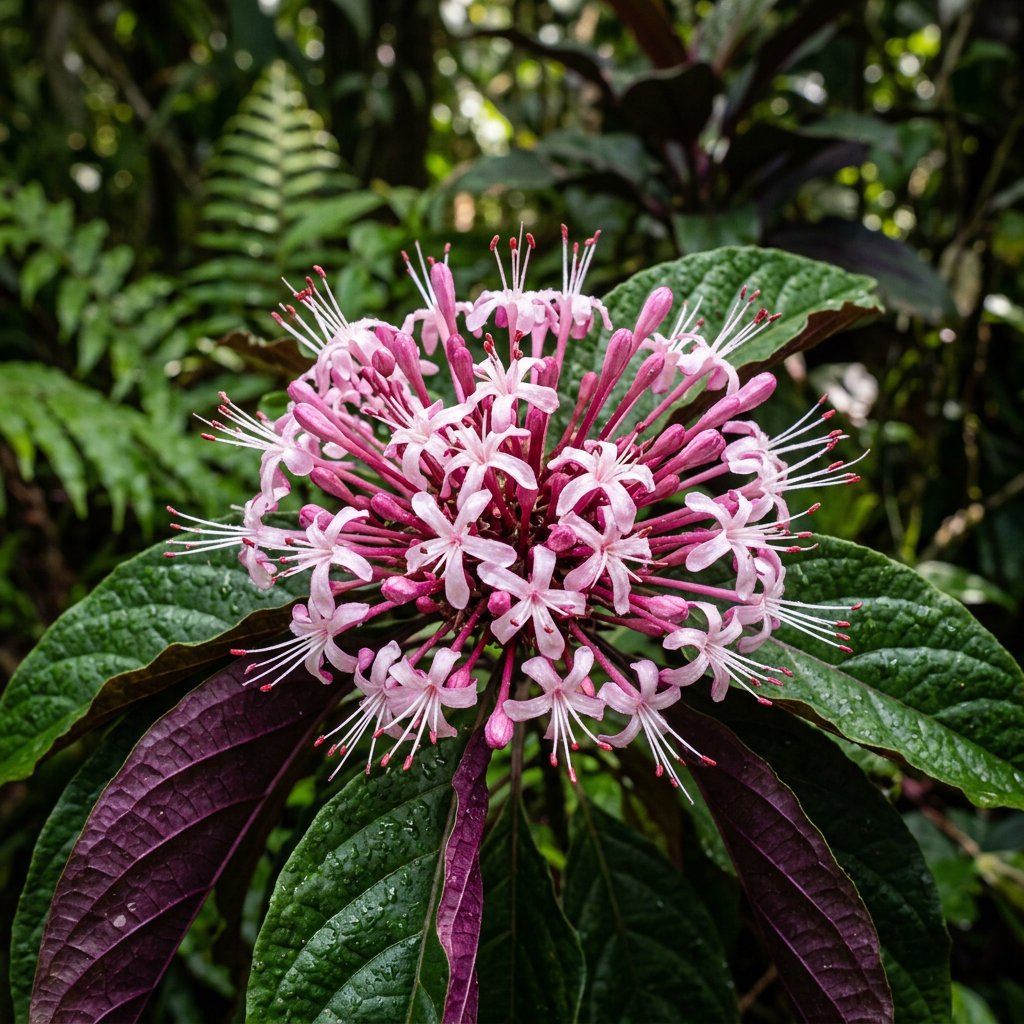
Known as the "Starburst Bush" or "Shooting Star," Clerodendrum quadriloculare is a showstopper from the Philippines that looks like a permanent celebration in your landscape. Its most striking feature is the dramatic contrast between its forest-green leaves and deep eggplant-purple undersides, making it beautiful even when not in bloom. When it finally flowers, it produces spectacular clusters of tubular blossoms that resemble a frozen firework display in mid-air.
🔍 How to Identify
- 🍃 Bicolor Foliage: The oblong leaves are a deep, glossy green on top, but flip them over to reveal a stunning, velvety wine-purple underside that catches the wind beautifully.
- 🎆 Explosive Blooms: The inflorescence consists of dozens of 3-to-4-inch long white tubes tipped with a "pop" of bright pink or magenta petals.
- 🌳 Upright Growth: This is a vigorous, woody shrub or small tree that can quickly reach 10–15 feet, often maintaining a somewhat leggy and architectural silhouette.
🏡 In Your Garden
- ✂️ Pruning is Essential: This plant is a fast grower. To prevent it from becoming too "thin" or tall, you should prune it back hard right after the flowering season ends to encourage a bushier, more compact shape.
- 🌱 Mind the Suckers: This species is known for "running." It frequently sends up baby plants (suckers) from its root system. If you want to keep it contained to one spot, you’ll need to pull these sprouts up as they appear.
- ☀️ Sun for Color: While it can survive in partial shade, that signature deep purple leaf color and the abundance of "firework" blooms require plenty of bright, direct sunlight to truly shine.
⚠️ Safety & Toxicity
- 🐾 Mildly Toxic to Pets: While not considered deadly, ingesting the leaves or berries can cause gastrointestinal upset, vomiting, or drooling in cats and dogs.
- 🤲 Skin Irritation: The sap from broken stems can be an irritant to those with sensitive skin. It is best to wear gloves when performing heavy pruning.
✨ Fun Fact
The species name quadriloculare refers to the plant’s seed pods, which are uniquely divided into four distinct chambers—nature’s way of neatly packaging the next generation of "fireworks."

Detailed Care Instructions
| Humidity | High |
| Lighting | Shade |
| Difficulty | Medium |
| Hibernation | Cold Period |
| Hardiness Zones | 9 - 10 |
To grow a Clerodendrum quadriloculare plant, follow these steps:
- Choose a suitable location: Clerodendrum quadriloculare prefers full sun to partial shade. Select a spot that receives at least six hours of direct sunlight each day.
- Choose the right soil: The plant thrives in moist, well-draining soil. Prepare the soil by adding organic matter such as compost or aged manure to improve its fertility and drainage.
- Propagate the plant: You can grow Clerodendrum quadriloculare from seeds or stem cuttings. If using seeds, soak them in warm water for several hours before planting. Plant the seeds in a seed-starting mix and keep them consistently moist until germination occurs. Alternatively, take stem cuttings from a mature plant and root them in a well-draining potting mix.
- Plant the seedlings or propagated cuttings: Transplant the seedlings or rooted cuttings into larger pots or directly into the ground once they've developed a strong root system. Space them at least 3 to 5 feet apart to allow for proper growth.
- Watering: Water the plant regularly, keeping the soil consistently moist but not waterlogged. Avoid allowing the soil to dry out completely between watering sessions.
- Fertilization: Apply a balanced slow-release fertilizer or a diluted liquid fertilizer during the growing season to promote healthy growth. Follow the package instructions for the appropriate dosage.
- Pruning: Regularly trim back any dead or damaged branches to maintain the plant's shape and improve air circulation. Prune in the early spring before new growth appears.
- Protect from frost: If you live in a region with freezing temperatures, protect your Clerodendrum quadriloculare plant from frost by covering it or moving it indoors during winter.
- Monitor pests and diseases: Keep an eye out for common pests like aphids, spider mites, or scale insects. Treat them promptly using appropriate organic or chemical insecticides. Monitor for any signs of diseases such as leaf spots or powdery mildew and take appropriate measures to control them.
- Support the plant: Clerodendrum quadriloculare can grow up to 10 feet tall and may need support as it develops. You can install stakes or a trellis to provide support and prevent sprawling.
Remember to research and follow any specific care requirements for your particular variety of Clerodendrum quadriloculare, as some cultivars may have slightly different needs.

Place in a window with dappled sun or a spot in the middle of a room. Or directly in a window facing west or east.

1. Determine the watering needs: Clerodendrum Quadriloculare plants prefer well-draining soil, and it is essential to ensure that the water does not sit at the bottom of the pot. Overwatering can lead to root rot, while underwatering can cause the plant to wilt and dry out.
2. Check the soil moisture: Before watering, always check the soil moisture level. Insert your finger into the soil up to a depth of one inch or use a moisture meter. If the soil feels dry, it's time to water your plant.
3. Water thoroughly: Water the plant thoroughly to ensure that the water reaches the roots. Slowly pour water into the soil until it flows out of the drainage holes at the bottom. Allow the excess water to drain away.
4. Frequency of watering: The frequency of watering depends on factors such as temperature, humidity, and light. Water your plant when the soil feels dry to the touch. During hot, dry weather, or if the plant is in direct sunlight, you may need to water more frequently.
5. Avoid waterlogging: Clerodendrum Quadriloculare plants do not like to sit in water, and it is essential to ensure that the water drains away quickly. Remove any excess water from the saucer beneath the pot.
6. Use filtered water: Clerodendrum Quadriloculare plants are sensitive to chlorine, fluoride, and other substances present in tap water. Use distilled or filtered water to water your plant.
7. Mist the foliage: Clerodendrum Quadriloculare plants prefer a humid environment, and it is essential to increase the humidity around the plant. Misting the foliage with room-temperature water can help maintain humidity levels.
To fertilize this plant, first, choose a balanced, water-soluble fertilizer with equal amounts of nitrogen, phosphorous, and potassium. Mix the fertilizer with water according to the package instructions. Then, apply the fertilizer solution to the soil around the base of the plant, taking care to avoid getting any on the foliage. Fertilize every 2-3 weeks throughout the growing season, reducing to once a month during the winter months. Always water the plant thoroughly before and after fertilizing to prevent root burn.
Clerodendrum quadriloculare is a plant that benefits from being grown in well-draining soil, as it does not tolerate waterlogged conditions. It prefers a soil that is rich in nutrients, so it is recommended to mix in a high-quality organic compost to aid in its growth. The soil pH should be slightly acidic to neutral, with a range of 6.0 to 7.5. It is best to avoid heavy clay soils that can lead to waterlogging, as this can cause root rot. Furthermore, it is important not to overwater the plant, as this can also lead to root rot. Therefore, it is recommended to allow the soil to slightly dry out between waterings.
To propagate this plant, select a healthy stem from the parent plant that is at least 6 inches long and has a few leaves and nodes. Cut the stem at a 45-degree angle using a clean and sharp pair of pruning shears. Remove any leaves from the bottom half of the stem.
Prepare a potting mix by mixing equal parts of peat moss and perlite or sand. Moisten the mixture and fill a small pot with it.
Dip the cut end of the stem in rooting hormone powder and gently tap off any excess. Make a hole in the potting mix and insert the stem into it. Firmly press the soil around the stem to secure it.
Cover the pot with a clear plastic bag to create a greenhouse effect. Place it in a warm and bright spot, but away from direct sunlight.
Check the potting mix frequently to make sure it stays moist, but not soggy. After 2-3 weeks, gently tug on the stem to see if it has rooted. Once it has, remove the plastic bag and move the plant to a brighter spot.
Feed the new plant with a fertilizer that is high in phosphorus to promote healthy root growth. Transplant it to a larger pot when it outgrows the initial one.
Common pests of the starburst bush include Spider mites, aphids, whiteflies. Make a habit of checking your starburst bush frequently for pests so that any infestations can be caught and managed early.








