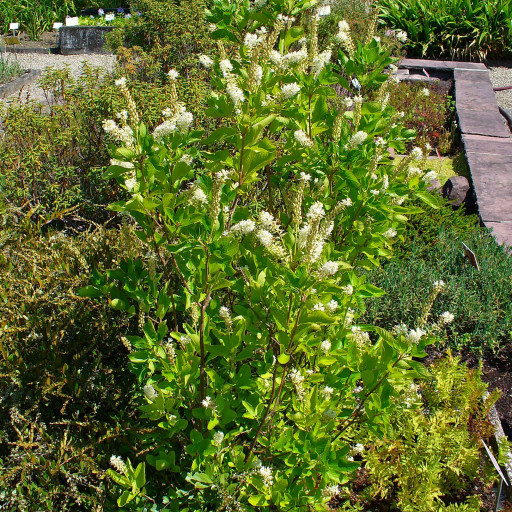
Plant Overview
Known affectionately as Summersweet or Sweet Pepperbush, Clethra alnifolia is the darling of the late-summer garden. While most flowering shrubs begin to fade under the August heat, this North American native bursts into bloom with a fragrance so sweet and spicy it can perfume an entire backyard. It is a prized choice for damp, shady corners where other plants might struggle to survive.
🔍 How to Identify
- ☁️ The Blooms: Look for upright, finger-like spikes (racemes) 3–6 inches long, covered in tiny, bell-shaped white or pink flowers that emit a heavy, honey-like scent.
- 🍃 The Foliage: The leaves are dark green, oval-shaped, and distinctively "serrated" (toothed) like a saw blade, specifically towards the tips.
- 🌶️ The "Peppercorns": After the flowers fade, they leave behind small, round brown seed capsules that look remarkably like dried peppercorns, remaining on the plant throughout the winter.
🏡 In Your Garden
- 💧 The "Wet Feet" Fanatic: Unlike many shrubs that rot in soggy soil, Summersweet thrives in wet, marshy areas. It’s the perfect candidate for a rain garden or that low spot in your yard that never seems to dry out.
- 🌑 Shade-Friendly Color: It is one of the few flowering shrubs that will bloom reliably even in heavy shade. While it grows more densely in the sun, it’s a lifesaver for adding fragrance to dark, woodland edges.
- 🍂 Autumn Interest: In the fall, the deep green leaves shift into a brilliant, buttery yellow, providing a second season of visual interest before dropping for the winter.
⚠️ Safety & Toxicity
- ✅ Safe for All: Clethra alnifolia is generally considered non-toxic to humans, dogs, and cats.
- 🐝 Pollinator Party: Because it blooms so late in the season, it serves as a critical "nectar bridge" for bees, butterflies, and hummingbirds when other food sources are scarce. Be mindful if you have a bee allergy, as this plant will be buzzing with activity!
✨ Fun Fact
The name "Clethra" is derived from the Greek word for "alder," because its leaves look strikingly similar to those of the Alder tree. Despite the resemblance, they aren't related at all—Summersweet is much more fragrant and garden-friendly!

Detailed Care Instructions
| Humidity | Normal |
| Lighting | Part Sun |
| Toxicity | Poisonous |
| Difficulty | Easy |
| Mature Size | 3 To 6 Feet In Height, Spreads To 4 To 6 Feet |
| Temperature | 21°C - 30°C |
| Sun Exposure | Full Sun To Part Shade |
| Hardiness Zones | 3-9 |
To grow Clethra alnifolia (commonly known as summersweet or sweet pepperbush) plant, follow these steps:
- Choose the right location: Clethra alnifolia prefers partial shade to full sun, though it can tolerate some shade. It also prefers moist, well-drained soil.
- Prepare the soil: Amend the soil with organic matter like compost to improve its fertility and drainage. Clethra alnifolia can tolerate acidic soil, so pH around 4.5 to 6.5 is ideal.
- Planting: Dig a hole that is slightly larger than the root ball of the plant. Place the plant in the hole and backfill with soil, ensuring the crown of the plant is level with or slightly above the soil surface. Water thoroughly after planting.
- Watering: Keep the soil consistently moist, especially during the plant's first year. Water deeply but be careful not to overwater, as this plant does not tolerate waterlogged conditions. During hot summers or extended dry spells, regular watering is necessary.
- Mulching: Apply a layer of organic mulch, such as wood chips or shredded bark, around the base of the plant. This helps retain moisture, regulate soil temperature, and prevent weed growth. Keep the mulch away from the plant's stem to avoid rot.
- Pruning: Prune the plant after it finishes flowering to maintain a compact shape and remove any dead or damaged branches. This is usually done in late winter or early spring.
- Fertilizing: Clethra alnifolia generally does not require much fertilization. However, you can apply a balanced, slow-release fertilizer in early spring if the plant shows signs of nutrient deficiency.
- Pests and diseases: Clethra alnifolia is generally pest and disease resistant. However, keep an eye out for aphids, spider mites, or powdery mildew. If necessary, treat with appropriate organic or chemical control methods.
Overall, Clethra alnifolia is a relatively low-maintenance plant that can thrive in the right conditions with regular care and attention.

Place in a window with dappled sun or a spot in the middle of a room. Or directly in a window facing west or east.

To water this plant, observe the topsoil for dryness. Check the soil by inserting a finger into the soil to about an inch deep to determine if it is dry. Water when the soil is dry to the touch. Water thoroughly, making sure the soil is evenly moist. Avoid overwatering or letting the soil become waterlogged. Ensure drainage is adequate by checking for excess standing water in the pot or surrounding soil. Water more frequently during hot, dry weather and less during cooler, wet seasons. In the winter, reduce watering to maintain soil moisture.
To fertilize this plant, apply a balanced, slow-release fertilizer in early spring before new growth emerges. Avoid using high-nitrogen fertilizers as this may promote excessive vegetative growth at the cost of flower development. Apply the fertilizer according to the manufacturer's instructions and water thoroughly after application. Avoid applying fertilizer during the hot months of summer or during the fall when the plant is preparing to enter dormancy.
When planting the Clethra Alnifolia plant, it is important to use a well-draining soil that is rich in organic matter. The soil should be slightly acidic with a pH range of 5.0 to 6.5. It is recommended to mix compost into the soil to improve its structure and fertility. Avoid using heavy clay soils as they can cause waterlogging and root rot. The plant prefers moist soil, so ensure the soil is hydrated before planting. Finally, the soil should be amended with a slow-release fertilizer to ensure optimal growth and health of the plant.
To propagate this plant, start by taking softwood stem cuttings during the summer months. Choose young lateral shoots that are green and pliable without being too woody.
Make a clean cut with a sharp knife, removing the cutting from the parent plant. You will want your cutting to be about 3-4 inches in length.
Remove all of the lower leaves from the stem, leaving only a few pairs of leaves at the top. This will reduce the water loss from the cutting.
Dip the end of the stem in rooting hormone, then plant the cutting in a well-draining soil mix. You can use a commercial seed-starting mix or make your own by combining equal parts sand, peat moss, and perlite.
Water the cutting thoroughly, then cover it with a clear plastic bag. This will help to maintain high humidity around the cutting, which is necessary for rooting.
Place the cutting in a bright, warm location out of direct sunlight. Keep the soil moist but not waterlogged, and mist the cutting regularly to maintain humidity.
After several weeks, gently tug on the cutting to check for resistance. If there is resistance, it has rooted! Remove the plastic bag and gradually acclimate the new plant to lower humidity levels.
Once the new plant has established roots and started to grow, you can transplant it to a larger pot or plant it outdoors.








