Plant Overview
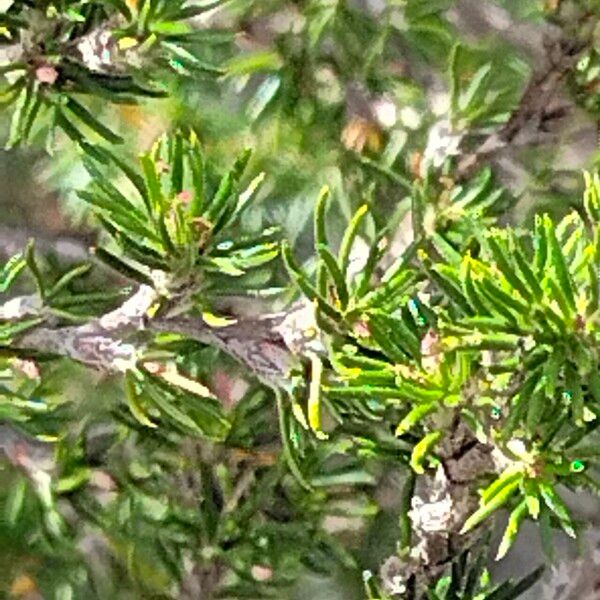
Often called the Silver Rice-bush, Cliffortia stricta is a rugged South African native that looks more like a conifer than a member of the Rose family. This plant is a specialist of the "Fynbos" biome, having evolved to thrive on the windy, rocky slopes of the Cape Fold Mountains. Its stiff, upright posture gives it an architectural quality that brings a touch of wild mountain mist to any rock garden.
🔍 How to Identify
- 🌿 The Foliage: The leaves are tiny, needle-like, and "ericoid" (resembling heather), often appearing silvery-grey due to a fine coating of protective hairs.
- 📏 Growth Habit: As the name stricta suggests, the plant grows in a very tight, vertical, and rigid manner, resembling a small, silver broom.
- 🌸 The Flowers: Unlike its showy rose cousins, its flowers are tiny and lack petals. They are often hidden at the base of the leaves and are designed for wind pollination rather than attracting insects.
🏡 In Your Garden
- ⛰️ Rocky Roots: This plant is a survivor. It thrives in nutrient-poor, sandy, or rocky soils and actually dislikes "rich" garden soil, which can cause it to grow too fast and become weak.
- 💨 Wind Specialist: Because it originates from high-altitude slopes, it is incredibly wind-tolerant. It makes an excellent structural plant for coastal gardens or exposed balconies where other plants might tatter.
- ✂️ Pruning Nuance: It has a woody base and does not like being cut back into old wood. It is best to light-trim only the green tips to maintain its shape.
⚠️ Safety & Toxicity
- 🟢 Status: Generally considered non-toxic to humans and common household pets.
- 🧤 Physical Irritation: While not chemically toxic, the leaves are very stiff and pointed. They can be quite prickly to the touch, so wearing gloves during maintenance is recommended to avoid minor skin scratches.
✨ Fun Fact
Most members of the Rose family (Rosaceae), like apples and cherries, spend a lot of energy growing beautiful petals to lure bees. Cliffortia decided to go a different route—it ditched the petals entirely and relies on the Cape winds to carry its pollen from plant to plant!

Detailed Care Instructions

Place in a bright room that is sun drenched almost all day. Or directly in a south-facing window.

Some plants require more regular watering than others, which should be done every few days. It's critical to maintain the soil moist all of the time. The water requirements of the same plant placed in pots with varying sizes will differ. Because the water in the smaller pot evaporates faster than the water in the larger pot, it will require more watering. Regardless of pot size, the surface should constantly be maintained moist.








