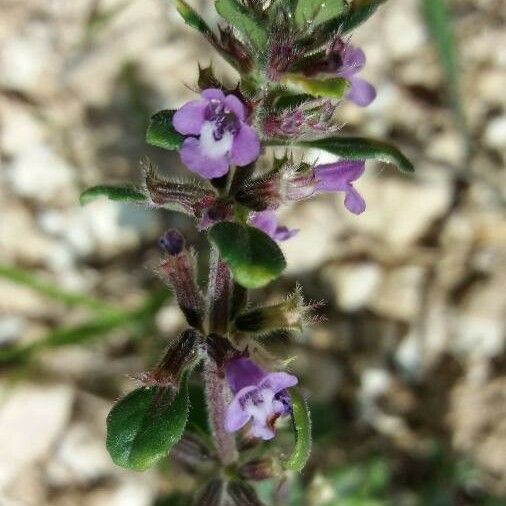
Plant Overview
Often called Basil Thyme or Spring Thyme, this charming little herb is a pint-sized powerhouse of the Mediterranean hillsides and European grasslands. Despite its delicate, airy appearance, it is a hardy pioneer that thrives where other plants give up, often found peeking through cracks in limestone rocks or along dry, chalky pathways. It carries a delightful, complex scent that bridges the gap between sweet basil and earthy thyme.
🔍 How to Identify
- 🌸 Petite Blooms: Tiny, tubular flowers appear in whorls around the stem, showing off shades of lavender or violet, often marked with white spots on the lower "lip."
- 🍃 Scented Foliage: The leaves are small, oval, and slightly hairy. When crushed, they release a spicy, herbal aroma that is both refreshing and pungent.
- 📐 Square Stems: As a proud member of the Mint family (Lamiaceae), it features distinctive four-angled stems that usually grow low to the ground before curving upward.
🏡 In Your Garden
- 🏜️ The Ultimate Survivor: This plant actually prefers "poor" soil. If your garden has a dry, rocky, or sandy patch where more "demanding" flowers wilt, Basil Thyme will likely feel right at home. It hates "wet feet," so drainage is its only non-negotiable requirement.
- ☀️ Sun Worshipper: It requires full, baking sun to maintain its compact shape and intense fragrance. In the shade, the plant tends to become "leggy" and loses its signature herbal punch.
- 🌱 Self-Seeding Habit: While it is often an annual or short-lived perennial, it is an excellent "weaver" plant. It drops seeds quietly, ensuring new clusters pop up every spring to fill in gaps between stones or pavers.
⚠️ Safety & Toxicity
- ✅ Generally Safe: Basil Thyme is considered non-toxic to humans and is not known to be a threat to common household pets like cats and dogs.
- 🍵 Historical Use: While not as famous as common kitchen thyme, it has a long history in folk medicine and as a wild seasoning. However, as with any wild herb, those with sensitive skin should be cautious of mild contact dermatitis if handling large quantities.
✨ Fun Fact
Unlike many garden herbs that have been bred for size, Clinopodium acinos has remained a "wild" beauty. It is a vital nectar source for the Large Blue butterfly, making it a tiny but essential hero in European conservation efforts.

Detailed Care Instructions
To grow Clinopodium Acinos, also known as basil thyme, follow these steps:
- Select the right location: Choose a spot in your garden that receives full sun to partial shade. The soil should be well-draining and rich in organic matter.
- Prepare the soil: Amend the soil by mixing in compost or well-rotted manure to improve its fertility and drainage. Clinopodium Acinos prefers a slightly alkaline soil with a pH between 6 and 7.
- Planting: Sow the seeds directly in spring after the last frost, or you can start them indoors 6-8 weeks before the last frost date. If starting indoors, sow the seeds ¼ inch deep in a seed tray or individual pots. Transplant seedlings outdoors when they have reached a height of 3-4 inches.
- Watering: Keep the soil evenly moist, but not soggy. Water the plant deeply whenever the top inch of soil feels dry. Avoid overwatering, as the plant doesn't tolerate excessive moisture.
- Pruning: Regularly trim the plant to promote bushy growth and to prevent it from becoming leggy. Pinch off the tips of the stems once the plant has reached a height of 6-8 inches.
- Fertilizing: Apply a balanced organic fertilizer once every 4-6 weeks during the growing season to encourage healthy growth.
- Mulching: Apply a layer of organic mulch around the plant to conserve moisture, suppress weeds, and regulate soil temperature.
- Pest and disease control: Clinopodium Acinos is generally resistant to pests and diseases. However, keep an eye out for common garden pests like aphids and caterpillars. If necessary, use organic insecticides or manually remove pests.
- Harvesting: Harvest leaves as needed once the plant reaches a height of 6-8 inches. Use sharp scissors or pruning shears to cut the uppermost leaves, but leave at least two sets of leaves on the stem to promote regrowth.
By following these steps, you can successfully grow Clinopodium Acinos and enjoy its aromatic leaves for culinary purposes or as an ornamental addition to your garden.

Place in a bright room that is sun drenched almost all day. Or directly in a south-facing window.

To water this plant, it is important to first check the soil moisture level. Use a finger or moisture meter to determine if the soil is dry to the touch. If the soil feels dry, water the plant thoroughly, but be careful not to overwater as this can lead to root rot. It is recommended to water deeply, allowing the water to soak down to the root zone, and then allowing the soil to dry out slightly before watering again. When watering, avoid getting water on the foliage, as this can promote fungal growth and disease. Additionally, ensure that the plant is not sitting in standing water, as this can also lead to root rot. Consider watering in the morning or evening when the sun is not as intense, as this can help prevent water from evaporating too quickly.
To fertilize this plant, first make sure the soil is moist but not waterlogged. Use a balanced fertilizer with equal amounts of nitrogen, phosphorus, and potassium. Apply the fertilizer once a month during the growing season, using a dilution of half the recommended strength. Be careful not to over-fertilize, as this can damage the plant. Alternatively, you can use compost or organic matter as a natural fertilizer. Mulching around the base of the plant can also help retain moisture and provide nutrients.
The ideal soil for Clinopodium Acinos plant should be well-draining and nutrient-rich. It should have a pH level between 6.0 to 7.5. The soil should be able to retain moisture, but not be waterlogged as this will lead to root rot. A mixture of sandy soil and organic matter such as peat moss, compost, or leaf mold mixed in equal parts will provide the necessary nutrients and drainage. The soil should be light and friable to allow for proper aeration and root growth. It is advisable to plant the seedlings in a potting mix that is specifically designed for herb plants for the best results.
To propagate this plant, first select a healthy and mature specimen that is at least 6 months old. Take cuttings of about 4-5 inches long, with at least two to three nodes. Remove lower leaves to leave only two to three leaves. Dip the cuttings in rooting hormone and plant them in a mix of equal parts peat and sand or vermiculite. Water the cuttings and cover them with a plastic bag to maintain humidity. Place them in a shaded area with indirect light and maintain a constant moisture level. After about four to six weeks, the cuttings will have developed a root system, and you can then transplant them into their individual pots with potting soil.








