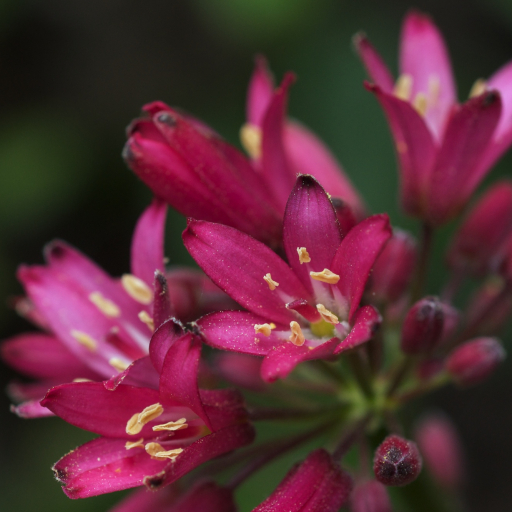
Plant Overview
Known as the Red Clintonia or Andrews' Bluebead Lily, this striking perennial is a true jewel of the foggy redwood forests along the Pacific Coast. It carries an air of prehistoric elegance, thriving in the deep, cool shadows where few other vibrant flowers dare to bloom. While its pink blossoms are lovely, it is most famous for its late-season "jewels"—berries of a metallic blue color rarely seen in the natural world.
🔍 How to Identify
- 🍃 Lush Rosette: It features a cluster of 5 or 6 large, oval-shaped leaves that are exceptionally glossy and deep green, spreading out at the base of the plant.
- 🌸 Vibrant Flowers: A tall, central stalk rises above the leaves, holding clusters of nodding, bell-shaped flowers that range from deep pink to a rich reddish-purple.
- 💎 Iridescent Fruit: The most diagnostic feature is the fruit; after the flowers fade, they are replaced by smooth, egg-shaped berries that turn a brilliant, "electric" cobalt blue.
🏡 In Your Garden
- 🌲 Shadow Seeker: This plant is a specialist of the deep shade. It requires the cool, moist, and acidic soil typical of a coniferous forest floor to thrive, making it a perfect companion for ferns.
- 🐌 Slow & Steady: It spreads very slowly via underground rhizomes. It is famously "finicky" about being moved, as it relies on specific soil microbes and dislikes having its roots disturbed by transplanting.
⚠️ Safety & Toxicity
- 🚫 Inedible: While the berries look like tempting candies, they are generally considered inedible and potentially toxic to humans.
- 🐾 Pet Warning: Like many members of the lily family, ingestion can cause digestive distress in cats and dogs. It is best treated as an ornamental plant only.
✨ Fun Fact
The genus Clintonia was named in honor of DeWitt Clinton, an 18th-century naturalist and Governor of New York, but this specific species, Andrewsiana, is a West Coast exclusive, found only from Central California to Southwest Oregon.

Detailed Care Instructions
To help grow Clintonia andrewsiana plants, which are also known as Western Bluebead Lily or Oregon lily, follow these guidelines:
- Climate: Clintonia andrewsiana thrives in moist, shaded woodland areas in temperate regions. Ensure you live in a suitable climate before planting.
- Light: While Clintonia andrewsiana prefers shady areas, it can tolerate some dappled sunlight. Place it in a location with filtered light, such as under tall trees or shrubs.
- Soil: The plant prefers well-draining soil rich in organic matter. Amend the soil with compost or leaf mulch to improve its water-holding capacity and nutrient content.
- Watering: Clintonia andrewsiana requires consistently moist soil. Water the plant regularly, particularly during dry spells. Avoid overwatering, as this can lead to root rot. Mulching around the plant can help retain moisture.
- Propagation: Clintonia andrewsiana can be propagated through division or seed. Division involves carefully digging up the plant and separating the rhizomes, allowing you to create multiple plants. Sow seeds in a container or directly in the ground during the fall, as they require a cold stratification period.
- Planting: When planting Clintonia andrewsiana, dig a hole slightly larger than the root ball and place the plant with the crown just above ground level. Gently backfill the hole with soil, ensuring that the roots are covered but not excessively buried.
- Maintenance: Keep the area surrounding the plant free from weeds to reduce competition for nutrients and moisture. Provide a layer of mulch around the plant to maintain a consistent soil moisture level and temperature. Additionally, remove any dead or damaged leaves to maintain the plant's appearance.
- Wildlife: Clintonia andrewsiana is a native plant and provides food and habitat for various wildlife species. Be mindful of this and create a welcoming environment for pollinators and other beneficial insects.
Remember, patience is key when growing Clintonia andrewsiana. It may take several years for the plant to establish itself and bloom. With proper care and maintenance, you will be able to enjoy the beauty of these native flowers in your garden.

Place in a dark room with little light, like a dark bedroom or a spot far away from a window or directly in a north-facing window.

To properly water this plant, it's important to first observe the soil moisture level. Check the topsoil with a finger or soil moisture meter to see if it's dry or moist. If the soil is dry, give the plant a thorough watering, allowing the water to penetrate deep into the soil. It's important to avoid overwatering, as this can lead to root rot and other issues. Wait until the soil has nearly dried out before watering again. It's also recommended to use room temperature water and avoid getting water on the leaves or stem, as this can promote fungal growth.
Clintonia Andrewsiana plants should be fertilized with a balanced fertilizer once a month during the growing season. This can be done by mixing the fertilizer with water according to the instructions on the package and applying it directly to the soil around the base of the plant. Be careful not to over-fertilize, as this can cause damage to the plant. Additionally, it is important to water the plant regularly to avoid dry conditions that can also harm the plant.
Clintonia Andrewsiana plant prefers a type of soil that is well-draining, loose, and loamy in texture. It requires a soil that is slightly acidic with a pH ranging between 5.0 and 6.5. The soil should be rich in organic matter such as compost, leaf mold, and well-rotted manure. The ideal soil should be fertile and able to retain moisture, but not be too wet or waterlogged. It is important to avoid using heavy clay soils or soils that are too sandy, which can be problematic for the growth and development of Clintonia Andrewsiana plant. Additionally, regular soil amendments such as organic fertilizer and compost can help maintain a healthy soil structure and provide the plant with essential nutrients.
To propagate this plant, begin by using a clean and sharp pair of pruning shears to take a stem cutting from a healthy and mature specimen. Choose a stem that is approximately 4-6 inches in length and has a few leaves attached.
Next, remove the lower leaves from the stem, leaving only 1-2 leaves at the top. Dip the cut end of the stem in rooting hormone powder to encourage healthy root growth.
Prepare a pot or container filled with moist potting soil and make a small hole in the soil with a pencil or your finger. Insert the stem cutting into the soil, deep enough so that the remaining leaves are resting just above the soil line. Gently press the soil around the stem cutting to secure it in place.
Water the new cutting thoroughly and place it in a bright, but shaded area. Keep the soil consistently moist, but not waterlogged.
In a few weeks, the cutting should begin to develop new growth and roots. Once the plant has established a healthy root system, it can be transplanted into a larger pot or directly in the ground in a suitable location.








