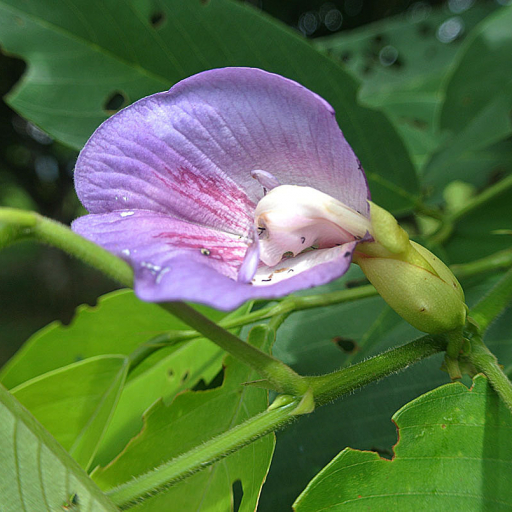
Plant Overview
Commonly known as the Sombreiro or the Butterfly Pea Tree, this Brazilian giant is a masterpiece of the tropical canopy. While many people are familiar with its cousin, the climbing Butterfly Pea vine, Clitoria fairchildiana is a massive tree famous for its dense, umbrella-like shade. Named in honor of the legendary plant explorer David Fairchild, it is a favorite in urban landscaping across South America for its ability to turn a scorching street into a cool, purple-fringed sanctuary.
🔍 How to Identify
- 💜 The Flowers: Large, showy, pea-shaped blossoms that range from deep violet to pale lilac, often featuring a white or yellowish "eye" at the center.
- 🍃 The Foliage: Massive, trifoliate leaves (sets of three) that are thick, leathery, and a deep, glossy green.
- 🌳 The Silhouette: A robust, wide-spreading crown that creates an almost perfect circle of deep shade, giving it the nickname "Sombreiro" (Hat).
🏡 In Your Garden
- ⛱️ The Ultimate Shade: This tree grows quickly and is primarily planted for its "cooling" effect. It is perfect for large estates or wide avenues where its sprawling branches have room to breathe.
- 🏗️ Root Awareness: Because it is a vigorous grower, its root system can be quite powerful. It is best to avoid planting it too close to home foundations, swimming pools, or underground pipes, as it likes to claim its territory.
- 💧 Thirst for Life: While it is resilient once established, it thrives in deep, fertile soil with consistent moisture, mimicking its origins in the humid Amazonian basin.
⚠️ Safety & Toxicity
- 🟢 General Safety: This tree is generally considered non-toxic to touch and handle.
- 🐾 Seed Pods: Like many members of the Fabaceae (Legume) family, the seed pods contain tannins. While not typically "deadly," they should not be ingested by curious pets or children, as they can cause mild to moderate stomach upset.
✨ Fun Fact
The genus name Clitoria was assigned by botanists who noted the flower's resemblance to certain human anatomy. This choice was so controversial in the 18th and 19th centuries that many "modest" botanists fought a losing battle to have the entire genus renamed to something they found less scandalous!

Detailed Care Instructions
To grow Clitoria fairchildiana, also known as the butterfly pea vine, you can follow these steps:
- Selection of planting site: Choose a well-drained location that receives full sun to partial shade. Ensure the site has enough space for the vine to grow and spread.
- Soil preparation: Prepare the soil by removing any weeds or rocks and loosening it with a garden fork. The soil should be fertile, rich in organic matter, and have a pH level between 6 and 7.
- Planting: Soak the seeds in water overnight before sowing. Sow the seeds directly in the prepared soil or in pots. Sow the seeds about 1 inch deep and space them 12-18 inches apart. If planting in pots, choose a pot with good drainage and fill it with potting soil.
- Watering: Keep the soil moist but not waterlogged. Water the plant regularly, especially during dry periods. Avoid overwatering, as it may lead to root rot.
- Support and training: As the vine grows, provide support like a trellis, fence, or pergola to help it climb. Train the vines to grow on the support structure by gently tying them using twine or soft plant ties.
- Pruning: Prune the plant to control its growth and shape. Encourage branching and bushiness by regularly pinching back the tips of the vines. Remove any dead or damaged leaves or branches.
- Fertilizing: Apply a balanced, slow-release fertilizer during the growing season to promote healthy growth and flowering. Follow the instructions on the fertilizer packaging for application rates.
- Pests and diseases: Monitor the plant for pests like aphids, caterpillars, or mites. Treat any infestation promptly using appropriate organic or chemical methods. Avoid overwatering to prevent root rot.
- Flowering and harvesting: Clitoria fairchildiana produces beautiful blue or purple flowers. Enjoy the vibrant flowers and use them for culinary purposes, such as making tea or adding color to dishes. Harvest the flowers when they are fully open for the best color intensity.
- Winter care: Clitoria fairchildiana is usually hardy in USDA hardiness zones 10-12. If you live in a colder climate, consider growing it as an annual or bring potted plants indoors during winter.
Remember to research and follow specific growing instructions for your specific region and climate, as well as any local regulations regarding planting and care practices.

Place in a bright room that is sun drenched almost all day. Or directly in a south-facing window.

To water this plant, it is important to consider the soil moisture and temperature. The plant requires moist soil, but it is essential not to overwater it. A suitable method of watering is using a watering can or a sprinkler. Ensure that the water dispensed is enough to saturate the soil but not to flood it.
The plant should be watered once or twice a week, depending on the environmental conditions and soil moisture levels. During hot and dry seasons, it is advisable to water the plant more frequently to prevent it from drying up.
It is essential to check the soil before watering, preferably by inserting a finger into the soil to determine the moisture levels. If the soil is dry, it is an indication that the plant needs water.
Mulching around the base of the plant helps to retain moisture in the soil, reducing the frequency of watering. It also helps to prevent soil erosion and maintains an ideal temperature for the plant's roots.
Finally, it is important to note that the water requirement for this plant varies from one growth stage to another. Therefore, it is important to observe and adjust the watering frequency accordingly.
To fertilize this plant, use a balanced fertilizer with an NPK (nitrogen, phosphorus, potassium) ratio of 10-10-10. Apply the fertilizer once a month during the growing season, which is typically spring through summer. Mix the fertilizer with water according to the package instructions, and apply it to the soil around the base of the plant, being careful not to get any on the leaves or flowers. Water the plant thoroughly after fertilizing. Avoid fertilizing during the winter months when the plant is dormant.
For optimal growth and health of the Clitoria Fairchildiana plant, it is recommended to use a well-draining soil mix with a pH level of 6-7. The soil should contain a balance of organic matter and minerals, including perlite, vermiculite, and peat moss. It is also important to ensure that the soil is not too compact or dense, as this can impede root development. Additionally, regular fertilization with a balanced fertilizer can further support the plant's growth and overall health.
To propagate this plant, you will need to take stem cuttings from a mature plant. Select a healthy stem that is at least 6 inches long and has several leaves. Use a sharp, clean pair of scissors or pruning shears to make a clean cut just below a node (where a leaf attaches to the stem).
Remove any leaves from the lower half of the stem, leaving only a few at the top. Dip the cut end of the stem into a rooting hormone powder to encourage root growth, then plant it into a pot filled with moist potting soil.
Cover the pot with a plastic bag to create a humid environment and place it in a bright, indirect light. Water the cutting regularly to keep the soil moist, but not waterlogged.
After a few weeks, new roots should start to form and new growth will emerge from the top of the stem. Once the cutting has established roots and new growth, you can remove the plastic bag and transplant the new plant into a larger pot or into the ground in a suitable location.








