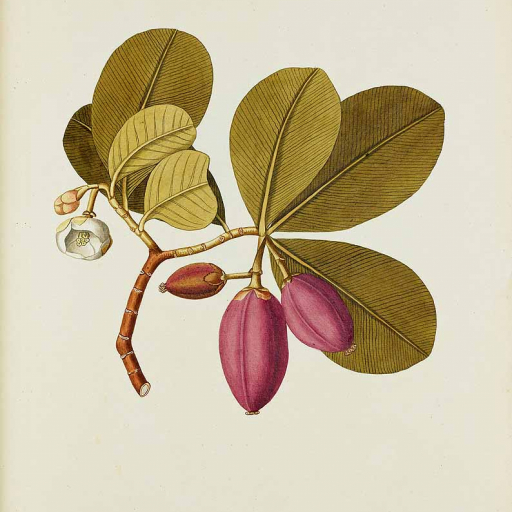
Plant Overview
Known as the "Autograph Tree," Clusia major is a tropical powerhouse that bridges the gap between a sturdy outdoor shrub and a lush, sculptural houseplant. Native to the Caribbean and Florida, this plant is a "strangler" in the wild, often starting its life high in the canopy of another tree before sending roots down to the ground. It is most famous for its incredibly thick, paddle-like leaves that are so durable you can scratch your name into them, where it remains as a permanent scar.
🔍 How to Identify
- 🍃 Leathery Foliage: The leaves are thick, teardrop-shaped, and deep olive green. They feel almost like rubber or thick plastic to the touch.
- 🌸 Waxy Blooms: It produces showy, funnel-shaped flowers that are creamy white with a soft pink center, usually appearing in the summer.
- 🍒 Star-Shaped Fruit: After flowering, it produces green, globe-like fruits that eventually turn brown and split open into a star shape, revealing bright red seeds.
🏡 In Your Garden
- 🌊 Coastal Warrior: This is one of the most salt-tolerant plants available. It thrives in seaside gardens where salt spray and wind would wither most other tropical species.
- 🪴 Space Matters: While it looks cute in a pot, Clusia has an aggressive, spreading root system. If planting in the ground, keep it away from pipes and sidewalks to prevent the roots from lifting the concrete.
- ✂️ Easy Training: Because of its dense growth, it is a favorite for living "privacy fences." It responds exceptionally well to pruning, allowing you to shape it into a tight hedge or a small, multi-trunked tree.
⚠️ Safety & Toxicity
- 🐾 Mildly Toxic: The sap and the fruit of the Clusia major are considered toxic to both humans and pets.
- 🧪 Skin Irritant: The milky white sap can cause skin irritation or dermatitis in sensitive individuals. It is best to wear gloves when pruning. If ingested by cats or dogs, it can cause vomiting and intestinal distress.
✨ Fun Fact
The "Autograph Tree" earned its name because the leaves have a unique layer of tissue that, when scratched, turns dark and stays that way for the entire lifespan of the leaf. In the past, people actually used these leaves as emergency playing cards or to mail short messages!

Detailed Care Instructions
To grow Clusia Major plant, you can follow these steps:
- Choose a suitable location: Clusia Major prefers full sun to partial shade. Ensure the location has well-draining soil.
- Prepare the soil: Clusia Major thrives in mildly acidic to mildly alkaline soil with a pH range of 6.0 to 7.5. Make sure the soil is rich in organic matter and well-draining. You can mix compost or well-rotted manure into the soil before planting.
- Planting: Dig a hole that is twice the size of the root ball of the Clusia Major plant. Place the plant in the hole and backfill with soil, gently firming it around the base of the plant.
- Watering: Clusia Major prefers regular watering, especially during the establishment period. Water the plant deeply, ensuring the soil is evenly moist. However, avoid overwatering as it can lead to root rot.
- Fertilizing: Feed Clusia Major with a balanced slow-release fertilizer in spring and mid-summer. Follow the package instructions for the correct dosage. Avoid over-fertilizing as it can cause leaf burn.
- Pruning: Clusia Major can be pruned to maintain its shape and remove any dead or damaged branches. Prune in late winter or early spring before new growth begins.
- Pest and disease control: Monitor the plant regularly for pests like aphids, whiteflies, or scale insects. Use organic pest control methods or insecticidal soap to control infestations. Keep an eye out for leaf-spotting diseases and treat promptly if detected.
- Mulching: Apply a layer of organic mulch around the base of the plant to conserve moisture, suppress weeds, and regulate soil temperature.
- Protection from cold: Clusia Major is frost-sensitive. If you live in a colder region, protect the plant during winter by covering it or moving it indoors.
- Propagation: Clusia Major can be propagated through stem cuttings. Take a cutting from a healthy, mature plant, remove the lower leaves, and plant it in moist potting soil. Keep the cutting in a warm, humid environment until it develops roots.
By following these steps, you should be able to successfully grow Clusia Major plant.

Place in a window with dappled sun or a spot in the middle of a room. Or directly in a window facing west or east.

To properly water this plant, you should first ensure that the soil is completely dry to the touch before watering it again. It is important not to overwater the plant, as this can lead to root rot and cause damage to the plant. When watering, slowly pour water onto the soil around the base of the plant, making sure not to get any water on the leaves. Allow the water to soak into the soil, then repeat the process until the soil is moist but not waterlogged. During the growing season, this plant may require more frequent watering, but it is important to monitor the soil moisture level to avoid overwatering. In the winter months, reduce watering frequency, as the plant will not be actively growing.
To fertilize the plant, use a balanced, slow-release fertilizer during the growing season, typically in spring and summer. Dilute the fertilizer according to the package instructions and apply it evenly to the soil around the plant, avoiding direct contact with the leaves or stems. Water the plant thoroughly after applying the fertilizer. Avoid fertilizing the plant during the dormant season, which typically occurs in the fall and winter.
When planting Clusia Major, it is important to use well-draining soil that is rich in organic matter. The soil should have a pH that is slightly acidic to neutral, with a range between 5.5 and 7.0. Avoid using soil that is heavy with clay or sand, as these types of soil can impede drainage and nutrient absorption.
The ideal mix for Clusia Major would be a combination of high-quality potting soil, perlite or pumice for improved drainage, and organic material such as compost or peat moss to increase the soil's water retention capacity.
When planting, ensure that the soil is thoroughly moist, but not saturated. Clusia Major requires consistent moisture, but over-watering can lead to root rot and other issues. It is also important to keep the soil evenly moist during the growing season, and to reduce watering during the dormant period.
Maintain proper lighting conditions, temperature and humidity to ensure the plant thrives.
Clusia Major plant can be propagated through stem cuttings. The stems should be cut from the parent plant and allowed to callus over for several days. The cutting should then be planted in a well-draining potting mix and kept in a warm, humid location.
It is important to keep the soil moist and provide adequate light, but not direct sunlight. Over time, roots will begin to form and new growth will appear. Once the new plant has established itself, it can be transplanted into a larger pot or into the ground.
Propagating Clusia Major plant through stem cuttings is a simple and effective way to grow new plants without the need for seeds or specialized equipment. With proper care and attention, this method can yield healthy and thriving new plants that will provide beauty and enjoyment for years to come.








