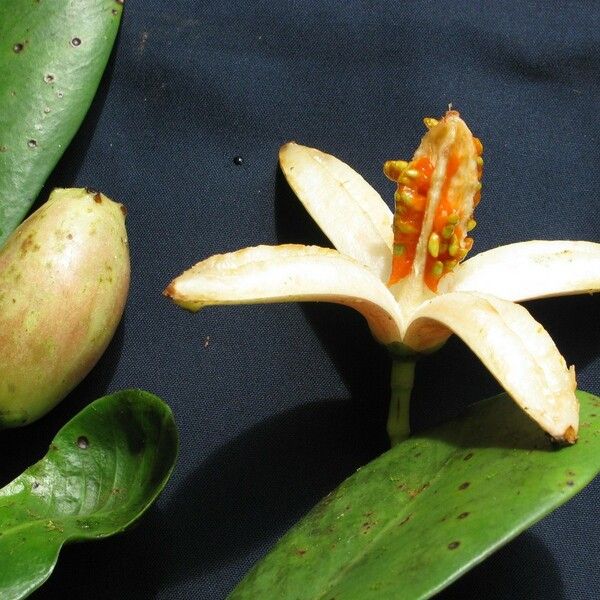
Plant Overview
Known as a sturdy survivor from the mist-shrouded forests of Central America, Clusia torresii is a master of adaptation. Often referred to as a "Balsam Apple" relative, this plant is famous for its thick, succulent-like leaves that feel almost like high-quality leather. In the wild, it often begins its life as an "air plant" (epiphyte) high in the canopy before eventually sending woody roots down to claim the soil.
🔍 How to Identify
- 🍃 The Leaves: Look for broad, teardrop-shaped leaves that are thick, stiff, and glossy. They grow in opposite pairs and have a distinctively "chunky" feel when touched.
- 💧 Milky Sap: If a leaf or stem is damaged, the plant exudes a thick, creamy, or yellowish latex-like sap that quickly hardens.
- 🌸 Star-Shaped Blooms: It produces elegant, fleshy white or pale pink flowers with a waxy texture, followed by green, woody fruit capsules that eventually split open like a star.
🏡 In Your Garden
- 🪴 A Heavy Drinker's Paradox: While its thick leaves suggest it can handle drought, Clusia torresii actually prefers consistent moisture and high humidity. However, it "breathes" through its roots, so using a chunky, orchid-like soil mix is vital to prevent root rot.
- ☀️ Light Seeker: This species is much more light-hungry than its common cousin, Clusia rosea. If kept indoors, it needs a very bright spot near a window; otherwise, it will become "leggy" as it tries to stretch toward the sun.
⚠️ Safety & Toxicity
- 🐾 Mildly Toxic: Like most members of the Clusiaceae family, the sap contains chemical compounds that can cause stomach upset if leaves or fruits are ingested by curious pets or children.
- 🚫 Skin Irritant: The sticky latex sap can cause contact dermatitis or skin irritation for some people. It is best to wear gloves when pruning or taking cuttings.
✨ Fun Fact
- 🧬 Night Breather: Clusia torresii is one of the rare trees that can switch its metabolism! It uses CAM photosynthesis (usually found in cacti) to take in carbon dioxide at night to save water during hot, dry days, making it an incredibly efficient survivor.

Detailed Care Instructions

Place in a bright room that is sun drenched almost all day. Or directly in a south-facing window.

When the top few inches of soil dry out, water your plants. If the top few inches of soil are still moist, do not water your plant. Wait a few days, then poke your finger into the soil to see if anything has changed. Overwatering poses a disease risk, such as the development of fungal diseases in the roots. These plants have adaptations in there leaves that allow them to survive in low water supply.








