Plant Overview
Known as the Spurge Olive or Widow-wail, this tough Mediterranean evergreen is a true survivor of rocky, sun-drenched cliffs. Despite its name, it isn't a true olive or a true spurge, but a unique shrub that has clung to the limestone coasts of Southern Europe for millions of years. It is often prized by collectors of rare Mediterranean flora for its architectural shape and curious three-part fruits.
🔍 How to Identify
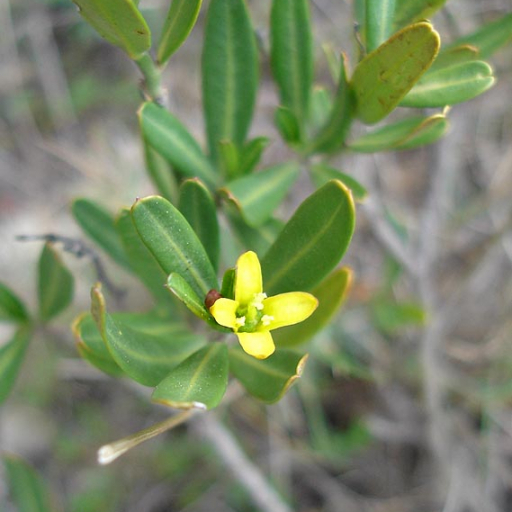
- 🌿 Leathery Foliage: The leaves are narrow, elongated, and stiff with a waxy coating that helps the plant retain moisture in the heat.
- 💛 Hidden Blooms: It produces small, bright yellow flowers with four petals that tuck themselves neatly into the base of the leaves.
- 🍒 Triple Berries: Its most iconic feature is the fruit—a "tricoccon" or three-lobed berry that transitions from a fleshy green to a deep, dark red and finally a charcoal black.
🏡 In Your Garden
- 🪨 Rocky Foundations: This plant hates "wet feet." In a garden setting, it thrives in rocky, alkaline soil or even tucked into the crevices of a dry stone wall where drainage is absolute.
- ☀️ Sun Worshiper: To maintain its dense, bushy habit, it requires full sun. In the shade, the branches become "leggy" and sparse as the plant reaches for more light.
- ✂️ Slow Growth: Because it grows at a leisurely pace, it rarely needs pruning. It is an excellent choice for low-maintenance "xeriscaping" or Mediterranean-themed landscapes.
⚠️ Safety & Toxicity
- 🚫 Status: Low-to-moderate toxicity.
- 🧤 Skin Irritant: Like many plants in its order, the sap can cause mild skin irritation or dermatitis in sensitive individuals. It is best to wear gloves when pruning.
- 🐾 Pet Warning: The attractive berries are not edible. If ingested by pets or children, they can cause stomach upset and nausea, so it is best planted in a spot where it won't be sampled by curious mouths.
✨ Fun Fact
The Cneorum tricoccon is considered a "living fossil." It is a remnant of the tropical flora that existed around the Mediterranean basin during the Tertiary period, millions of years before the current Mediterranean climate even developed!

Detailed Care Instructions
To grow Cneorum tricoccon, also known as the Mediterranean rockrose, follow these steps:
- Climate and location: Cneorum tricoccon prefer warm Mediterranean climates but can also tolerate mild coastal areas. It requires well-drained soil and full sunlight.
- Soil preparation: Prepare a planting site by loosening the soil and removing any weeds or rocks. Amend the soil with well-aged compost or organic matter to improve drainage and nutrient content.
- Seeds or cuttings: Cneorum tricoccon can be grown from seeds or cuttings. If starting from seeds, soak them overnight before planting. Cuttings should be taken in spring or early summer and treated with a rooting hormone before planting.
- Planting: Plant the seeds or cuttings in the prepared soil. If planting multiple specimens, space them 2-3 feet apart to allow for proper growth.
- Watering: Keep the soil slightly moist but not waterlogged. Provide regular watering during the establishment period, then reduce to occasional watering as the plant becomes more established.
- Fertilization: Cneorum tricoccon generally does not require much fertilization. However, you can apply a balanced slow-release fertilizer in the spring to promote growth. Avoid excessive use of nitrogen-rich fertilizers, as it can harm the plant.
- Pruning: Prune the plant to maintain its shape and remove any dead or damaged branches. Pruning can be done after flowering or in early spring.
- Pests and diseases: Cneorum tricoccon is relatively pest and disease resistant. However, watch out for common garden pests such as aphids or scale insects. If necessary, apply a suitable insecticide or use organic pest control methods.
- Mulching: Apply a layer of organic mulch around the base of the plant to conserve moisture, suppress weeds, and regulate soil temperature.
- Winter care: In areas with harsh winters, protect Cneorum tricoccon from freezing temperatures by covering it with a layer of mulch or bringing potted plants indoors.

Place in a bright room that is sun drenched almost all day. Or directly in a south-facing window.

Cneorum Tricoccon is a small evergreen shrub that requires regular and consistent watering. When watering, it's important to avoid overwatering as Cneorum Tricoccon is susceptible to root rot. To ensure proper watering, it's recommended to water deeply once or twice a week depending on the weather conditions and soil moisture level. The soil should be moist but not soggy. It's also important to avoid watering the leaves as this can lead to diseases. It's better to water directly at the base of the plant. During the summer months, the plant may require more frequent watering to combat drought stress. When growing Cneorum Tricoccon in a container, it's important to make sure the container has drainage holes to allow excess water to escape. Adequate watering practices will help ensure the plant is healthy and thriving.
To fertilize this plant, use a balanced fertilizer that contains equal amounts of nitrogen, phosphorus, and potassium. Apply the fertilizer sparingly, as too much can harm the plant. Water the plant thoroughly before and after fertilizing to help the nutrients penetrate the soil. Fertilize once every two to three months during the growing season, which is typically from early spring to late fall. Avoid fertilizing during the winter months, as the plant is dormant and does not need the extra nutrients.
The ideal soil for the plant should be well-draining and rich in nutrients, with a pH level of around 6.5 to 7.5. It should also be able to hold moisture without becoming waterlogged. A mix of sandy loam and peat moss is recommended, along with compost or other organic matter to improve soil fertility. Additionally, the soil should be free from weeds, pests, and disease-causing pathogens. It is important to note that overwatering the plant or planting it in heavy soil can cause root rot, which can be fatal to the plant.
To propagate this plant, you will need to take semi-hardwood cuttings in the late spring or early summer. Begin by selecting a healthy stem from the parent plant that is between 4 and 6 inches long. Using a clean, sharp pair of pruning shears, make a clean cut at a 45-degree angle just below a leaf node.
Remove any leaves from the bottom half of the cutting, and dip the end in rooting hormone powder. Then, place the cutting in a small pot filled with a well-draining soil mix. Make sure the pot has drainage holes to prevent water accumulation.
Cover the pot with a plastic bag to create a humid environment. Place it in a bright but indirect sunlight location and keep the soil moist but not waterlogged. After a few weeks, check the cutting for roots by giving it a gentle tug. If you feel some resistance, it means roots have formed.
When the roots are about 2-3 inches long, transplant the cutting into a slightly larger pot with fresh soil mix and continue to care for it until it's strong enough to withstand outdoor conditions.








