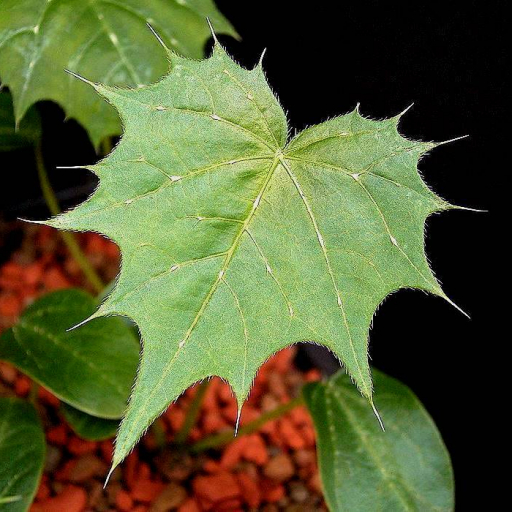
Plant Overview
Known famously—and infamously—as Mala Mujer (or "Bad Woman"), Cnidoscolus angustidens is a desert-dweller with a striking split personality. While its clusters of snowy white flowers look delicate and inviting, the entire plant is armored with a sophisticated defense system of stinging hairs. In regional folklore, its name serves as a humorous but firm warning to hikers and gardeners: admire this beauty from a safe distance, or you’ll certainly regret the touch!
🔍 How to Identify
- 🌿 The Foliage: The leaves are deeply lobed, often resembling a maple or grape leaf, and are dark green with distinct silver or light-colored veins.
- 🦷 Stinging Armor: Look closely at the stems and leaves; they are covered in translucent, stiff hairs (trichomes) that look like tiny needles.
- 🌸 The Flowers: It produces clusters of small, fragrant, five-petaled white flowers that seem to float above the jagged, protective leaves.
🏡 In Your Garden
- 🌵 Desert Roots: This plant is a specialist of the Sonoran Desert. It thrives in rocky, well-draining soil and can survive intense heat and prolonged drought that would wither most other garden plants.
- 🚫 Look but Don't Move: If you find one growing naturally or want to plant it, choose its spot wisely. It develops a deep, thick taproot that makes it incredibly difficult to transplant once established; moving it usually results in the plant failing to thrive.
- ☀️ Sun Seeker: It requires full, baking sun to produce its characteristic white blooms. In shaded areas, the plant becomes "leggy" and loses its compact, defensive shape.
⚠️ Safety & Toxicity
- 🚫 Status: HIGHLY IRRITATING. This plant should be handled only with heavy-duty gloves, or better yet, not at all.
- ⚡ The Sting: The hairs act like hypodermic needles, injecting a cocktail of toxins (including caustic sap) into the skin. This causes an immediate, intense burning sensation—often described as "electric"—followed by itching and redness that can last for days.
- 🐾 Pets & Kids: Keep this plant far away from high-traffic areas. Dogs and curious children are particularly at risk, as even a light brush against the leaves can cause significant distress and skin inflammation.
✨ Fun Fact
The "sting" of the Mala Mujer is actually a pressurized delivery system. When you touch a hair, the brittle silica tip breaks off, and the internal pressure of the plant cell squirts the irritating fluid deep into the skin, ensuring the "predator" (or gardener) doesn't try to touch it again!

Detailed Care Instructions
To grow Cnidoscolus Angustidens, also known as spurge nettle, you can follow these steps:
- Seed selection: Obtain seeds of Cnidoscolus Angustidens from a reputable nursery or online source. Make sure the seeds are fresh and not expired.
- Preparing the soil: Choose a well-draining soil mix that is rich in organic matter. Cnidoscolus Angustidens prefers slightly acidic to neutral soil. Prepare the soil by removing any weeds, rocks, or debris and loosen it using a garden fork.
- Planting: Sow the seeds directly into the prepared soil during the spring or early summer when the frost risk has passed. Make small holes, around 1/4 to 1/2 inch deep, and place one seed in each hole. Space the seeds 12 to 18 inches apart to allow ample room for growth.
- Watering: After planting, water the seeds lightly to keep the soil moist but not waterlogged. Avoid overwatering, as it can cause root rot. Ensure the soil remains evenly moist but not damp.
- Sunlight and temperature: Cnidoscolus Angustidens plants require full sun exposure to thrive. Choose a location in your garden that receives at least 6-8 hours of direct sunlight daily. The plant can tolerate a wide range of temperatures, but it prefers warmth. Aim for a temperature range of 65-85°F (18-29°C).
- Fertilization: Apply a balanced, slow-release fertilizer during the growing season, following the instructions on the package. This will provide essential nutrients to the plant and support its growth.
- Pruning: Once the plant has established and starts growing, you can prune it to promote bushier growth. Pinch off the tips of the growing stems periodically to encourage branching and fuller foliage.
- Protection: Be aware that Cnidoscolus Angustidens has stinging hairs and can cause skin irritation, so take precautions when handling the plant. Wear gloves and long sleeves if necessary.
- Pests and diseases: Cnidoscolus Angustidens is generally resistant to pests and diseases. However, inspect your plant regularly for signs of infestation or any abnormalities. Treat any issues promptly using organic pest control methods if required.
- Harvesting: Once the plant has matured and produces seed pods, you can harvest the seeds for propagation. Allow the seed pods to dry on the plant before collecting them.
Remember to research specific care requirements for this plant, as individual needs may vary.

Place in a bright room that is sun drenched almost all day. Or directly in a south-facing window.

1. Check the soil moisture: Before watering the plant, it is essential to check the soil moisture level. Use your finger or a moisture meter to determine if the soil is dry or moist.
2. Watering frequency: The watering frequency of Cnidoscolus Angustidens plant varies from season to season and also depends on the location's humidity level. In general, the plant should be watered once a week in the growing season (spring and summer) and every two to three weeks in the dormant season (fall and winter).
3. Watering amount: The appropriate amount of water required for Cnidoscolus Angustidens plant often depends on its location. However, a general rule of thumb is to water the plant until the soil is moderately moist. Avoid over-watering the plant, which could lead to root rot.
4. Watering method: The best method to water Cnidoscolus Angustidens plant is to do it slowly and evenly. Pour water directly into the soil, avoiding the foliage, to prevent the leaves from becoming wet and prone to fungal diseases.
5. Drainage: Ensure that the pot or container in which the plant is growing has proper drainage holes. Additionally, if water accumulates in the dish or saucer below the plant, empty it to prevent waterlogging.
6. Water quality: Use only clean, fresh water for watering the Cnidoscolus Angustidens plant as the presence of chemicals or contaminants in water could damage or kill the plants.
7. Humidity: Keeping the humidity level high around the plant can help to avoid damage and stress. You can mist the plant occasionally or place a tray of water near the plant to increase humidity.
To fertilize Cnidoscolus Angustidens plant, you should use a balanced fertilizer with equal parts nitrogen, phosphorus, and potassium. Apply the fertilizer once a month during the growing season, which is typically from late spring to early fall. Avoid fertilizing during the winter months when the plant is dormant. Dilute the fertilizer in water according to package instructions and apply it to the soil around the base of the plant. Water the plant thoroughly after fertilizing.
Cnidoscolus angustidens prefers well-draining soil with a slightly acidic to neutral pH level. It can tolerate sandy or loamy soil types, but it needs to be rich in organic matter to provide adequate nutrition. The soil should be well-aerated, so it is essential to avoid compacted or heavy clay soils. Adding compost or organic matter to the soil can improve drainage, air circulation, and fertility. The plant prefers soil that retains moisture but is not waterlogged. Therefore, it is necessary to avoid overwatering and ensure adequate drainage around the plant's roots. When planting Cnidoscolus angustidens, it is best to mix the soil with some sand or perlite to increase drainage.
The propagation process for Cnidoscolus Angustidens involves taking cuttings from mature plants and rooting them in a suitable growing medium. Here are the steps in detail:
- Choose a healthy, mature plant for taking cuttings.
- Using a sharp, clean pair of scissors or pruning shears, cut a stem that is about 4-6 inches long from the top of the plant. Make the cut at a 45-degree angle just below a node (where a leaf attaches to the stem).
- Remove any leaves or flowers from the lower half of the cutting.
- Dip the cut end of the stem in rooting hormone powder to encourage root growth.
- Place the cutting in a small pot filled with a well-draining potting mix or seed-starting mix.
- Cover the pot with a clear plastic bag or a plastic dome to create a humid environment.
- Place the pot in a warm, bright location where it will receive indirect sunlight.
- Water the cutting regularly, ensuring that the soil stays moist but not waterlogged.
- After a few weeks, the cutting should begin to form roots. Test for this by gently tugging on the stem - if there is resistance, roots have formed.
- Once the cutting has established roots, it can be transplanted into a larger pot or directly into the ground. Keep the plant well-watered and in a warm, bright location as it continues to grow.








