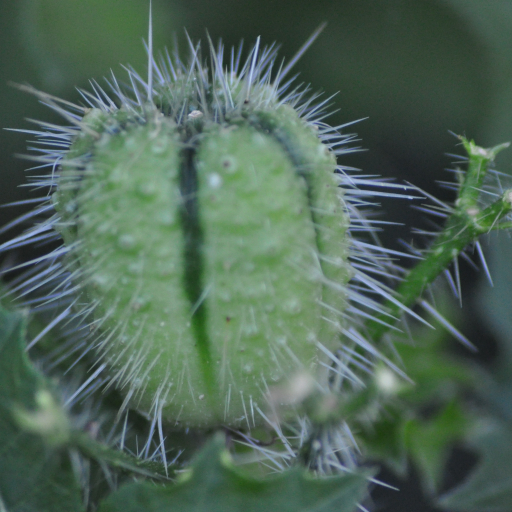
Plant Overview
Known colloquially as the Texas Bull Nettle or the "Mala Mujer" (Bad Woman), this plant is a legendary resident of the American South. While it may look like a delicate wildflower with its sweet, jasmine-scented blooms, it is famous for its fierce defensive capabilities. It is a plant that demands respect—beautiful to observe from a distance, but a painful lesson for anyone who dares to touch it.
🔍 How to Identify
- [🌸] Fragrant Blooms: Produces clusters of pure white, five-petaled flowers that emit a heavy, pleasant perfume, especially during the heat of the day.
- [🍃] Lobed Foliage: The leaves are dark green and deeply divided into 3 to 5 crinkled lobes, giving them a distinct, rugged appearance.
- [🪡] Needle Armor: The most defining feature is the dense covering of translucent, glass-like stinging hairs (trichomes) that coat every stem, leaf, and seed pod.
🏡 In Your Garden
- [🏜️] Sandy Specialists: In a natural landscape, these plants are signs of sandy, well-draining soil. They are incredibly hardy and can survive extreme heat and prolonged droughts thanks to a massive, tuberous taproot.
- [🦋] A Pollinator's Paradox: While humans avoid it, the Bull Nettle is a vital host for pollinators. Its nectar is a favorite for many butterfly species, who navigate the stinging hairs with ease to reach the sweet center.
⚠️ Safety & Toxicity
- [🚫] Severe Irritant: The stinging hairs act like hypodermic needles, injecting a cocktail of formic acid and other toxins upon contact. This causes an immediate, intense burning sensation that can last for hours, followed by itchy welts.
- [🐾] Pet & Child Alert: This plant should never be placed in areas where children or pets play. The "sting" is potent enough to cause significant distress to dogs and cats, particularly on sensitive areas like noses and paws.
✨ Fun Fact
[🌰] Despite its painful defenses, the seeds inside the pods are completely edible and are said to taste better than pecans or walnuts! However, you have to wait for the pods to dry and "explode" to release the seeds, or risk a very painful harvest.

Detailed Care Instructions

Place in a bright room that is sun drenched almost all day. Or directly in a south-facing window.

Some plants require more regular watering than others, which should be done every few days. It's critical to maintain the soil moist all of the time. The water requirements of the same plant placed in pots with varying sizes will differ. Because the water in the smaller pot evaporates faster than the water in the larger pot, it will require more watering. Regardless of pot size, the surface should constantly be maintained moist.








