Plant Overview
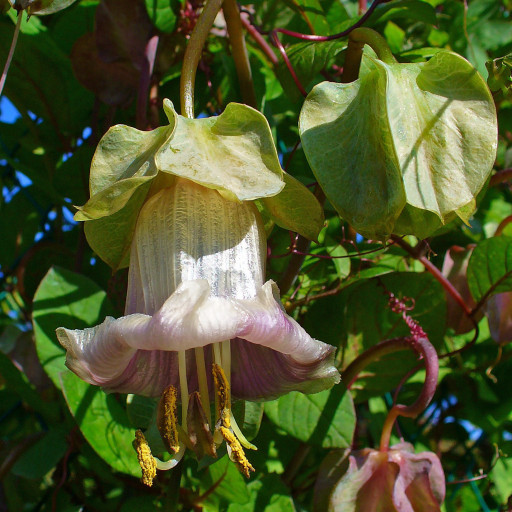
Often called the "Cup and Saucer Vine" or "Cathedral Bells," this Mexican native is a true high-speed climber. In a single season, it can transform a bare fence into a lush, purple-tapestry wall. It is a favorite for those who love a bit of vintage drama in their garden, offering oversized blooms that look like they belong in a botanical illustration from the 1800s.
🔍 How to Identify
- 🔔 The Flowers: Large, bell-shaped blooms that emerge a pale creamy-green and slowly transition to a deep, royal purple as they mature.
- ☕ The "Saucer": Each flower sits perfectly centered on a large, ruffled green calyx that looks exactly like a decorative ceramic plate or saucer.
- 🧶 Climbing Tendrils: Look at the tips of the leaves; you’ll find thin, branched tendrils that act like tiny hooks, allowing the plant to "zip" itself up walls and trellises.
🏡 In Your Garden
- 🏃 A Speed Demon: This plant is famous for its rapid growth. Give it a sturdy trellis or a chain-link fence early on, as it can easily climb 15 to 20 feet in a single warm summer.
- 🪴 Sensitive Roots: It possesses a delicate root system that resents being moved. If you are starting it from seed, use biodegradable pots that can be planted directly into the ground to avoid "transplant shock."
- ☀️ Sun Seeker: While the foliage grows well in partial shade, you need full, bright sun to trigger the heavy flowering and the rich color change from green to purple.
⚠️ Safety & Toxicity
- ✅ Low Risk: Cobaea scandens is generally considered non-toxic and is not listed on major poisonous plant databases for humans or common pets.
- 👅 General Caution: While safe, the foliage is not edible. Ingesting any garden plant in large quantities can cause mild stomach upset or nausea in curious pets or toddlers.
✨ Fun Fact
In its native Mexican forests, the Cup and Saucer Vine has evolved specifically to be pollinated by bats! The flowers produce a heavy, musky scent at night and offer a wide "landing pad" specifically designed for nocturnal visitors.

Detailed Care Instructions
| Color | Green, Maturing To Purple |
| Soil Ph | No Preference |
| Humidity | Dry |
| Invasive | Weed |
| Lighting | Full Sun |
| Toxicity | Poisonous |
| Soil Type | Medium Moisture, Well-Drained Soil |
| Bloom Time | Seasonal Bloomer |
| Difficulty | Medium |
| Plant Type | Perennial Vine, Usually Grown As An Annual |
| Mature Size | 10 To 20 Feet; 3- To 6-Foot Spread |
| Native Area | Mexico, Parts Of Peru |
| Temperature | Min 18°C |
| Sun Exposure | Full Sun |
| Hardiness Zones | 9-11 |
To grow Cobaea Scandens (also known as the Cathedral Bells or Cup and Saucer Vine), you can follow these steps:
- Choose a suitable location: Cobaea Scandens prefers full sun to part shade. Make sure the area has well-draining soil.
- Start seeds indoors: It is best to start the seeds indoors 6-8 weeks before the last frost date in your area. Soak the seeds in water for 24 hours before planting to enhance germination.
- Plant the seeds: Fill seed trays or small pots with a seed starting mix. Plant the seeds at a depth of about 1/2 inch and keep them moist but not waterlogged.
- Provide warmth and light: Place the seed trays or pots in a warm location, around 70-75°F (21-24°C). Provide plenty of light, either by placing them in a sunny window or using artificial grow lights.
- Transplant seedlings: When the seedlings have developed a few sets of true leaves and the danger of frost has passed, transplant them into larger pots or into the garden. Space the plants at least 12-18 inches apart to give them room to climb.
- Train the vines: Cobaea Scandens is a climbing vine, so it will need support. Install a trellis, arbor, or fence for the plant to climb on. You can gently train the vines to attach themselves to the support structure.
- Watering: Keep the soil consistently moist, but not saturated. Water the plant deeply whenever the top inch of soil feels dry to the touch. Avoid letting the soil dry out completely.
- Fertilize: Cobaea Scandens benefits from regular feeding. Use a balanced liquid fertilizer every 2-4 weeks during the growing season.
- Pruning: Trim back any unruly or dead stems as needed to maintain a tidy appearance. You can also prune back the plant in late winter or early spring to encourage new growth.
- Monitor for pests and diseases: Keep an eye out for common garden pests like aphids or spider mites. Treat any infestations promptly using organic methods or insecticidal soap.
Following these steps should help you successfully grow Cobaea Scandens and enjoy its beautiful bell-shaped flowers.

Place in a bright room that is sun drenched almost all day. Or directly in a south-facing window.

To water this plant, it is important to take note of the soil moisture levels. Water the plant when the soil is dry to the touch, but not completely dry. Over-watering can cause root rot and under-watering can cause the plant to wilt and dry out. Make sure to water around the roots and avoid watering the leaves, as this can lead to fungal growth. Use a watering can or hose with a gentle spray to avoid damaging the plant. Water regularly, but not excessively, especially in hot and dry weather conditions.
To fertilize this plant, use a balanced fertilizer with equal parts nitrogen, phosphorus, and potassium. Apply the fertilizer once a month, starting in the early spring. Make sure to follow the instructions on the fertilizer package for application rates and methods. Avoid over-fertilizing, as this can lead to excessive growth and decreased flower production.
This plant prefers a well-draining soil mix that is rich in organic matter and has a slightly acidic to neutral pH. A good option would be a mix of peat moss, perlite, and compost or well-rotted manure. The soil should also be kept consistently moist but not waterlogged. Avoid using heavy clay soils or soils with a high sand content. Adding a slow-release fertilizer to the soil mix can also help to provide nutrients to the plant throughout the growing season.
To propagate the plant referred to, follow these steps:
- Start by selecting a healthy parent plant with desirable traits and characteristics.
- Take stem cuttings from the parent plant during the growing season. Cuttings should be at least 10cm long and taken from the tips of the stems.
- Remove the lower leaves from the cuttings and dip the cut end in rooting hormone.
- Prepare a potting mix of equal parts peat moss, perlite, and vermiculite. Fill a small container with the potting mix and moisten it.
- Make a hole in the potting mix with a pencil and insert the cutting into the hole. Firm the potting mix around the base of the cutting.
- Cover the container with a clear plastic bag and place it in a warm, bright location out of direct sunlight.
- Check the cutting regularly to ensure that the potting mix remains moist but not waterlogged. Mist the cutting with water when necessary.
- Once the cutting has rooted and begun to grow, remove the plastic bag and transplant it into a larger container or the garden.
- Monitor the newly rooted plant for pests and diseases and provide adequate water and nutrients to encourage healthy growth.
Common pests of the cup-and-saucer-vine include Spider mites, aphids. Make a habit of checking your cup-and-saucer-vine frequently for pests so that any infestations can be caught and managed early.








