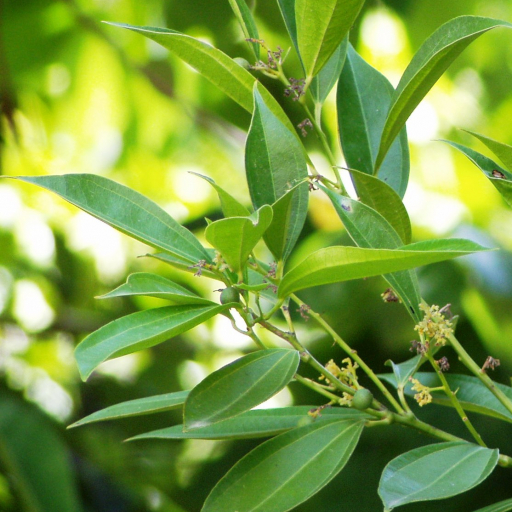
Plant Overview
Known as the Laurel-leaf Snail Tree, this Himalayan native is the unsung hero of the "shady garden." While most plants with such lush, glossy foliage demand direct sun, Cocculus laurifolius thrives in the quiet, dappled corners of a landscape. Its elegant, weeping form and architectural leaves make it a favorite for those looking to create a serene, Zen-like atmosphere or a privacy screen that feels more like a waterfall of green than a wall.
🔍 How to Identify
- 🍃 The Triple-Vein Pattern: The most striking feature is the leaf. Each glossy, lance-shaped leaf features three prominent longitudinal veins that run from the base all the way to the tip, resembling a laurel leaf but with more texture.
- 🌊 Weeping Architecture: Look for long, arching branches that gracefully "fountain" downward. In its youth, it behaves like a dense shrub, but it can eventually grow into a small, multi-trunked tree.
- 🌑 Subtle Fruit: After flowering, it produces tiny, round berries that turn a dark blackish-purple. These berries contain a seed that is uniquely curled, which gives the genus the name "Cocculus" (Latin for "little berry" or "husk").
🏡 In Your Garden
- ☁️ The Shade Solution: Unlike many evergreen shrubs, this plant is exceptionally shade-tolerant. It is perfect for those "dead zones" near tall fences or under the canopy of larger trees where grass and flowers refuse to grow.
- ✂️ Low-Stress Maintenance: It has a slow to moderate growth rate, meaning you won't be out there pruning every weekend. It responds beautifully to "cloud pruning" or being shaped into a formal hedge, but it’s just as happy left in its natural, cascading state.
- 💧 Moisture Matters: While it is surprisingly hardy once established, it hates "wet feet." Ensure your soil is rich in organic matter but drains well to prevent root issues.
⚠️ Safety & Toxicity
- 🚫 Toxic if Ingested: Cocculus laurifolius contains various alkaloids (such as cocculine) throughout the plant, especially in the bark and seeds.
- 🐾 Keep Pets Away: It is considered toxic to dogs, cats, and livestock. Ingestion can lead to lethargy, gastrointestinal distress, or more serious neurological symptoms in large quantities. It is best used as an ornamental piece out of reach of curious chewers.
✨ Fun Fact
The "Snail Tree" gets its name from its seeds! If you were to peel back the fruit, you’d find a seed shaped like a tiny, curled snail shell or a crescent moon—a secret bit of geometry hidden inside every berry.

Detailed Care Instructions
To grow Cocculus Laurifolius plant, also known as Indian Cockle, you can follow these steps:
- Choosing the right location: Select a spot that receives partial shade or full sun. The plant prefers well-draining soil and does well in both sandy and loamy soils.
- Planting method: Either sow the seeds directly in the ground or start with young plants purchased from a nursery. If using seeds, it's recommended to soak them in warm water for a few hours before sowing.
- Soil preparation: Prepare the soil by removing any weeds, rocks, or debris. Incorporate organic matter such as compost or well-rotted manure into the soil to improve its fertility and drainage.
- Planting: Dig a hole slightly larger than the rootball of the plant or sow seeds at a depth recommended on the seed packet. Space the plants around 2-3 feet apart if planting multiple ones.
- Watering: After planting, water the plant thoroughly to help it establish its roots. Water regularly, keeping the soil moist but not waterlogged. Cockle vines prefer a consistently moist environment.
- Fertilizing: Apply a balanced slow-release fertilizer or organic fertilizer rich in nitrogen, phosphorus, and potassium to provide essential nutrients to the plant. Follow the dosage instructions on the fertilizer packaging.
- Pruning: Cocculus Laurifolius doesn't require frequent pruning but can be guided to the desired shape and size. Prune any dead, damaged, or crossing branches to maintain good air circulation within the plant.
- Pests and diseases: Monitor the plant regularly for any signs of pest infestations such as aphids or spider mites. Treat them with appropriate organic or chemical pesticides if necessary. The plant is generally resistant to diseases.
- Support: If you want the plant to grow upwards, provide a trellis, arbor, or any other support structure for the vines to cling onto.
- Harvesting: You can collect seeds from mature plants or use the fruits to propagate new ones. Harvest the fruits when they turn black and dry. Extract the seeds and plant them following the same steps.
With proper care and suitable conditions, Cocculus Laurifolius can grow vigorously and provide an appealing green cover or a decorative element in your garden.

Place in a bright room that is sun drenched almost all day. Or directly in a south-facing window.

To properly water Cocculus Laurifolius plants, it's important to consider the plant's specific needs and environment. Start by placing the pot in a location with partial shade and well-draining soil.
When watering, use a watering can or hose with a gentle stream to avoid disturbing the soil or roots. Allow the top inch of soil to dry out before watering again. Over-watering can lead to root rot and other issues.
As the plant grows, it may require more water. Monitor the soil regularly to ensure it stays moist but not too wet. In addition, consider the humidity levels in the plant's environment and adjust watering accordingly.
Overall, consistent and careful watering is key to keeping Cocculus Laurifolius plants healthy and thriving.
To fertilize this plant, you should apply a balanced, slow-release fertilizer in early spring. Mix the fertilizer into the soil around the base of the plant, being careful not to disturb the roots. Water the plant thoroughly after fertilizing. Repeat this process every 4-6 weeks during the growing season. Avoid fertilizing during the dormant season.
The ideal soil for Cocculus Laurifolius plant should be well-draining, airy, and nutrient-rich. It should have a pH level between 5.5 to 7.5. The plant prefers loamy soil that is a mixture of sand, silt, and clay. The soil should have good water-holding capacity and should not get waterlogged as it may lead to root rot. Organic matter such as compost or well-rotted manure can be added to the soil to improve its fertility. Avoid using heavy soil, as it can prevent air circulation and drain slowly. Additionally, it is important to ensure that the soil is free from any harmful pathogens, pests, or weeds, which can affect plant growth and health.
Cocculus Laurifolius plant can be propagated by both seed and cuttings.
To propagate through cuttings, choose a healthy stem with a few leaves and cut it at an angle just below a leaf node. Remove the lower leaves and dip the cut end in a rooting hormone. Plant the cutting in a pot filled with damp soil and keep it in a warm, bright spot with high humidity. Water it regularly and wait for roots to develop before transplanting it to a larger pot or outdoors.
To propagate through seeds, collect mature fruits from the plant and extract the seeds. Clean them and plant them in a pot filled with a well-draining potting mix. Keep the pot moist and in a bright, warm spot. The seeds should germinate in 2-3 weeks, and when they have grown a few leaves, they can be transplanted into larger pots or outdoors.








