Plant Overview
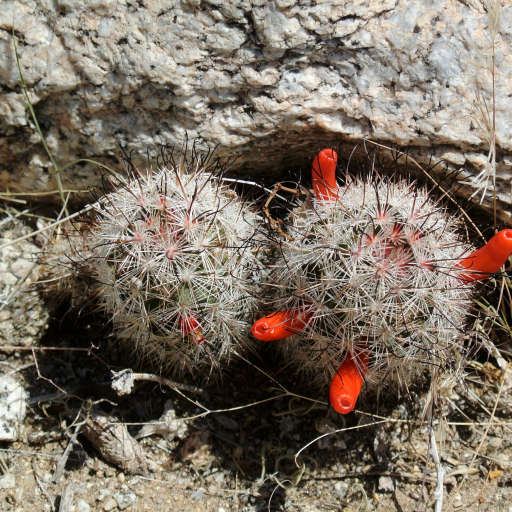
Often called the Fishhook Pincushion or Corkseed Cactus, this desert gem is a master of defense and survival. Native to the arid landscapes of the Mojave and Sonoran deserts, it often hides beneath larger "nurse shrubs" to escape the most intense heat. Its botanical name, tetrancistra, literally translates to "four hooks," referring to the formidable weaponry it uses to protect its moisture.
🔍 How to Identify
- 🪝 The "Fishhooks": The most striking feature is the cluster of 1 to 4 dark, reddish-brown central spines that are sharply curved at the tip, looking exactly like miniature fishing hooks.
- 🕸️ Radial Spines: Surrounding the hooks are 30 to 60 white, needle-like radial spines that create a dense, "frosted" or webbed appearance over the cylindrical green body.
- 🌸 Vibrant Blooms: Despite its prickly exterior, it produces surprisingly large, funnel-shaped flowers in shades of lavender, pink, or deep magenta that emerge from the top of the plant.
🏡 In Your Garden
- 🏜️ Taproot Sensitivity: This cactus grows a massive, carrot-like taproot that stores water for droughts. Because of this, it is notoriously sensitive to "wet feet"—it needs extremely gritty, fast-draining soil, or the root will rot almost overnight.
- 🌤️ Light Nuance: While it loves the sun, it is used to being partially shaded by desert scrub. In a home collection, it prefers very bright light but appreciates protection from the most intense, direct afternoon sun which can scorch its skin.
⚠️ Safety & Toxicity
- 🌵 Physical Hazard: The Cochemiea tetrancistra is non-toxic if nibbled, but its physical defense is aggressive. The "fishhooks" are designed to latch onto skin or fur and are very difficult to remove without causing a tear.
- 🐾 Pet & Child Warning: Keep this plant out of reach of curious paws and hands. If a pet gets a hook caught in their fur or mouth, it usually requires a careful, painful extraction.
✨ Fun Fact
- 🛶 The Corkseed Mystery: Its seeds have a unique, corky base that isn't found in most other cacti. This "cork" allows the seeds to float on top of desert flash-flood waters, allowing the plant to "sail" and colonize new areas miles away from the parent plant.

Detailed Care Instructions








