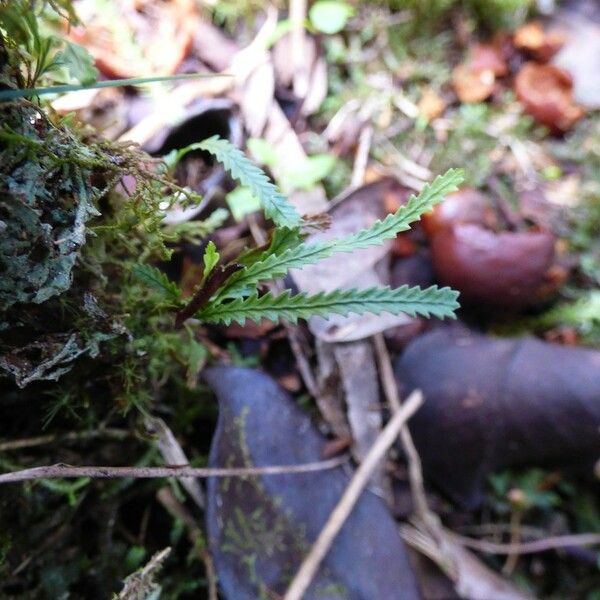
Plant Overview
Meet the Cochlidium serrulatum, a tiny, enchanting member of the grammitid fern family. Often called the Saw-toothed Ribbon Fern, this miniature marvel looks less like a traditional fern and more like a serrated green ribbon lost in a tropical cloud forest. It is a specialist of high-altitude humidity, making it a "holy grail" species for dedicated terrarium enthusiasts and moss-gardeners.
🔍 How to Identify
- 🌿 The Fronds: Unlike bushy ferns, these fronds are narrow, strap-like, and rarely exceed a few inches in length, giving them a delicate, grass-like appearance.
- 🪚 Serrated Edges: The species name serrulatum refers to the distinct "saw-toothed" notches along the leaf margins, which are most visible under close inspection.
- 🌑 Hidden Spores: If you look at the underside or tip of a mature frond, you may find the sori (spore clusters) arranged in a single, sunken line along the midvein, often protected by the folding of the leaf.
🏡 In Your Garden & Home
- ☁️ Cloud Forest Vibes: This plant is an epiphyte, meaning it naturally grows on mossy tree trunks rather than in soil. In a home setting, it absolutely requires high humidity—think 70% or higher—making it an ideal candidate for a closed glass terrarium.
- 💧 Sensitive Roots: Because it lacks a deep taproot and evolves to live on bark, it is highly sensitive to "wet feet." It prefers to cling to a piece of cork or lava rock covered in live sphagnum moss rather than being buried in a traditional pot.
⚠️ Safety & Toxicity
- 🟢 Non-Toxic Status: There are no known reports of toxicity for Cochlidium serrulatum regarding humans or common household pets like cats and dogs.
- ✋ Handle with Care: While safe to touch, the plant is physically fragile. The tiny fronds can dry out and become brittle within hours if the humidity drops, so it is best kept as a "look but don't touch" specimen.
✨ Fun Fact
In the wild, this fern participates in a "vertical ecosystem." It often grows alongside orchids and rare mosses, acting as a tiny sponge that helps trap moisture and organic debris, eventually creating a miniature patch of soil high up in the canopy for other life to thrive!

Detailed Care Instructions
To grow Cochlidium Serrulatum, also known as the Spiral Grass or Corkscrew Rush, you can follow these steps:
- Choose a suitable location: Cochlidium Serrulatum prefers bright indirect sunlight to partial shade. It can also tolerate full sun in cooler climates. Ensure that the planting area has well-draining soil.
- Prepare the soil: Before planting, amend the soil with organic matter, such as compost or well-rotted manure, to improve moisture retention and fertility.
- Planting: Dig a hole that is slightly larger than the root ball of the plant. Place the plant into the hole and backfill with soil, gently firming it around the roots. Make sure the crown of the plant (where the roots meet the stem) is level with the soil surface.
- Watering: Water the plant thoroughly after planting and ensure that the soil remains consistently moist during the growing season. However, avoid overwatering, as this can cause root rot.
- Fertilization: Apply a balanced slow-release fertilizer in spring to provide nutrients to the plant. Follow the package instructions for the correct application rate.
- Maintenance: Remove any dead or damaged foliage regularly to maintain the plant's appearance. Additionally, you can trim the plant back in late winter or early spring to encourage fresh growth.
- Division: Over time, Cochlidium Serrulatum may become crowded and lose vigor. To rejuvenate the plant, divide it every 2-3 years in early spring. Carefully dig up the clump, separate it into smaller sections, and replant them individually.
- Protection: If you live in a colder climate, consider protecting the plant during winter by mulching around the base and covering it with a frost cloth or similar material.
By following these steps, you can successfully grow Cochlidium Serrulatum and enjoy its unique spiral shape and texture in your garden.
The Cochlidium Serrulatum plant should be watered regularly and deeply, allowing the water to saturate the soil around the roots. However, it is important to not over-water the plant, as this can lead to root rot. One way to gauge when it needs to be watered is to check the moisture level of the soil with your finger. If the top inch of soil is dry, it is time to water the plant. It is also important to make sure the plant has proper drainage, as standing water can also cause damage to the roots. Water should be applied directly to the soil and not on the leaves to prevent damage or disease. During the winter months, the plant may require less frequent watering.
To fertilize your Cochlidium Serrulatum plant, mix a balanced fertilizer such as 10-10-10 with water according to the instructions on the package. Water the plant thoroughly with the fertilizer solution every 4-6 weeks during the growing season (spring and summer) and reduce frequency during the dormant season (fall and winter). Avoid over-fertilizing, as this can burn the plant's roots. Always water the plant before and after fertilizing to prevent any damage to the roots.
To grow Cochlidium Serrulatum, it is ideal to use a well-draining soil mixture. A mixture of peat moss, perlite, and sand is recommended. The pH level of the soil should be slightly acidic, around 5.5 - 6.5. It is important to avoid using heavy, dense soil that retains water, as this can lead to root rot. The soil should be kept moist but not waterlogged, and it is recommended to allow the top inch of soil to dry out before watering again. Fertilization should be done with a balanced, water-soluble fertilizer every 2-4 weeks during the growing season.
To propagate this plant, it is best to take a stem cutting from a healthy parent plant. The cutting should be approximately 4-6 inches in length. Remove any leaves from the bottom half of the stem and dip the cut end into rooting hormone. Plant the cutting in well-draining soil and keep the soil moist but not waterlogged. Place the cutting in a bright, but indirect light and keep it warm. After a few weeks, the cutting should begin to root and new growth will appear. Once the plant has established roots and new growth, it can be repotted into a larger container or planted in the garden. Alternatively, the plant can also be propagated through division of the parent plant.








