Plant Overview
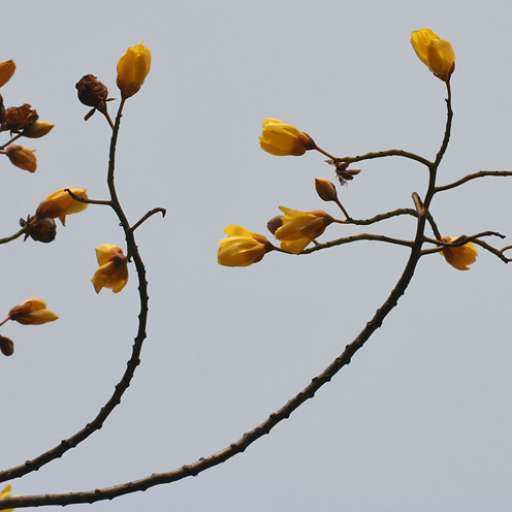
Known widely as the "Buttercup Tree" or the "Yellow Silk Cotton Tree," this stunning deciduous tree is a spiritual icon in its native India. It earned its botanical name, religiosum, because it is frequently planted around temples to offer its glowing blossoms to the gods. When the tree sheds its leaves in the dry season, it leaves behind a skeleton of branches adorned with massive, waxy yellow flowers that look like golden chalices against the sky.
🔍 How to Identify
- 🌼 Golden Blossoms: The most striking feature is its large, 5-petaled, bright yellow flowers that can grow up to 10cm across, resembling giant buttercups.
- 🍁 Star-Shaped Leaves: The leaves are deeply lobed, usually having 3 to 5 points, resembling a maple or a hand. They are soft and bright green during the rainy season.
- 🍐 Pear-Shaped Fruit: After flowering, it produces brownish, pear-shaped capsules that eventually split open to reveal seeds embedded in a soft, silky white "cotton" fiber.
🏡 In Your Garden
- ☀️ The Sun Seeker: This tree is a sun-worshipper and requires full light to produce its famous blooms. If kept in the shade, it may grow lanky and refuse to flower.
- 💧 Drought Specialist: Because it originates from dry, deciduous forests, it is incredibly hardy once established. It actually prefers a "tough love" approach—well-draining, even rocky soil, and very little water during its winter dormant phase.
- 🍂 Seasonal Magic: Don't panic if it loses all its leaves! This is a natural cycle. The tree goes bare to conserve energy before putting on its spectacular floral show on empty branches.
⚠️ Safety & Toxicity
- ✅ Low Risk: The Buttercup Tree is generally considered non-toxic to humans and common household pets like cats and dogs.
- 🌬️ Seed Irritation: While not poisonous, the fine, silky fibers (the "silk cotton") surrounding the seeds can sometimes act as a mild respiratory or eye irritant if they blow around in large quantities during the seeding stage.
✨ Fun Fact
The bark of this tree produces a clear, gummy substance known as "Katira Gum." This gum is often used in traditional cooling drinks and herbal remedies, and the silky fibers from the seed pods are occasionally used as a luxurious stuffing for pillows!

Detailed Care Instructions
To grow a Cochlospermum religiosum plant, also known as the Golden Silk Tree, you can follow these steps:
- Climate and Soil Requirements: Make sure the plant's natural habitat requirements match your current climate. The Golden Silk Tree thrives in tropical and subtropical regions with full sun exposure. It prefers sandy or loamy soil that is well-draining.
- Planting Time: The best time to plant Cochlospermum religiosum is during spring or early summer when the weather is warm and frost is no longer a concern.
- Seeds or Seedlings: Obtain either seeds or seedlings of the Golden Silk Tree from a reputable garden center or nursery. If using seeds, soak them in warm water overnight to help with germination.
- Seed Germination: Create optimal conditions for seed germination by using a small pot filled with potting mix or a seed starting mix. Sow the seeds about 1/4 inch deep and keep the soil moist. Place the pot in a warm location with high humidity, such as in a greenhouse or inside a plastic bag.
- Transplantation: Once the seedlings have grown to a suitable size, typically 4-6 inches tall, they can be transplanted into larger pots or directly into the ground. Choose a location with full sun exposure and prepare the soil before planting.
- Planting Technique: Dig a hole slightly wider and deeper than the root ball and gently place the seedling in the hole. Backfill the hole with soil and firmly press down around the base of the seedling to eliminate air pockets.
- Watering: After planting, the Golden Silk Tree requires regular watering to ensure proper establishment. Keep the soil consistently moist but not waterlogged. Once the plant has established itself, it becomes relatively drought-tolerant.
- Fertilization: Apply a balanced slow-release fertilizer during the growing season to provide essential nutrients. Follow the instructions on the fertilizer packaging for appropriate dosage and frequency.
- Pruning: Minimal pruning is required for the Golden Silk Tree, mainly to remove dead, damaged, or congested branches. Prune during the dormant season or after flowering to maintain a desirable shape.
- Pests and Diseases: Monitor the plant for any signs of pests, such as aphids or mealybugs, and treat them promptly using appropriate insecticides or organic methods. The Golden Silk Tree is generally resistant to diseases.
Remember to research the specific regional requirements and appropriate cultivation practices for your particular area to ensure successful growth of the Cochlospermum religiosum plant.

Place in a bright room that is sun drenched almost all day. Or directly in a south-facing window.

Cochlospermum religiosum is a tropical plant that requires a certain level of care when it comes to watering. Here are some details on how to water this plant:
1. Understanding the Watering Needs: The watering requirements of Cochlospermum religiosum vary with its growth stage. Younger plants need more frequent watering, while mature plants can tolerate some dry periods. It is crucial to strike a balance between moist soil and avoiding waterlogged conditions.
2. Soil Moisture Check: Before watering, check the moisture level of the soil. Insert your finger about an inch deep into the soil near the base of the plant. If it feels dry at this depth, it is an indication that the plant needs watering.
3. Watering Frequency: Younger plants require more frequent watering to establish their roots. Generally, it is advisable to water the plant every two to three days during the initial growth period. As the plant matures, you can reduce the frequency to once a week or even less, depending on the soil and climate conditions.
4. Watering Depth: When watering Cochlospermum religiosum, ensure that the water reaches the root zone. Watering deeply allows the roots to grow deeper and promotes overall plant health. Avoid just wetting the surface, as it can encourage shallow root growth.
5. Watering Techniques: There are various methods to water the plant. One common technique is to use a watering can or a garden hose with a gentle flow to wet the soil around the plant's base. Another effective method is drip irrigation, which provides slow, consistent moisture to the roots.
6. Watering Time: It is generally recommended to water in the early morning or evening when the temperatures are cooler. This allows the water to soak into the soil before evaporation occurs and minimizes the risk of fungal diseases.
7. Rainwater Utilization: If possible, collect rainwater and use it for watering Cochlospermum religiosum. Rainwater is free from chemicals found in tap water and is better suited for the plant's needs.
8. Drainage Considerations: Ensure that the plant is grown in a well-draining soil mix or potting medium. Adequate drainage prevents waterlogging, which can lead to root rot and other diseases.
Remember to always observe and adjust your watering routine based on the specific needs of the plant, taking into account factors like temperature, humidity, and the overall health of Cochlospermum religiosum.
Cochlospermum Religiosum, also known as Argan tree, Earth apple, or Buttercup tree, is a tropical plant that requires specific fertilizing instructions to maintain its health and promote proper growth.
- Choose a balanced fertilizer: Select a slow-release, balanced fertilizer with equal or similar ratios of nitrogen (N), phosphorus (P), and potassium (K). A general NPK ratio of 10-10-10 or 20-20-20 is suitable for Cochlospermum Religiosum.
- Timing: Fertilize your Cochlospermum Religiosum during the active growth period, which is typically in early spring or late winter. Avoid fertilizing during the dormant phase.
- Dilute the fertilizer: Follow the instructions provided on the fertilizer package to dilute the solution properly. Do not exceed the recommended dosage as it may cause harm to the plant.
- Application methods: There are two primary methods to apply fertilizer to Cochlospermum Religiosum:
a. Broadcast application: Sprinkle the diluted fertilizer evenly around the base of the plant and onto the soil. Avoid direct contact with the stem or leaves.
b. Soil drench: Mix the diluted fertilizer with water as per the package instructions. Slowly pour the solution around the plant's root zone, ensuring it is thoroughly soaked but not excessively waterlogged.
- Watering: After applying the fertilizer, water the Cochlospermum Religiosum plant deeply. This helps to distribute the nutrients and prevent potential fertilizer burn.
- Frequency: Fertilize every 4 to 6 weeks during the active growth period. However, it is crucial to assess the plant's response to the fertilizer and adjust the frequency accordingly.
- Organic alternatives: If you prefer organic fertilizers, you can use well-decomposed compost or organic fertilizer blends suitable for flowering plants. Follow the instructions on the package for proper application.
- Monitor the plant: Regularly observe the plant for any signs of over-fertilization, such as yellowing or browning of leaves, stunted growth, or leaf burn. If these signs appear, discontinue fertilization and flush the soil thoroughly with water.
Remember to consider factors like the specific fertilizer brand's instructions, environmental conditions, and the overall health of your Cochlospermum Religiosum plant when determining the ideal fertilization schedule.
The Cochlospermum religiosum plant thrives in well-draining soil that is rich in organic matter. It requires a soil that is slightly acidic to neutral, with a pH level ranging between 6.0 and 7.5. The ideal soil should have good water retention capacity while also ensuring proper drainage to prevent waterlogging and root rot.
To create an ideal growing environment, it is recommended to use a mixture that consists of loam soil, compost, and sand. Loam soil provides a balanced combination of clay, silt, and sand, allowing for adequate water retention, nutrient availability, and drainage. Compost enhances soil fertility by adding organic matter, improving moisture retention, and promoting beneficial microbial activity. Adding sand helps to improve drainage and prevent compaction.
Additionally, incorporating a small amount of perlite or vermiculite into the soil mixture can further enhance drainage and aeration. This is particularly important if the native soil is heavy or compacted.
Regularly amending the soil with organic matter, such as compost or well-rotted manure, is beneficial for the overall health and growth of the Cochlospermum religiosum plant. This helps to maintain soil fertility, improve moisture retention, and support the growth of beneficial soil organisms.
It is important to note that the specific soil requirements may vary slightly depending on the regional climate and growing conditions. Therefore, it is always recommended to consult local gardening experts or nursery professionals for tailored advice specific to your location.
Cochlospermum religiosum, commonly known as the silk cotton tree or the buttercup tree, is a flowering plant native to the Indian subcontinent and Southeast Asia. It is a deciduous tree that can reach heights of up to 20 meters (65 feet). Propagating this plant can be done through various methods, including:
- Seed Propagation:
- Collect mature seeds from the tree during its fruiting season, typically from late winter to early spring.
- Soak the seeds in water for 24 hours to soften the hard seed coat.
- Fill a seed tray or pots with a well-draining planting medium, such as a mix of sand, perlite, and peat.
- Place the seeds on the surface of the planting medium and lightly cover them with a thin layer of soil.
- Water the seeds gently, ensuring that the soil remains moist but not waterlogged.
- Keep the tray or pots in a warm and bright location, maintaining a temperature around 25-30°C (77-86°F).
- Germination may take anywhere from 1 to 4 weeks. Once the seedlings develop two to three true leaves, they can be transplanted into individual pots or planted outdoors.
- Collect mature seeds from the tree during its fruiting season, typically from late winter to early spring.
- Stem Cuttings:
- Take stem cuttings with a clean, sharp knife from a healthy, mature silk cotton tree.
- Choose cuttings that are approximately 15-20 cm (6-8 inches) long and have multiple nodes.
- Remove any leaves from the lower half of the cutting.
- Dip the bottom end of the cutting in a rooting hormone powder to promote root development (optional).
- Prepare a well-draining rooting medium, such as a mix of perlite and peat or a soilless propagating mix.
- Insert the lower end of the cutting into the rooting medium, ensuring that at least one or two nodes are buried.
- Keep the cuttings in a warm and humid environment, ideally with a temperature around 25-30°C (77-86°F).
- Mist the cuttings regularly to maintain humidity and prevent them from drying out.
- Rooting may take several weeks to a couple of months. Once roots are well-established, the cuttings can be transplanted into individual pots.
- Take stem cuttings with a clean, sharp knife from a healthy, mature silk cotton tree.
- Air Layering:
- Select a healthy, flexible branch or stem on the silk cotton tree.
- Make a 2-3 cm (1-inch) upward diagonal cut on the branch, about 30 cm (12 inches) below its tip.
- Apply a small amount of rooting hormone to the wounded area (optional).
- Surround the wounded area with a moist sphagnum moss or peat moss.
- Wrap a plastic wrap or film around the moss, creating a root-promoting environment.
- Secure the plastic wrap on both ends using a string or rubber band.
- Monitor the air layer regularly, ensuring that the moss remains moist.
- After a few weeks to a few months, roots should start to form in the moist moss. Once the roots are well-developed, cut below the rooted portion and plant it in a suitable pot or ground.
Remember to provide proper care, including regular watering, adequate sunlight, and protection from extreme temperatures, to ensure healthy growth of the propagated Cochlospermum religiosum plant.
- Select a healthy, flexible branch or stem on the silk cotton tree.








