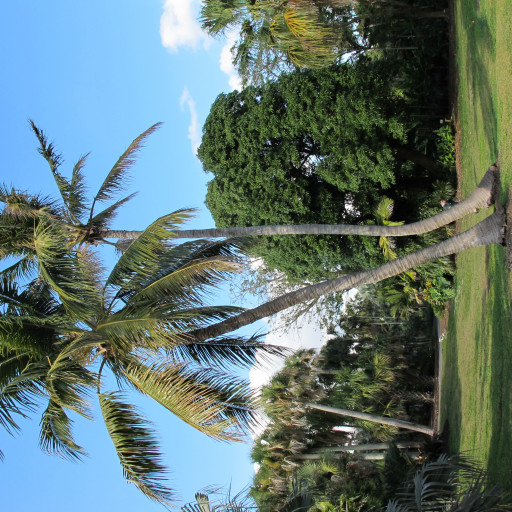
Plant Overview
Known as the "Tree of Life" in many coastal cultures, the Coconut Palm (Cocos nucifera) is the ultimate symbol of tropical paradise. Whether lining a white-sand beach or growing as a dramatic (though challenging) indoor specimen, this plant provides everything from refreshing water to sturdy building materials. Its name "Cocos" actually comes from the 16th-century Portuguese word for "grinning face" or "monkey," referring to the three indentations on the base of the shell.
🔍 How to Identify
- 🌴 The Fronds: Massive, arching, feather-like leaves (pinnate) that can reach up to 18 feet long in the wild, though they stay much smaller in indoor pots.
- 🥥 The Fruit: Large, fibrous green or yellow husks that hide the hard, brown, "hairy" nut we recognize as the coconut.
- 🐘 The Trunk: A slender, light gray, and often slightly curved stem marked with distinct horizontal rings (leaf scars) left behind by fallen fronds.
🏡 In Your Garden
- ☀️ Sun Worshipper: This plant evolved for the brightest tropical sun. If kept indoors, it requires a very bright spot—ideally a south-facing window—and high humidity to prevent the leaf tips from turning brittle and brown.
- 🌱 Root Sensitivity: The Coconut Palm grows directly from its large nut, which acts as a nutrient reservoir for the first few years. Because it has a sensitive taproot system, it hates being moved; choose its permanent "home" carefully to avoid transplant shock.
- 🏖️ Coastal Imitation: It thrives in sandy, well-draining soil. To keep it happy, ensure the pot allows water to flow through freely, as stagnant water at the base of the nut will quickly lead to rot.
⚠️ Safety & Toxicity
- ✅ Safe for All: The Cocos nucifera is non-toxic to dogs, cats, and humans. The fruit is a staple food source worldwide.
- ⚠️ Gravity Warning: In outdoor tropical landscapes, the primary safety concern is "falling fruit." A mature coconut can weigh several pounds and cause serious injury if it drops from a 60-foot height.
- 🧤 Pruning Precautions: While the plant isn't "prickly," the edges of dried fronds can be sharp and stiff. It is best to wear gloves when removing old leaves to avoid skin scrapes.
✨ Fun Fact
Coconuts are the world's most successful seafaring travelers. A single coconut can float in the salty ocean for up to 110 days and travel over 3,000 miles across the sea, only to sprout and grow into a new tree once it finally washes up on a distant shore.

Detailed Care Instructions
| Color | Yellow |
| Soil Ph | Neutral To Acidic |
| Humidity | High |
| Lighting | Part Sun |
| Toxicity | Non-Toxic |
| Soil Type | Sandy, Loamy, Well-Drained |
| Bloom Time | Year-Round |
| Difficulty | Hard |
| Plant Type | Tropical Evergreen |
| Mature Size | 50–100 Ft. Tall, 20–40 Ft. Wide |
| Native Area | Western Pacific |
| Temperature | 18°C - 30°C |
| Sun Exposure | Full Sun |
| Hardiness Zones | 10-12 |
To grow Cocos nucifera plants, also known as coconut palms, you can follow these steps:
- Climate: Ensure you are in a tropical or subtropical climate as coconut palms require warm temperatures to thrive. They grow best in USDA zones 10-12.
- Soil: Coconut palms prefer well-draining soil rich in organic matter. The soil should have a pH ranging from 5.0 to 8.0.
- Planting: Select a healthy, mature coconut that still has its husk intact. Soak it in water for a few days to soften the husk. Dig a hole in the ground that is deep enough to accommodate the entire coconut. Place the coconut horizontally in the hole with the pointed end facing up.
- Watering: Coconut palms need regular watering, especially when young. Keep the soil consistently moist but not waterlogged. Once established, they become more tolerant of drought.
- Sunlight: Coconut palms require full sun exposure. Choose a location with at least 6-8 hours of direct sunlight daily.
- Fertilization: Fertilize the plant every 2-3 months with a balanced fertilizer. Use organic fertilizers like compost or well-rotted manure for better results.
- Mulching: Apply a layer of mulch around the base of the coconut palm to retain moisture, control weeds, and regulate soil temperature.
- Pruning: Regularly remove any dead or damaged fronds to ensure the plant's health and aesthetics.
- Pollination: If you want your coconut palm to produce coconuts, you'll need a male and female plant. Otherwise, you can enjoy the beauty of the palm tree without expecting fruit.
- Patience: Growing coconut palms from seeds can take several years before they reach maturity and bear fruit. Ensure you have a long-term plan and commitment to nurturing the plant.
Remember, growing coconut palms can be a long-term project, so be prepared to invest time and effort into their care.

Place in a window with dappled sun or a spot in the middle of a room. Or directly in a window facing west or east.

The watering requirements for this plant vary depending on a number of factors such as the climate, soil type, and age of the plant. It is important to determine the watering needs of the plant by observing its foliage and soil moisture levels.
When watering this plant, it is important to avoid over-watering as it can lead to root rot and other fungal diseases. The soil should never be allowed to dry out completely, but at the same time, it should not be waterlogged.
One effective way to water this plant is to use a drip irrigation system that delivers water directly to the base of the plant. This helps to conserve water and ensures that the roots are receiving a consistent supply of moisture.
Alternatively, the plant can be watered manually using a watering can or hose with a suitable nozzle. The water should be applied slowly and evenly, allowing it to soak into the soil and reach the roots.
It is also important to fertilize this plant regularly to ensure healthy growth and development. A balanced fertilizer that contains all essential nutrients should be applied during the growing season.
Overall, watering this plant requires careful attention to the soil moisture levels, and a balance must be maintained between providing enough water to prevent dehydration and avoiding over-watering.
To fertilize this plant, use a balanced fertilizer with equal parts of nitrogen, phosphorus, and potassium. Apply the fertilizer once a month during the growing season, which is typically from spring to early fall. Water the plant thoroughly before and after the application of fertilizer to prevent damage to the roots. Ensure that the fertilizer is not applied directly onto the plant's stem or foliage to avoid burn injuries. Over-fertilization can also be harmful to the plant, so follow the instructions on the label and avoid using too much fertilizer.
The most suitable soil for growing Cocos Nucifera plants is a well-draining, nutrient-rich soil. It should be slightly acidic, with a pH range of 5.5 to 6.5. The soil should also have good moisture retention capacity, but not be waterlogged. In order to achieve this, it is recommended to mix in organic compost, perlite, and sand to the soil. The organic compost helps to provide necessary nutrients, and also improves the water retention capacity of the soil. On the other hand, the perlite and sand help to improve the drainage of the soil, ensuring that roots are not waterlogged and the plant is able to grow healthily. Overall, the ideal soil for growing Cocos Nucifera plants is a well-draining yet moisture-retentive soil that is rich in organic nutrients.
To propagate this plant, you will need a mature plant and its fruit. First, select a mature fruit that is healthy and fresh. The fruit will be used to propagate the plant. Next, remove the outer layer of the fruit to reveal the seed or nut inside. The seed will need to be removed carefully as it is covered in a fibrous material. Once the seed is removed, it can be washed and soaked in water for 24 hours to aid germination. After soaking, plant the seed in well-draining soil and keep it moist. You may need to cover the pot with plastic to maintain humidity. Within 2-3 months, the seed should germinate and a young plant will emerge. Make sure to provide adequate sunlight and water, and avoid overwatering. In a few years, the plant will mature and begin producing fruit, which can be used to propagate more plants.
Common pests of the coconut palm include Scale insect, mealybugs, spider mites. Make a habit of checking your coconut palm frequently for pests so that any infestations can be caught and managed early.








