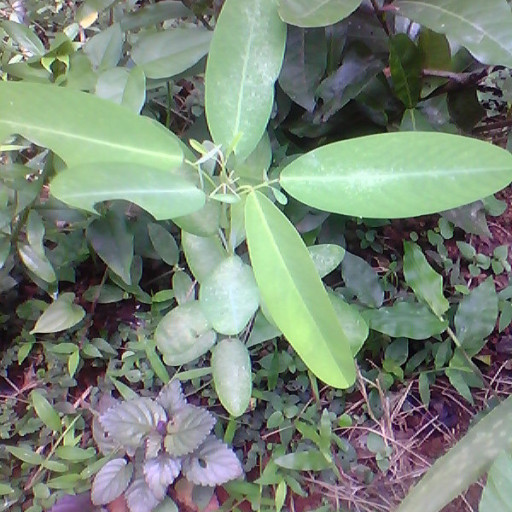
Plant Overview
Often called the Telegraph Plant or Dancing Plant, this extraordinary tropical shrub is one of the few species in the world capable of rapid movement. Unlike most plants that grow toward the sun over days, the Codariocalyx motorius twitches and rotates its leaves in real-time, appearing to "dance" to music or warmth. Native to Tropical Asia, it has fascinated botanists for centuries, including Charles Darwin.
🔍 How to Identify
- 🍃 The Triple Leaflet: Each leaf consists of one large central leaflet and two much smaller lateral leaflets at the base. These tiny side leaflets are the ones that perform the "dancing" motion.
- 📡 Jerky Movement: The small leaflets move in elliptical paths, rotating every few minutes to sample the light intensity and find the best position for the larger leaf.
- 🌸 Pea-like Blooms: As a member of the legume family, it produces delicate, terminal clusters of small purple or pinkish-violet flowers that resemble tiny sweet peas.
🏡 In Your Garden
- 🌡️ Tropical Sensitivity: This plant thrives in high humidity and consistent warmth. If the temperature drops below 60°F (15°C), its "dancing" will slow down or stop entirely as it enters a dormant state.
- 💧 Moisture Balance: It prefers consistently moist, well-draining soil. Because of its high metabolic rate (due to all that moving!), it can be quite thirsty, but it hates "wet feet," which can lead to root rot.
- ☀️ Light Requirements: While it loves bright light to fuel its movement, harsh, direct midday sun can scorch the delicate foliage. Filtered "jungle" light is its favorite.
⚠️ Safety & Toxicity
- ✅ Generally Safe: The Telegraph Plant is considered non-toxic to humans and common household pets like cats and dogs.
- 👉 Mechanical Stress: While it is safe to touch, try to avoid over-stimulating the leaves. Constantly "forcing" the plant to move through touch or loud vibrations can exhaust its energy reserves.
✨ Fun Fact
Charles Darwin was so captivated by this plant that he featured it prominently in his 1880 book, The Power of Movement in Plants. He was amazed that the plant moved even in the absence of wind, concluding it was an internal biological mechanism used to maximize sunlight exposure.

Detailed Care Instructions
| Lighting | Full Sun |
| Hardiness Zones | 10A - 11 |
To grow the Codariocalyx Motorius plant, also known as the telegraph plant or dancing plant, follow these steps:
- Obtain seeds or a young plant: You can purchase seeds or a young plant from a nursery or order them online.
- Choose a location: Find a suitable location for the plant. It prefers bright but indirect sunlight, so a spot near a window that receives partial shade is ideal.
- Soil and container: Use well-draining potting soil and choose a container with drainage holes to allow excess water to escape. The pot should be large enough to accommodate the plant's growth.
- Planting: Sow the seeds or transplant the young plant into the soil. Ensure the plant is planted at the same depth as it was previously.
- Watering: Keep the soil evenly moist, but avoid overwatering as it can lead to root rot. Allow the top inch of soil to dry out between waterings.
- Temperature and humidity: Maintain a temperature between 68-75°F (20-24°C). The plant prefers higher humidity, so misting the leaves occasionally can help create a suitable environment.
- Fertilization: Feed the plant with a balanced liquid fertilizer every 2-3 weeks during the growing season (spring and summer). Follow the instructions on the fertilizer packaging for proper application.
- Pruning: If the plant becomes leggy or wild, prune it back by cutting off excess growth. This will help maintain a more compact and bushy appearance.
- Pest control: Monitor the plant for pests such as spider mites or aphids. If detected, treat them with a suitable organic pesticide or insecticidal soap.
- Observe and enjoy: The most fascinating aspect of the Codariocalyx Motorius plant is its ability to move its leaves in response to stimuli such as touch or changes in light. Observe and enjoy the unique dance-like movements of the plant.
With proper care and attention, your Codariocalyx Motorius plant should thrive and bring enjoyment with its captivating movements.

Place in a bright room that is sun drenched almost all day. Or directly in a south-facing window.

Codariocalyx motorius is a plant that requires regular watering to maintain its health and growth. To water this plant appropriately, it is recommended to water it deeply at least once a week, allowing the soil to dry out between waterings. It's important not to overwater this plant, as it can lead to root rot and other issues. When watering, aim to saturate the soil around the plant's base while avoiding getting water on the leaves or flowers. Additionally, it's a good practice to water the plant in the morning, as it allows for optimal absorption and evaporation. Using room temperature water is also recommended, as cold water can shock the plant's roots and lead to damage. Finally, keep an eye on the moisture level of the soil and adjust your watering schedule accordingly based on the environmental conditions and the plant's needs.
- Use a balanced fertilizer with equal amounts of nitrogen, phosphorus, and potassium.
- Dilute the fertilizer according to the instructions on the packaging.
- Apply the fertilizer to the soil around the base of the plant, avoiding direct contact with the leaves or stem.
- Water the plant thoroughly after fertilizing to distribute the nutrients evenly.
- Repeat this process every 4-6 weeks during the plant's active growing season, which is typically from spring to summer.
- However, reduce or stop fertilizing during the dormant period in fall and winter.
The ideal soil for this plant is a well-draining, nutrient-rich soil with a pH range of 6.0-7.0. A mix that includes equal parts sand, peat moss or coconut coir, and perlite or vermiculite would work well. It is important to ensure that the soil is not overly compacted to allow for adequate root growth and oxygenation. Additionally, adding organic matter such as compost or aged manure can help improve soil quality and fertility.
Codariocalyx motorius plant can be propagated through vegetative propagation or seed propagation. To propagate through vegetative propagation, it is necessary to cut a portion of the stem that has 2-3 nodes. The cuttings must then be planted in a well-draining potting mix and kept in a warm, humid location. The cuttings will usually root within 1-2 weeks, and then the plant can be transplanted into a larger pot.
On the other hand, seed propagation is also an option. The seeds should be collected from a healthy plant and should be soaked in water for a few hours prior to planting. The seeds should then be sown in a well-draining potting mix and kept in a warm, humid location. The seeds will usually germinate within 1-2 weeks, and then the plant can be transplanted into a larger pot. It is important to note that seed propagation may not produce the same characteristics as the parent plant.
Common pests of the semaphore-plant include Scale insect, mealybugs, spider mites, aphids. Make a habit of checking your semaphore-plant frequently for pests so that any infestations can be caught and managed early.








